
Healthy Eating Guide
Artificial Food Dyes: What the Science Says and Why I Choose to Avoid Them
Last updated: October 11, 2026
In this guide: Synthetic food dyes give candy, cereal, drinks and even some medicines their bright colors, but they add nothing to the nutrition of the food. Some research links them to behavior changes in some children, a few have raised concerns in animal studies, and the FDA is now pushing companies to stop using them. Below, I go through all nine synthetic dyes one at a time, explain what's known and what isn't, show you how to spot them on labels, and share what happened to me that made me start paying attention.
This guide is for general information. It isn't medical advice. If you think you're reacting to something you eat, talk with a doctor or an allergist.
Why are dyes added to food?
Mostly for looks. Color tells us what to expect from food. Red says cherry or strawberry, yellow says lemon, and bright colors make candy, cereal and drinks more appealing, especially to kids. The FDA describes color additives as a way to enhance natural colors, add color to otherwise colorless "fun" foods, and help identify flavors [1].
Synthetic dyes became popular with food companies because they're cheap, give strong and consistent color, and blend easily into other shades [1]. What they don't do is add nutrition. A red candy and a clear candy have the same nutrients. That's the main reason I think it's fair to ask whether we need them at all.
Synthetic dyes vs. natural colors
Not every food color is the same, and it's worth knowing the difference before we go further.
- Synthetic dyes (the FDA calls them "certified" colors) are made from petroleum-based chemicals. Every batch has to be tested and certified by the FDA before it can be sold [1]. These are the dyes this guide is about.
- Natural colors (the FDA calls them "exempt" colors) come from plants, minerals or other natural sources. Examples include annatto (yellow), beet juice and dehydrated beets (red), caramel (tan), beta-carotene (orange) and grape skin extract [1]. They still need FDA approval, but they aren't petroleum-based.
When I say I avoid food dyes, I mean the synthetic ones. Coloring a smoothie with berries or a frosting with beet juice is a completely different thing.
The nine synthetic food dyes at a glance
The FDA has historically approved nine synthetic dyes for food [1]. As of October 2026, eight are still allowed, and that number is shrinking.
| Dye | Other names | Common uses | FDA status (Oct. 2026) |
|---|---|---|---|
| Red 40 | Allura Red AC, E129 | Cereal, drinks, gelatin, pudding, dairy, candy | Allowed; voluntary phase-out goal by end of 2027 |
| Red 3 | Erythrosine, E127 | Candy, frosting, cakes, cookies, frozen desserts | Banned in food starting Jan. 15, 2027 |
| Yellow 5 | Tartrazine, E102 | Candy, cereal, snacks, drinks, condiments, yogurt | Allowed; voluntary phase-out goal by end of 2027 |
| Yellow 6 | Sunset Yellow FCF, E110 | Cereal, snacks, baked goods, drinks, sauces, crackers | Allowed; voluntary phase-out goal by end of 2027 |
| Blue 1 | Brilliant Blue FCF, E133 | Candy, drinks, cereal, frozen desserts, frosting | Allowed; voluntary phase-out goal by end of 2027 |
| Blue 2 | Indigo carmine, indigotine, E132 | Baked goods, cereal, snacks, ice cream, candy, yogurt | Allowed; voluntary phase-out goal by end of 2027 |
| Green 3 | Fast Green FCF, E143 | Cereal, ice cream, sherbet, drink mixers, baked goods | Allowed; voluntary phase-out goal by end of 2027 |
| Citrus Red 2 | — | Only the skins of some fresh oranges | Allowed for now; FDA has proposed removing it |
| Orange B | — | Only hot dog and sausage casings | Approval revoked Sept. 8, 2026 |
Sources for uses and status: FDA [1][2][3][4].
Each dye, one at a time
For each dye, I've tried to separate what's been seen in people, what's been seen only in animals, and what's still uncertain. Some of these dyes have a lot of research behind them. Others have very little.
Red 40 (Allura Red AC)
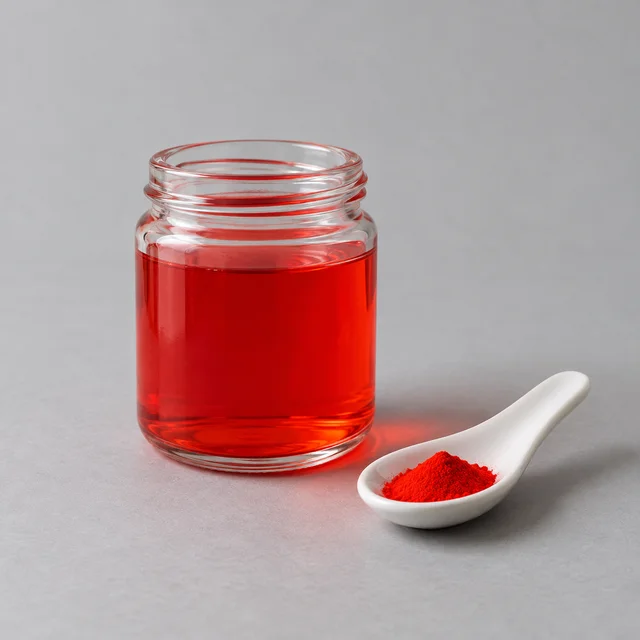 Illustration of the color Red 40 produces.
What it is: The most widely used synthetic dye in the U.S. It gives a bright cherry-red color.
Where you'll find it: Cereal, drinks, gelatin, pudding, dairy products and candy [1]. It's also common in sports drinks, chips with red seasoning and children's snacks.
What the research says:
- In people: Red 40 was one of the dyes in the well-known 2007 Southampton study in the U.K., which found that mixtures of certain dyes plus a preservative increased hyperactive behavior in ordinary 3-year-olds and 8- to 9-year-olds, not just kids with ADHD [9]. Because the dyes were tested as mixtures, the study couldn't say how much came from Red 40 alone. After this study, the European Union began requiring foods with Red 40 and five other dyes to carry a label warning that they may affect activity and attention in children [11].
- In animals: A 2022 study in mice found that eating Red 40 every day over a long period, at levels found in common foods, made the mice more prone to gut inflammation similar to colitis. When the mice got it only on and off, which the researchers said is closer to how people usually eat it, it didn't have that effect [12]. This is a mouse study, so it doesn't show the same thing happens in people.
- Uncertain: Red 40 is still approved, and the FDA considers it safe at permitted levels. Whether everyday amounts cause harm in most adults hasn't been shown.
FDA status: Allowed. It's one of the six dyes the FDA wants companies to remove voluntarily by the end of 2027 [3].
Red 3 (Erythrosine)
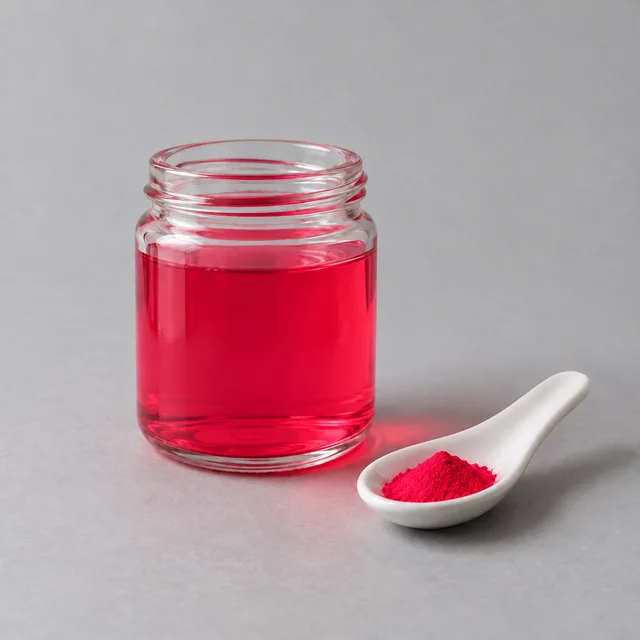 Illustration of the color Red 3 produces.
What it is: A cherry-pink to red dye.
Where you'll find it: Some candy, cakes and cupcakes, cookies, frozen desserts, frostings and some medicines [2].
What the research says:
- In animals: High doses caused thyroid cancer in male rats. The FDA says this happens through a hormone process specific to male rats [2].
- In people: The FDA states that studies in other animals and in humans did not show the same effect, and there's no evidence Red 3 causes cancer in humans [2].
- Why it was banned anyway: A U.S. law called the Delaney Clause says the FDA can't approve a food color that has been found to cause cancer in animals or humans, no matter how the cancer happened [2]. So the ban is a legal requirement based on the rat findings, not proof of harm in people.
FDA status: The FDA revoked its approval in January 2025. Companies have until January 15, 2027 to remove it from food and until January 18, 2028 to remove it from medicines. Products made before those dates may still be on shelves for a while afterward [2].
Yellow 5 (Tartrazine)
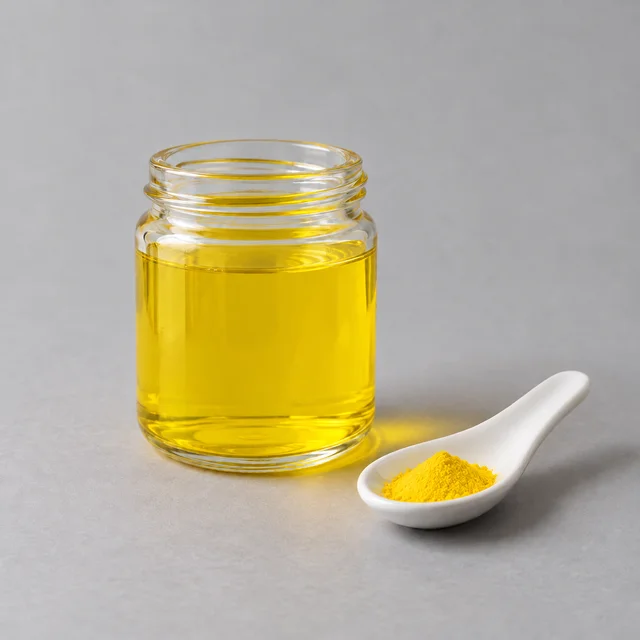 Illustration of the color Yellow 5 produces.
What it is: A bright lemon-yellow dye, also mixed with blue to make green.
Where you'll find it: Candy, cereal, snack foods, drinks, condiments, baked goods and yogurt [1].
What the research says:
- Sensitivity reactions in people: Yellow 5 is the only synthetic dye that carries an FDA-required allergy warning. Prescription medicines that contain it must carry a warning that it may cause allergic-type reactions, including asthma, in certain sensitive people. The FDA notes that this sensitivity is low in the general population but is seen more often in people who are also sensitive to aspirin [13].
- Behavior: Yellow 5 was also in the Southampton study mixtures [9] and is one of the dyes that carries a warning label in the EU [11].
- Uncertain: Most people eat Yellow 5 with no noticeable reaction.
FDA status: Allowed, and it must always be listed by name on labels. It's part of the voluntary phase-out goal for the end of 2027 [3].
Yellow 6 (Sunset Yellow FCF)
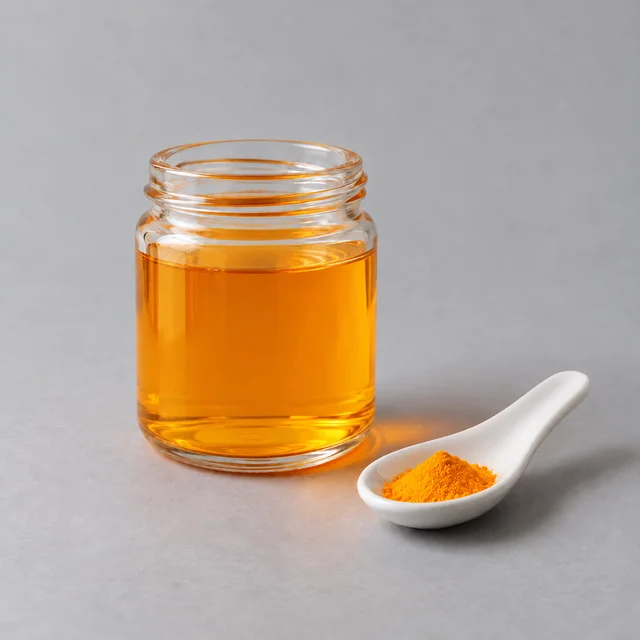 Illustration of the color Yellow 6 produces.
What it is: An orange-yellow dye.
Where you'll find it: Cereal, snack foods, baked goods, gelatin, drinks, dessert powders, crackers and sauces [1]. It can also show up in orange-flavored supplements and medicines.
What the research says:
- In people: Yellow 6 was part of the Southampton study mixtures [9] and is another dye that requires a warning label in the EU [11].
- In animals: The consumer group Center for Science in the Public Interest (CSPI) points to industry-sponsored animal tests it says showed adrenal and kidney tumors [15]. This is CSPI's reading of those studies. The FDA has not acted on it, and the dye remains approved.
- Uncertain: There isn't strong evidence that Yellow 6 harms most people at normal levels.
FDA status: Allowed. Part of the voluntary phase-out goal for the end of 2027 [3].
Blue 1 (Brilliant Blue FCF)
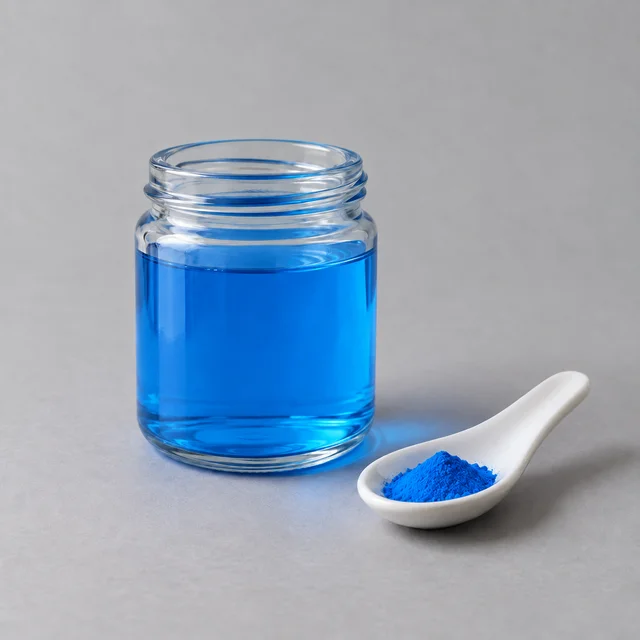 Illustration of the color Blue 1 produces.
What it is: A bright blue dye, often combined with yellow dyes to make green.
Where you'll find it: Candy, drinks, cereal, frozen desserts, popsicles and frosting [1].
What the research says:
- In hospital patients: In 2003, the FDA warned doctors about reports of serious problems, including deaths, in very sick patients who were fed through feeding tubes tinted with Blue 1. The dye was being used in hospitals to help spot breathing problems. The FDA said it had no reports of problems from Blue 1 in ordinary foods [14]. This was a very specific medical situation, not regular eating.
- In animals: CSPI notes that one unpublished study suggested kidney tumors in mice [15]. That finding hasn't been confirmed.
- Uncertain: There's no clear evidence of harm from Blue 1 in food for healthy people.
FDA status: Allowed. Part of the voluntary phase-out goal for the end of 2027 [3].
Blue 2 (Indigo Carmine)
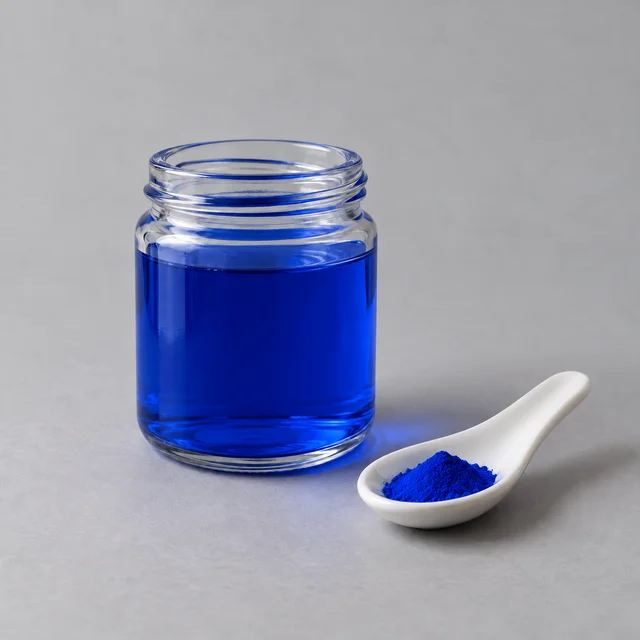 Illustration of the color Blue 2 produces.
What it is: A deep royal-blue dye.
Where you'll find it: Baked goods, cereal, snack foods, ice cream, candy and yogurt [1].
What the research says:
- In animals: CSPI describes some, but not conclusive, evidence of brain tumors in male rats. The FDA reviewed the same data and concluded there was a reasonable certainty of no harm [15].
- In people: There's very little research on Blue 2 in people.
- Uncertain: This is one of the dyes where the honest answer is that we don't know much.
FDA status: Allowed. Part of the voluntary phase-out goal for the end of 2027 [3].
Green 3 (Fast Green FCF)
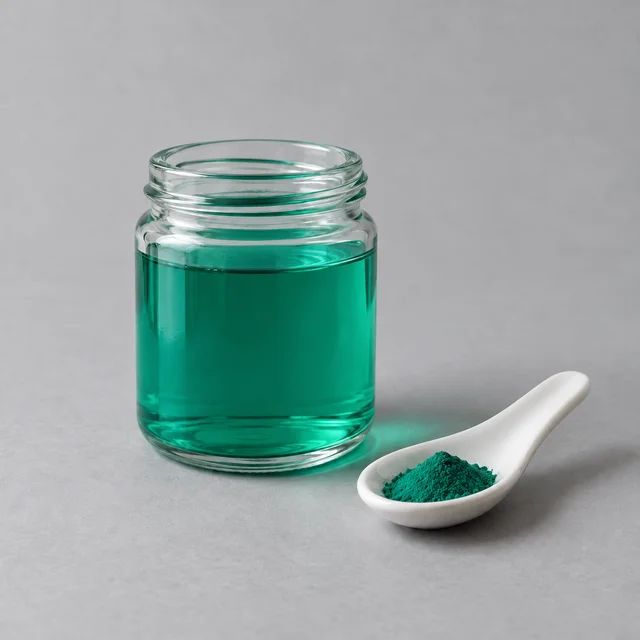 Illustration of the color Green 3 produces.
What it is: A blue-green dye.
Where you'll find it: Cereal, ice cream, sherbet, drink mixers and baked goods [1].
What the research says:
- In animals: A 1981 industry study showed hints of bladder and testicular tumors in male rats. The FDA reanalyzed the data and concluded the dye was safe [15].
- In people: Very little research.
- Uncertain: Like Blue 2, there just isn't much good data either way.
FDA status: Allowed. Part of the voluntary phase-out goal for the end of 2027 [3].
Citrus Red 2
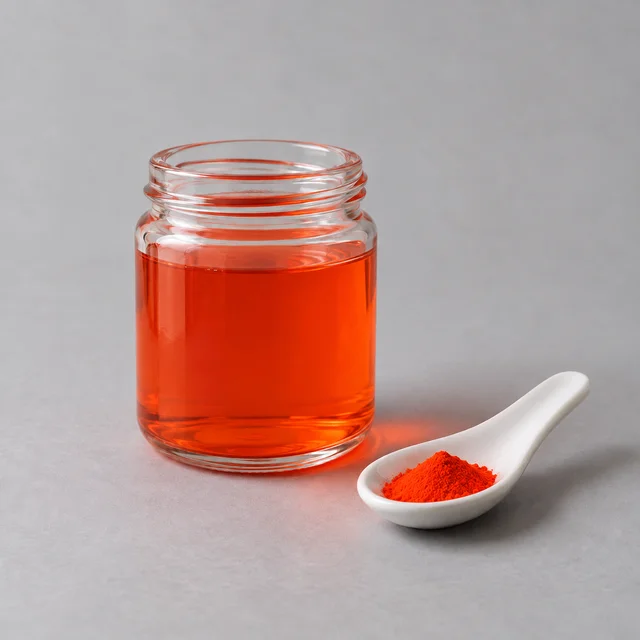 Illustration of the color Citrus Red 2 produces.
What it is: An orange-red dye with one narrow use.
Where you'll find it: Only on the skins of some fresh oranges that aren't meant for juice or processing, at very small amounts [17]. It's not allowed in other foods.
What the research says:
- In animals: The International Agency for Research on Cancer (IARC) found it caused bladder tumors in mice and rats and classifies it as "possibly carcinogenic to humans" (Group 2B). IARC had no human data to review [16].
- In people: No human studies.
FDA status: In July 2026, the FDA proposed removing its approval because the food industry appears to have stopped using it [4]. As of this update, that proposal hadn't been finalized.
Orange B
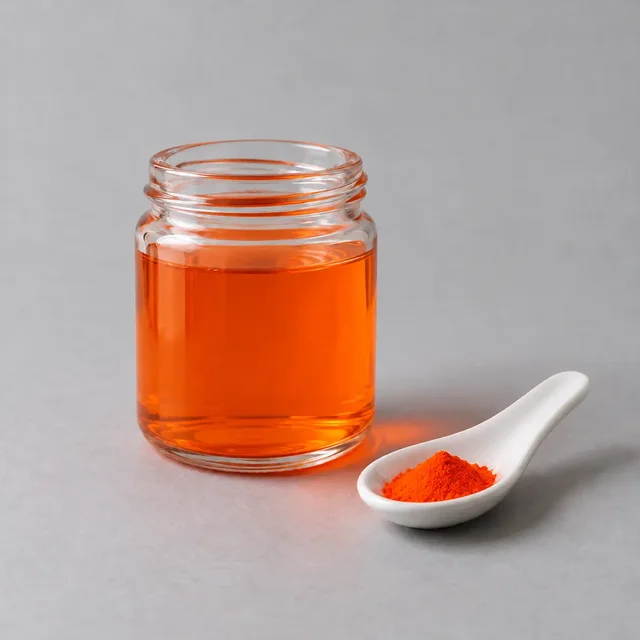 Illustration of the color Orange B produces.
What it is: An orange dye that was approved only for hot dog and sausage casings [1].
What happened: It hasn't been certified for use since 1978 [18]. The FDA revoked its approval effective September 8, 2026, because the industry had abandoned it [4].
Important: The FDA removed Orange B because nobody was using it, not because the revocation established that it was unsafe [4]. You almost certainly won't see it on any label today.
What the research says overall
It's easy to find articles online saying food dyes cause cancer, ADHD, allergies and more. The real picture is more mixed, and I'd rather give you that than scare you.
Children's behavior: the strongest evidence
This is where the research is most consistent.
- In 2021, California's Office of Environmental Health Hazard Assessment (OEHHA) reviewed seven synthetic dyes [6][7]. It found 27 clinical trials in children, 25 of which were "challenge studies," where kids were kept off dyes and then given foods or drinks with dyes or a placebo. Of those 25, 16 (64%) found some evidence of a link to behavior problems, and 13 (52%) found a statistically significant link [8].
- OEHHA concluded that synthetic dyes can cause hyperactivity and other behavior problems in some children, and that children vary in how sensitive they are [7].
- It also found that the FDA's safe daily intake levels for these dyes are based on studies 35 to 70 years old that weren't designed to detect effects on behavior, and may not fully protect children [7].
- The FDA's position is that most children have no bad effects from food dyes, but some evidence suggests certain children may be sensitive to them [1].
The other side: Some researchers point out that nearly all of these studies were done in children who already showed signs of hyperactivity, and that parent reports can be affected by a strong placebo effect, since parents who think their child had dye tend to report more hyperactivity [10]. That doesn't erase the findings, but it's a fair reason to say the effect is real for some kids rather than all kids.
Sensitivity reactions
Some people report hives, itching or other reactions after eating dyes. Yellow 5 is the only dye where the FDA formally recognizes this risk with a required warning on prescription drugs [13]. For the other dyes, reported reactions exist but are hard to prove and considered uncommon.
Cancer findings in animals
Several dyes have raised cancer questions in animal studies, most clearly Red 3 (in male rats) and Citrus Red 2 [2][16]. For Red 3, the FDA says the effect doesn't apply to humans [2]. For several others, the evidence comes from older or disputed studies [15]. Current human evidence has not established that any synthetic food dye causes cancer in people.
What's still uncertain
- Most dye research is old, and newer studies are mostly in animals.
- People usually eat several dyes at once, plus preservatives, which makes it hard to know which ingredient is doing what.
- Very few studies look at adults over long periods.
My takeaway: the evidence isn't strong enough to say these dyes harm everyone, but it's strong enough, especially for kids, that cutting back is a reasonable choice. Since they add nothing nutritionally, there isn't much to lose by avoiding them.
Why I started paying attention to food dyes
This is the part of the guide that's personal.
In July 2023, I got hooked on a watermelon sour straw candy. The red color came from Red 40. I wasn't eating a pack here and there. I was going through a whole box, 24 packs, every week, and ordering a new one as soon as I finished.
Around the end of September, something strange started happening. Every time my body heated up, I'd get a prickling, stinging feeling all over my skin. The best way I can describe it is that feeling when you're frying an egg and hot oil pops onto your hand, except it was my whole body at once. It got so bad that I'd jump into a cold shower with my clothes still on just to make it stop.
When it hit, small red bumps would show up in different spots on my arms, hands and stomach. Not everywhere, just patches here and there. They were hard to see indoors, but in daylight by a window they were obvious. Once I cooled down and the stinging stopped, the bumps faded too. Not right away, but not long after.
A strange layer of skin also showed up on my back. It looked dry and crispy, almost like dead skin, and it wrinkled when I moved a certain way. I started putting moisturizer all over my back with a back applicator, and keeping my skin moisturized became part of my routine.
Anything that raised my body temperature set it off: a hot day, lifting something heavy, even getting stressed. I saw my doctor and a dermatologist, and nobody could tell me what it was.
I didn't connect it to the candy at first. When I started reading online, I found other people describing reactions they blamed on Red 40, so in early 2024 I stopped eating it. About a month later, I tried one piece to test it. As it went down, I felt a tingling move through my body. That was enough for me.
It didn't go away right away. It took more than a year to calm down, and by spring 2025 it was finally gone.
Then, at the end of September 2026, it came back. I'd started taking an orange fiber supplement and hadn't checked the label. It had Yellow 6 in it.
Later I learned that what I went through looks a lot like a condition called cholinergic urticaria, or heat-triggered hives [20]. I haven't been diagnosed with it, and I can't prove the dyes caused this. My doctors never gave me an answer. But I know what I went through, and I never want to go through it again. So now I read labels, and I stay away from synthetic dyes.
If you're dealing with something similar, please see a doctor. A dermatologist or allergist can help figure out what's going on, and photos taken during a flare-up can help. If a reaction ever comes with trouble breathing, swelling in your throat or fainting, get emergency help right away.
Where things stand with the FDA (as of October 2026)
The rules around food dyes have changed a lot in the last two years. Here's where things are now.
Mandatory bans and removals
- Red 3: Banned in food starting January 15, 2027, and in medicines starting January 18, 2028 [2].
- Orange B: Approval revoked effective September 8, 2026, because it was no longer used [4].
- Citrus Red 2: Removal proposed in July 2026 for the same reason. Not final yet [4].
The voluntary phase-out
In April 2025, the FDA and the Department of Health and Human Services announced a plan to move the food supply away from petroleum-based dyes [5]. The FDA's current goal is for companies to stop using the six remaining common dyes, Red 40, Yellow 5, Yellow 6, Blue 1, Blue 2 and Green 3, by the end of 2027 [3].
This is important: those six dyes are not banned. The FDA is relying on companies to make the change on their own. So you'll still see them on shelves for now, and some products may keep them past 2027.
What companies have promised
The FDA keeps a public tracker of company pledges [3]. A few examples:
- General Mills plans to remove synthetic dyes from all U.S. cereals and school foods by summer 2026 and from all its U.S. products by the end of 2027.
- Kraft Heinz (including Kool-Aid, Jell-O and Crystal Light) plans to remove them by the end of 2027.
- Hershey plans to remove them from its snacks by the end of 2027.
- Walmart plans to remove them from its store-brand foods by January 2027.
- Nestlé USA reports it has already removed them from its U.S. food and drinks.
Pledges can change, so check the FDA tracker for the latest.
New natural colors
To give companies alternatives, the FDA has approved or expanded several colors from natural sources since 2025, including galdieria extract blue, butterfly pea flower extract, calcium phosphate, gardenia blue, beetroot red and spirulina extract [3][19].
A labeling change to know about
In February 2026, the FDA said it would not object to products saying "no artificial colors" if they contain no synthetic (certified) dyes, even if they use natural colors [19]. This is a change in how the FDA enforces labels, not a new legal definition of "artificial color." In practice, it makes "no artificial colors" a more useful shortcut when you're shopping.
How to spot synthetic dyes on labels
On food
The FDA requires synthetic dyes to be listed by name in the ingredients [1]. Look for:
- Full or short names: "FD&C Red No. 40," "Red 40," "Yellow 6," "Blue 1" and so on.
- "Lake" versions: "Red 40 Lake" or "Blue 1 Lake" is the same dye in a form used in coated candies, cereals and other dry foods.
- Chemical or international names, especially on imported foods: Allura Red (E129), Tartrazine (E102), Sunset Yellow (E110), Erythrosine (E127), Brilliant Blue (E133), Indigo Carmine (E132), Fast Green (E143).
A tricky one: the words "color added" or "artificial color" by themselves don't necessarily mean a synthetic dye. Natural colors are allowed to be listed under those general terms, but synthetic dyes must be named individually [1]. If you don't see a dye name, the color likely comes from a natural source.
On supplements
Check the "Other ingredients" line under the Supplement Facts panel. Gummies, chewables, flavored powders and some fiber supplements often contain dyes. This is exactly how one got past me.
On medicines
Check the "Inactive ingredients" section of the Drug Facts label on over-the-counter medicines, or ask your pharmacist about prescriptions. Medicines that contain Yellow 5 must name it on the label [13]. Many common medicines come in dye-free versions, and a pharmacist can help you find one. Don't stop or switch a prescribed medicine without talking to your doctor or pharmacist first.
Natural alternatives and practical tips
Colors you can make at home
If you bake or make treats, you can get bright color without synthetic dyes:
- Red and pink: beet juice or powder, raspberries, strawberries, pomegranate juice
- Orange: carrot juice, paprika, sweet potato
- Yellow: turmeric (a tiny amount goes a long way), saffron
- Green: spinach, matcha, spirulina
- Blue: butterfly pea flower tea, blue spirulina
- Purple: blueberries, blackberries, purple sweet potato, red cabbage
- Brown: cocoa powder, coffee, cinnamon
Many of our smoothies and smoothie bowls already get their color this way, straight from the fruit and vegetables.
Everyday tips
- Start with the usual suspects. Brightly colored candy, sports drinks, soda, fruit drinks, cereal, frosting, flavored yogurt and snack chips are where dyes show up most.
- Check "healthy" products too. Supplements, fiber powders, vitamins and medicines can have dyes.
- Look for "no artificial colors." Under the FDA's 2026 policy, companies can use this claim on foods without synthetic dyes [19].
- Cook more at home. Whole foods don't need added color.
- Swap, don't stress. You don't need to empty your pantry overnight. Replace things as you run out.
- Keep a simple note if you think you're reacting to something. Write down what you ate and what happened. It's useful information to bring to a doctor.
My final thoughts
I'm not sharing my story because I think the same thing will happen to you. Most people eat food dyes without any obvious problem, and the science doesn't support saying they're dangerous for everyone.
But here's how I see it. Synthetic dyes don't make food more nutritious. They only change how it looks. The research shows some children react to them, a few dyes have raised questions in animal studies, and regulators in the U.S. and Europe have been tightening the rules for years. And for me personally, what I went through was bad enough that I'm not willing to take the chance again.
So I read labels, I choose foods colored by real ingredients, and I don't feel like I'm missing anything. If you decide to cut back too, start small, be kind to yourself about it, and remember that every swap counts.
References
- U.S. Food and Drug Administration. Color Additives Questions and Answers for Consumers. https://www.fda.gov/food/color-additives-information-consumers/color-additives-questions-and-answers-consumers
- U.S. Food and Drug Administration. FD&C Red No. 3 (content current as of October 5, 2026). https://www.fda.gov/industry/color-additives/fdc-red-no-3
- U.S. Food and Drug Administration. Tracking Food Industry Pledges to Remove Petroleum-Based Food Dyes (content current as of September 15, 2026). https://www.fda.gov/food/color-additives-information-consumers/tracking-food-industry-pledges-remove-petroleum-based-food-dyes
- U.S. Food and Drug Administration. FDA Takes Further Steps to Remove Outdated Authorizations for Color Additives in Food (July 22, 2026). https://www.fda.gov/news-events/press-announcements/fda-takes-further-steps-remove-outdated-authorizations-color-additives-food
- U.S. Food and Drug Administration. HHS, FDA to Phase Out Petroleum-Based Synthetic Dyes in Nation's Food Supply (April 22, 2025). https://www.fda.gov/news-events/press-announcements/hhs-fda-phase-out-petroleum-based-synthetic-dyes-nations-food-supply
- California Office of Environmental Health Hazard Assessment. Health Effects Assessment: Potential Neurobehavioral Effects of Synthetic Food Dyes in Children (April 2021). https://oehha.ca.gov/risk-assessment/report/health-effects-assessment-potential-neurobehavioral-effects-synthetic-food-dyes-children
- California Office of Environmental Health Hazard Assessment. Report Links Synthetic Food Dyes to Hyperactivity and Other Neurobehavioral Effects in Children (press release, April 16, 2021). https://oehha.ca.gov/risk-assessment/press-release/report-links-synthetic-food-dyes-hyperactivity-and-other-neurobehavioral-effects-children
- Miller MD, et al. Potential impacts of synthetic food dyes on activity and attention in children: a review of the human and animal evidence. Environmental Health, 2022. https://pmc.ncbi.nlm.nih.gov/articles/PMC9052604/
- McCann D, et al. Food additives and hyperactive behaviour in 3-year-old and 8/9-year-old children in the community: a randomised, double-blinded, placebo-controlled trial. The Lancet, 2007;370:1560–1567. https://eprints.soton.ac.uk/145999
- Oster E. Are the Worries About Food Dyes Overblown? ParentData. https://parentdata.org/kids/worries-about-red-food-dye-overblown/
- European Union. Regulation (EC) No 1333/2008 on food additives (Annex V warning label requirement). https://eur-lex.europa.eu/eli/reg/2008/1333/oj
- Kwon YH, et al. Chronic exposure to synthetic food colorant Allura Red AC promotes susceptibility to experimental colitis via intestinal serotonin in mice. Nature Communications, 2022;13:7617. https://pubmed.ncbi.nlm.nih.gov/36539404/
- U.S. Code of Federal Regulations. 21 CFR 201.20: Declaration of presence of FD&C Yellow No. 5 and/or FD&C Yellow No. 6 in certain drugs for human use. https://www.ecfr.gov/current/title-21/chapter-I/subchapter-C/part-201/subpart-A/section-201.20
- U.S. Food and Drug Administration. Public Health Advisory: Reports of Blue Discoloration and Death in Patients Receiving Enteral Feedings Tinted With the Dye, FD&C Blue No. 1 (September 29, 2003). https://www.fda.gov/industry/medical-devices/fda-public-health-advisory-subject-reports-blue-discoloration-and-death-patients-receiving-enteral
- Center for Science in the Public Interest (consumer advocacy group). Chemical Cuisine: Artificial Colorings. https://www.cspi.org/article/artificial-colorings-synthetic-food-dyes
- International Agency for Research on Cancer. Citrus Red No. 2, Summaries & Evaluations, Vol. 8 (1975); Group 2B in Suppl. 7 (1987). https://inchem.org/documents/iarc/vol08/citrusredno2.html
- U.S. Code of Federal Regulations. 21 CFR 74.302: Citrus Red No. 2. https://www.ecfr.gov/current/title-21/chapter-I/subchapter-A/part-74/subpart-A/section-74.302
- Nutritional Outlook. FDA Finalizes Order for Orange B Revocation, Proposes to Remove Citrus Red No. 2 (July 22, 2026). https://www.nutritionaloutlook.com/view/fda-finalizes-orange-b-revocation-proposes-remove-citrus-red-no-2
- Covington & Burling. FDA Takes Additional Steps to Advance Transition Away From Synthetic Color Additives (February 2026). https://www.cov.com/en/news-and-insights/insights/2026/02/fda-takes-additional-steps-to-advance-transition-away-from-synthetic-color-additives
- DermNet. Cholinergic Urticaria. https://dermnetnz.org/topics/cholinergic-urticaria