
Kitchen Tips
Why Does Sugar Come in a Paper Bag?
Plus how to store white, brown, powdered and coconut sugar.
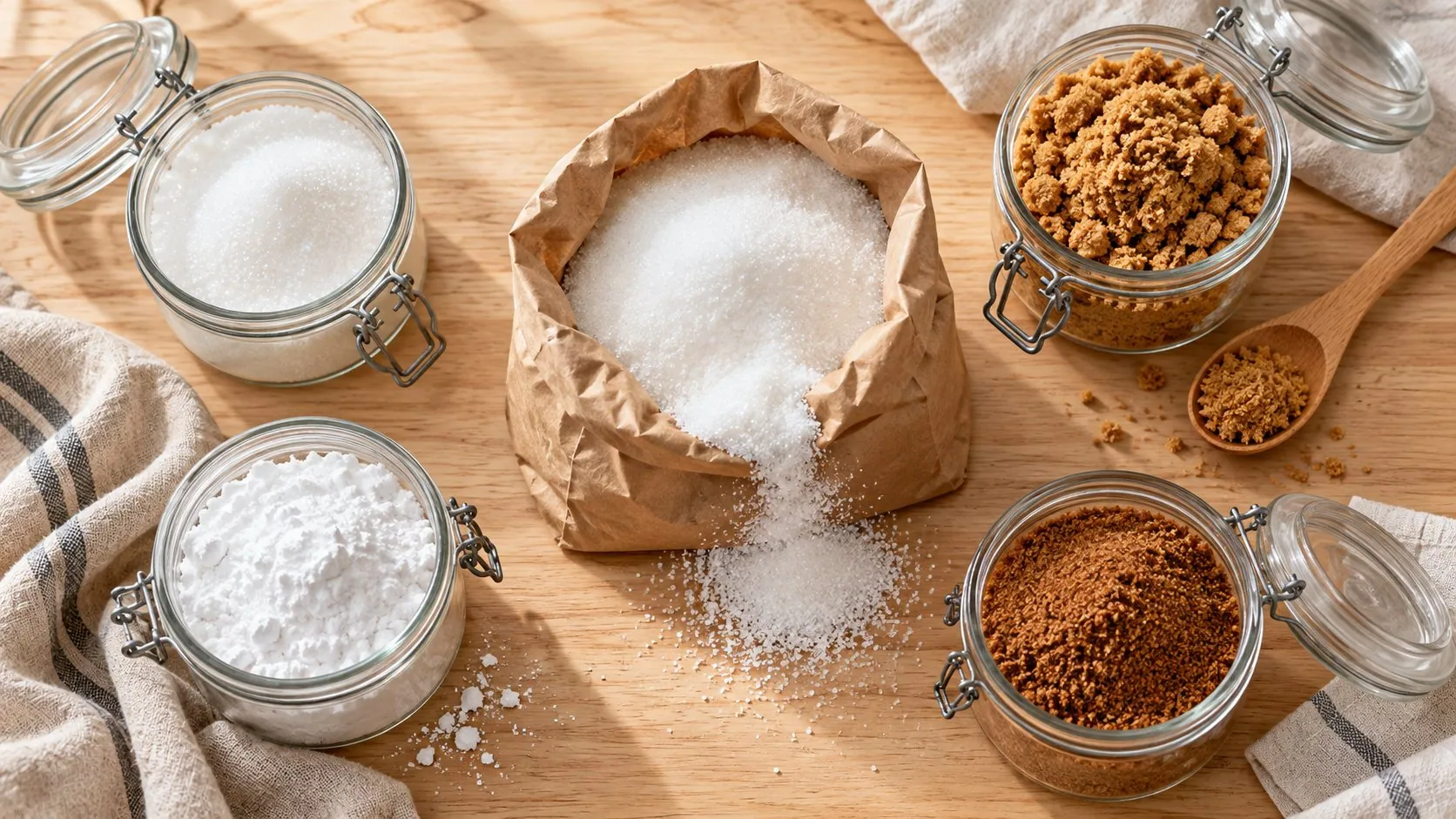
If you've ever carried a bag of sugar home in the rain, or had a corner split open in your pantry, you've probably wondered why it still comes in a plain paper bag.
Why is sugar sold in paper bags?
The short answer: regular white sugar doesn't need much protection. It's very dry, it doesn't spoil, and it holds up fine on a store shelf. Paper is cheap, light, easy to stack and ship, and easy to recycle, so it does the job.
The bag is made to get sugar to your kitchen, though, not to keep it at its best for months. Here's how to store each kind once you open it.
White sugar: keep it dry
White sugar's only real enemy is moisture. Sugar pulls water from the air, and when it does, the crystals stick together and turn into hard lumps.
Once the bag is open, pour it into a container with a tight lid and keep it in a cool, dry cupboard, away from the stove, the sink and the dishwasher. Stored this way, it keeps indefinitely.
If it clumps anyway, it's still fine to use. Break the lumps up with a fork or a few pulses in a blender.
Brown sugar: keep it soft
Brown sugar has the opposite problem. It has molasses in it, which keeps it soft and moist. When air gets to it, that moisture dries out and the sugar turns into a brick. That's why it comes in a sealed plastic bag instead of paper.
After opening, keep it in an airtight container or a zip-top bag with the air pressed out. Domino says it tastes best within about six months of opening.
Live somewhere very dry? You can also freeze brown sugar in an airtight bag. Let it thaw before using and break up any clumps with a fork.
If it's already hard, you can bring it back:
- Fast (microwave): Put the sugar in a microwave-safe bowl, cover it with two damp (not dripping) paper towels, then cover the bowl with plastic wrap. Microwave on high for 1½ to 2 minutes, break it up with a fork, and use it right away. It hardens again as it cools, so only soften what you need.
- Fast (oven): Spread it in an oven-safe dish and warm it at 250°F, watching closely, just until soft. Measure it while it's warm.
- Slow (overnight): Seal it in a container with a slice of bread or a damp paper towel tucked on top. In a day or two it'll be soft again. Take the bread out and reseal.
Powdered sugar: keep it away from moisture and smells
Powdered sugar has a little cornstarch mixed in so it doesn't cake. That also means it can't be fully fixed once it gets lumpy, so keep it sealed tight from the start. It also soaks up strong smells, so don't store it next to onions or spices.
Coconut sugar: treat it like white sugar
Coconut sugar is dry and grainy like white sugar, and it clumps when it gets damp. Keep it in an airtight container in a dry cupboard, and break up any lumps with a fork.
Should sugar go in the fridge?
No. The fridge is humid, which makes sugar clump, and sugar can pick up fridge smells. A dry cupboard is the best spot for every kind.
Does sugar go bad?
Plain white sugar doesn't really go bad as long as it stays dry. Brown sugar is at its best within about six months of opening, and after that it's mostly a texture problem, not a safety one. Throw out any sugar that has bugs, mold or wet spots, or that smells strange.
Put it to use
Now that your brown sugar is soft again, try it in our Healthy Chocolate Chip Cookies, or use coconut or brown sugar in these Healthy Peach Crisp Cups.