
Avocado Hummus & Veggie Platter
 By Better Plate Recipes
Have a recipe from another site? Import it →
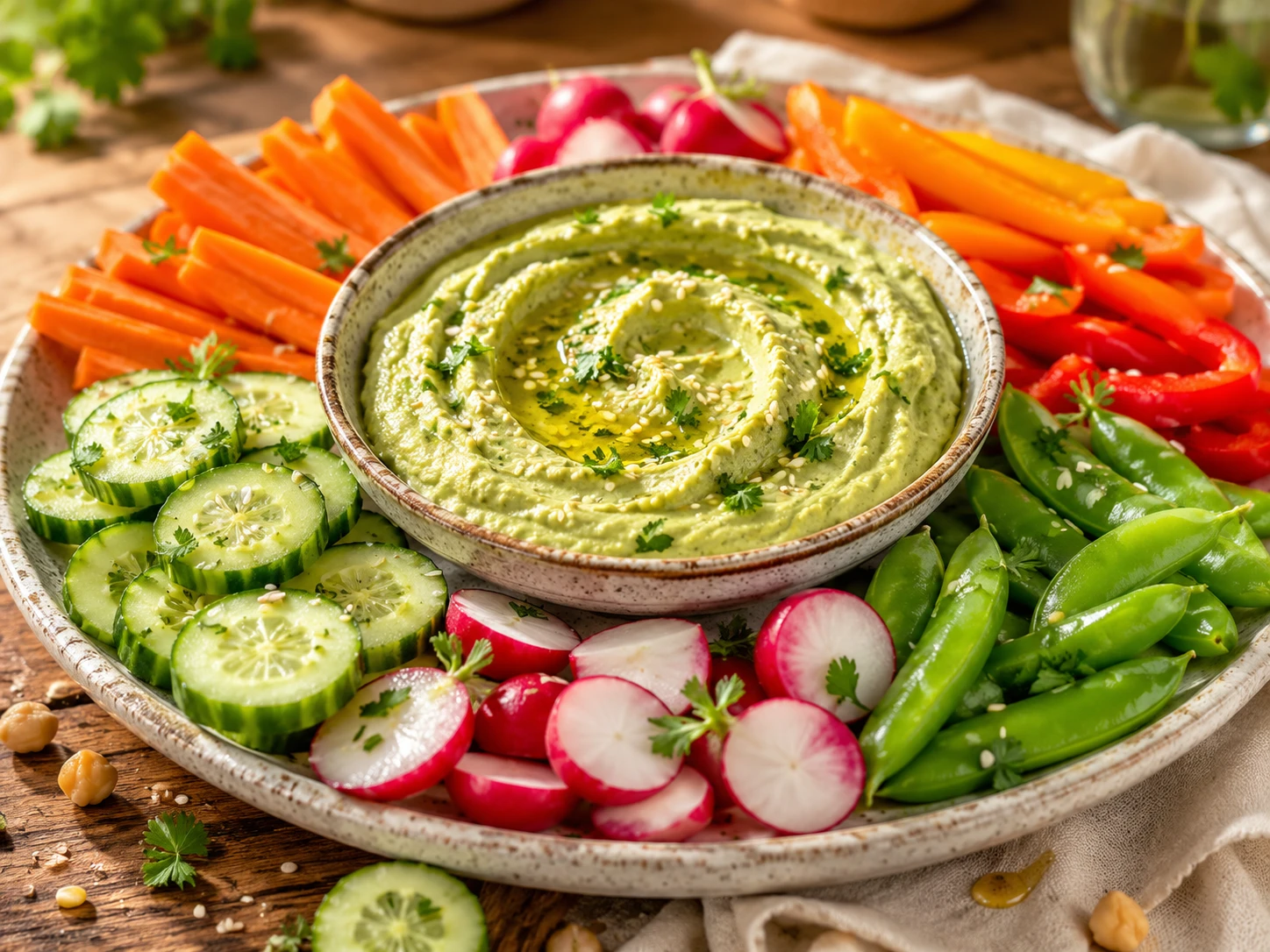
Creamy chickpeas, ripe avocado, tahini, lemon, garlic, cumin, and olive oil blend into a smooth green hummus for crisp vegetables. It is bright, scoopable, and fresh, with enough richness to feel satisfying and enough crunch around it to make snack time feel complete. It works well for a quick, balanced snack.
Why You’ll Love This Recipe
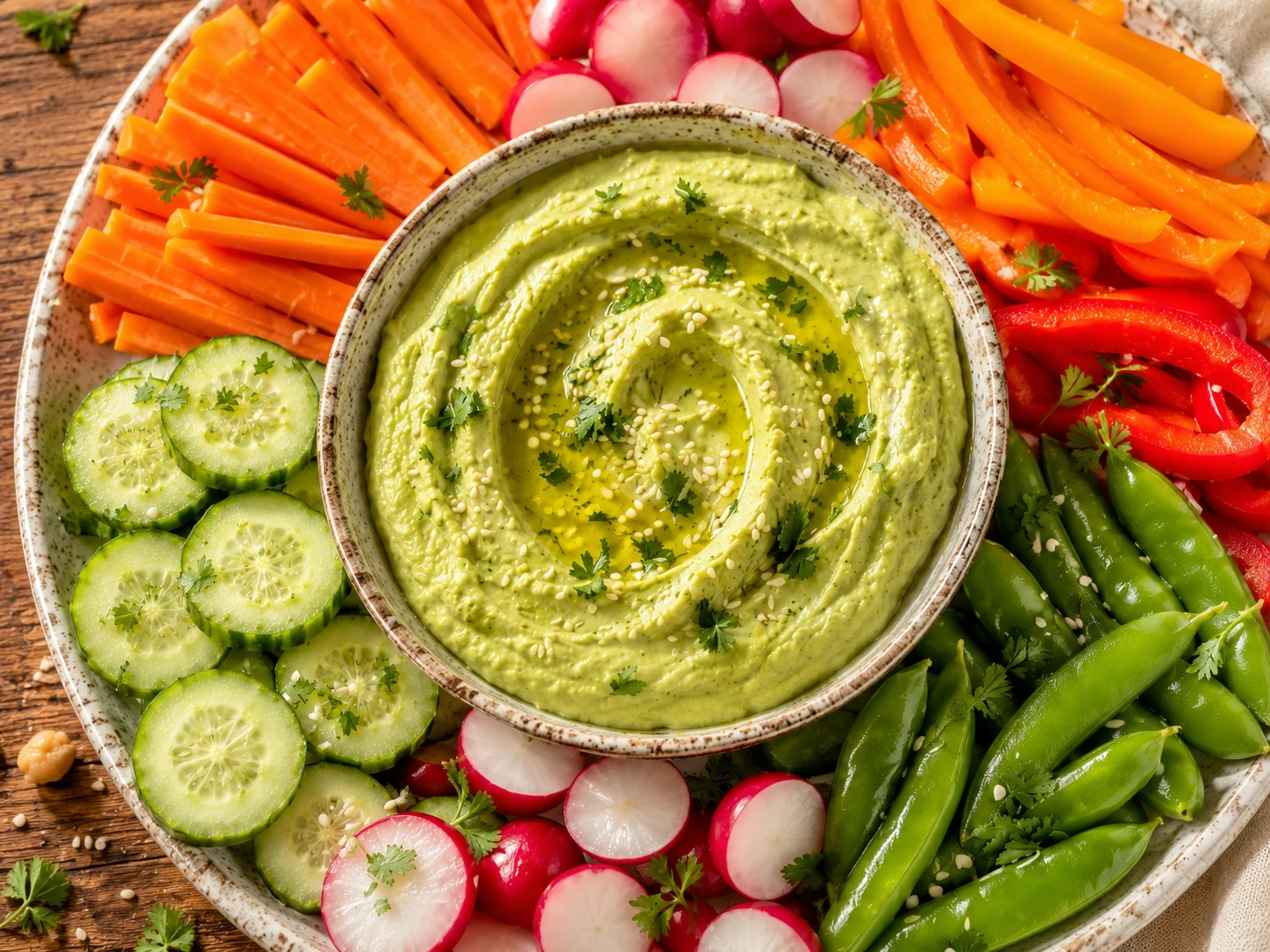
You will love Avocado Hummus & Veggie Platter because it feels like a real snack, not a placeholder between meals. In this recipe, chickpeas and tahini bring classic hummus body, avocado makes it extra creamy, and lemon juice keeps the dip bright instead of heavy. That balance gives you flavor, texture, and enough satisfaction to make it useful for a snack board, a quick appetizer, or a fresh no-cook lunch side. The steps stay friendly for a beginner because they explain what to look for, not just what to do. The hummus should look smooth, thick, and spoonable, almost like thick yogurt, before it goes into the serving bowl. The finished snack is easy to portion and practical enough to make again.
What Makes This Recipe Work
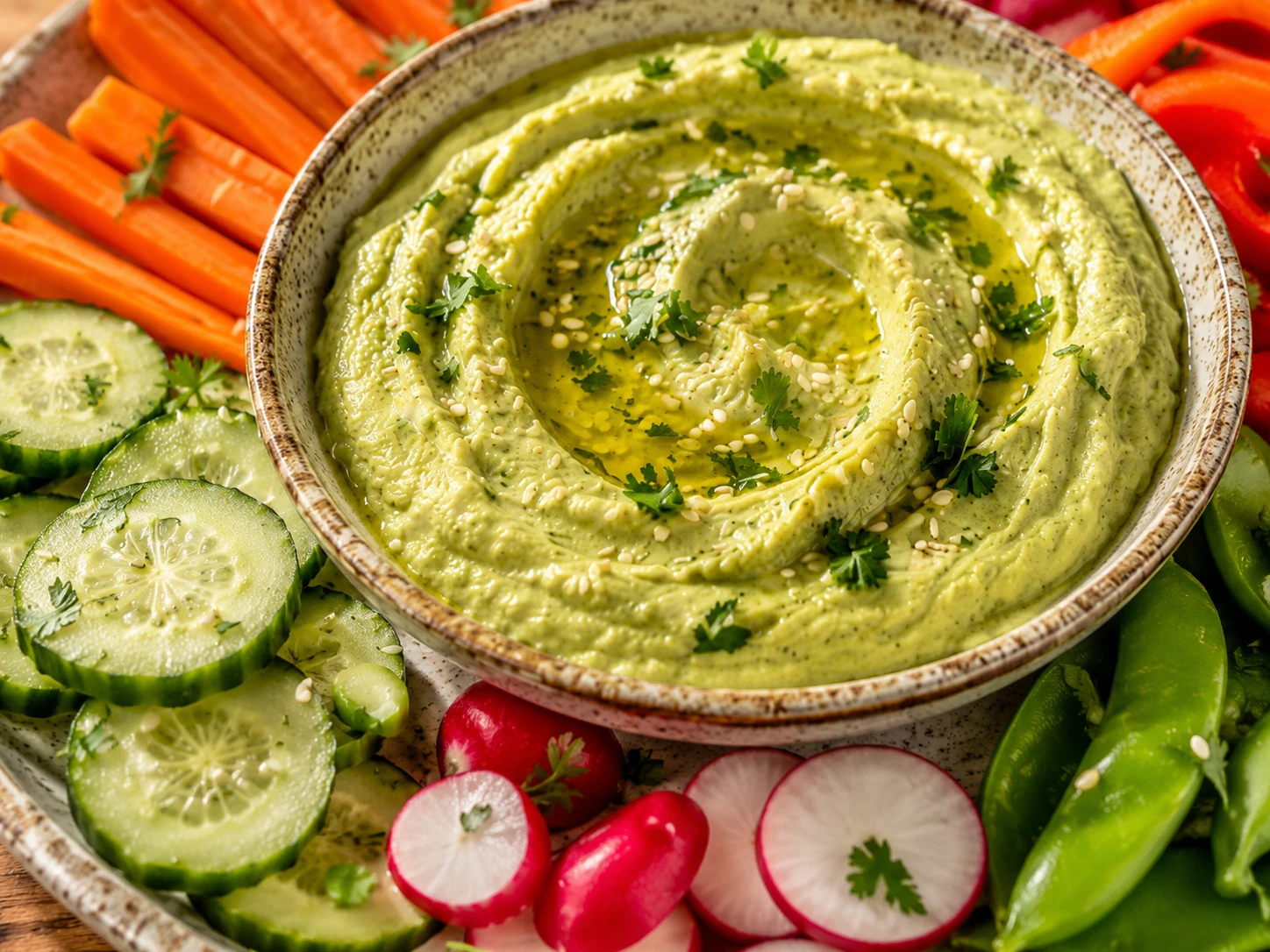
What makes Avocado Hummus & Veggie Platter work is the way the textures play together. In this recipe, chickpeas and tahini bring classic hummus body, avocado makes it extra creamy, and lemon juice keeps the dip bright instead of heavy. That matters because healthy snacks can taste flat when they are only soft, only crunchy, or only sweet. Here, the contrast makes the recipe feel more complete while still staying easy. The beginner cues are important too. The hummus should look smooth, thick, and spoonable, almost like thick yogurt, before it goes into the serving bowl. A new cook can follow that sign with their eyes and hands instead of wondering whether the step is finished. That is the kind of detail that keeps the recipe reliable without making it complicated. It also helps the snack feel intentional, even when the prep time is short.
Notes That Make It Easier
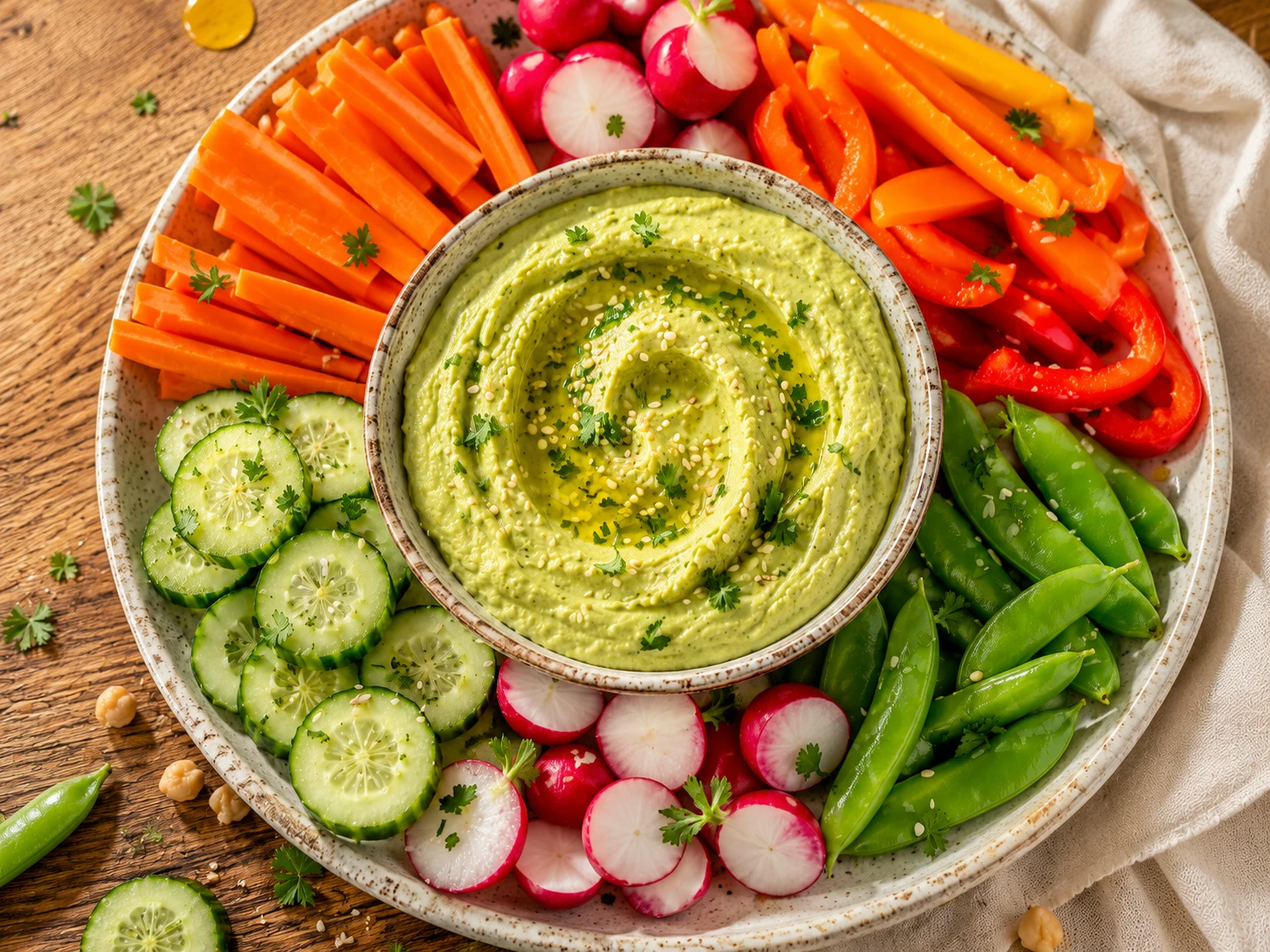
This snack also fits real life because it does not ask for extra steps that are not needed. Add the ice water slowly while the processor runs so you can stop as soon as the dip loosens. Dry the vegetables after rinsing, then arrange them around the bowl so every scoop has something crisp beside it. Those small details protect the texture, which is usually what makes or breaks a snack after it sits for a little while. For beginners, that guidance is especially helpful because it explains why the order matters. Mixing, chilling, cutting, or packing at the right moment keeps the recipe from turning watery, crumbly, soggy, or uneven. Once you understand that, Avocado Hummus & Veggie Platter becomes easy to repeat and easier to adjust only within the ingredients already listed.
Keeping It Simple
For the cleanest result, keep Avocado Hummus & Veggie Platter close to the recipe as written. Extra sauces, toppings, liquids, or swaps can sound small, but they can change the moisture, sweetness, salt level, or nutrition more than expected. Use the listed ingredients first and let the texture cues guide you. If the recipe should be cold, chill it. If it should be crisp, build it close to serving. If it needs to set, give it the full rest time. That simple approach keeps the snack consistent and Lovable-ready. It also makes the instructions feel calm for someone who is new in the kitchen, because every step has a clear reason and a visible finish line. That keeps the dip creamy and the vegetables crisp from the first scoop.
Ingredient Notes & Easy Swaps
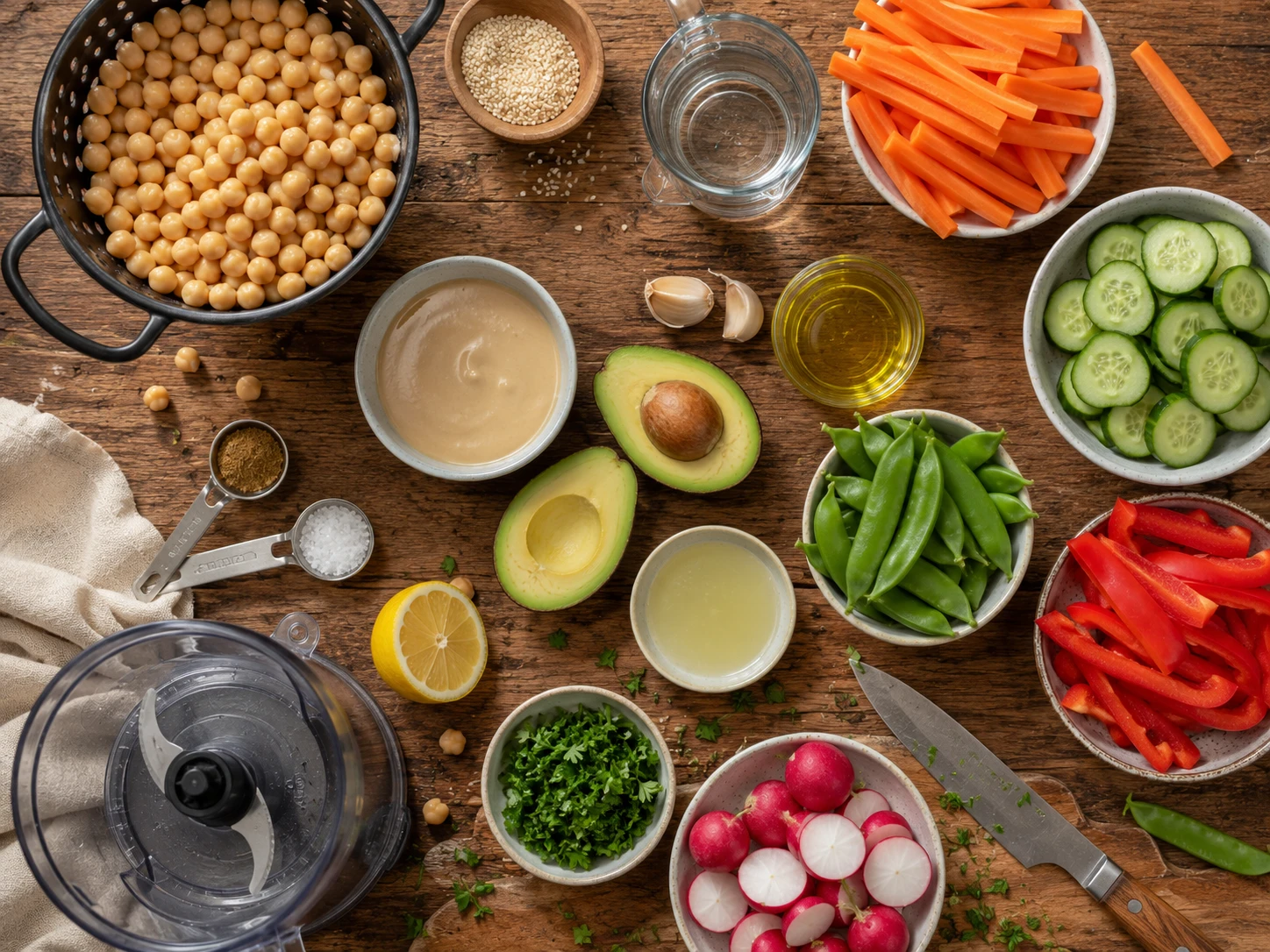
Chickpeas: Drain and rinse the chickpeas well so the hummus tastes clean, not canned. Removing loose skins can make the hummus smoother, but it is not required.
Avocado: Use a ripe avocado that gives slightly when pressed. It makes the hummus creamy and green, but an overripe avocado can taste dull or watery.
Tahini: Tahini adds sesame flavor and helps the hummus taste rich. Stir the jar well before measuring because the oil often separates.
Lemon juice: Fresh lemon keeps the avocado flavor bright and helps slow browning. Lime juice can work too if that is what you have.
Garlic and cumin: Garlic gives the hummus a bold bite, while cumin adds warm flavor. Use one garlic clove instead of two if you prefer a milder dip.
Extra virgin olive oil: Olive oil makes the hummus smoother and adds a rounded flavor. A small drizzle on top is optional but makes the platter look finished.
Ice water: Ice water loosens the hummus and helps it blend into a lighter, creamier texture. Add it slowly so the dip does not become too thin.
Vegetables for serving: Carrots, cucumbers, radishes, snap peas, and bell peppers all give good crunch. Celery sticks or broccoli florets can also work.
Sesame seeds and parsley: These are simple garnishes that add texture and freshness. You can skip them if you want the hummus plain.
Avocado Hummus & Veggie Platter
Description
Creamy chickpeas, ripe avocado, tahini, lemon, garlic, cumin, and olive oil blend into a smooth green hummus for crisp vegetables. It is bright, scoopable, and fresh, with enough richness to feel satisfying and enough crunch around it to make snack time feel complete. It works well for a quick, balanced snack.
Ingredients
- 1 (15 oz) can chickpeas, drained and rinsed
- 1 ripe avocado
- 1/4 cup tahini
- 3 tbsp fresh lemon juice
- 2 cloves garlic
- 3 tbsp extra virgin olive oil, plus more for drizzling
- 1/2 tsp ground cumin
- 1/2 tsp sea salt
- 2 to 3 tbsp ice water, to loosen
- Carrot sticks, cucumber rounds, radishes, sugar snap peas and bell pepper strips, for serving
- Sesame seeds and chopped parsley, to garnish
Instructions
- 1Equipment: a food processor, a can opener when needed, a fine-mesh strainer or colander, a rubber spatula, measuring cups, measuring spoons, a cutting board, a sharp knife, paper towels or a clean kitchen towel, a spoon, a wide shallow serving bowl, a large serving platter, and food-safe plastic wrap when making the hummus ahead.
- 2Open the 15-ounce can of chickpeas when needed, drain and rinse the chickpeas, and shake off as much water as possible. Stir the tahini in its container when the oil has separated, then measure 1/4 cup tahini. Cut the 1 ripe avocado in half, carefully lift out the pit with a spoon, and scoop all of the flesh into the food processor. Add the chickpeas, measured tahini, 3 tablespoons fresh lemon juice, 2 peeled garlic cloves, 3 tablespoons extra-virgin olive oil, 1/2 teaspoon ground cumin, and 1/2 teaspoon sea salt. Lock the lid securely in place.
- 3Process on high for 1 minute. Stop the machine, remove the lid, and scrape the bottom and sides with the rubber spatula. Replace the lid and process for another 30 to 60 seconds, until the chickpeas are finely blended and no large pieces remain.
- 4With the food processor running on low, add 2 tablespoons ice water through the feed opening, 1 tablespoon at a time. Blend for about 10 seconds after each addition. Check the texture before adding the final tablespoon. Add the third tablespoon only when the hummus is still too thick to scoop easily. Process until smooth and creamy.
- 5Wash the carrot sticks, cucumber, radishes, sugar snap peas, and bell pepper as needed. Dry them thoroughly so water does not collect on the platter. Cut the vegetables into the sticks, rounds, or strips named in the ingredient list when they are not already prepared.
- 6Spoon the avocado hummus into the wide shallow bowl and smooth the top. Make a shallow swirl with the back of the spoon. Add a light drizzle of the extra olive oil, then garnish with sesame seeds and chopped parsley to taste.
- 7Place the hummus bowl in the center of the platter and arrange the prepared vegetables around it. Serve immediately for the freshest avocado color and the crispest vegetables. When making it ahead, press food-safe wrap directly against the surface of the hummus, refrigerate it, keep the vegetables separate, and serve within 1 day for the best color and texture.
Tips and Tricks
- 1
Scrape the Bowl: Chickpeas can hide along the sides of the food processor, so stop and scrape during blending. This helps the avocado, tahini, garlic, and lemon mix evenly and prevents little dry pockets from showing up in the finished hummus. That little check keeps the texture cleaner and the serving easier for beginners.
- 2
Add Ice Water Slowly: Ice water makes the hummus creamy, but too much can make it loose. Add it one tablespoon at a time and watch the texture. Stop when the dip is smooth, thick, and easy to scoop with vegetables. It also makes the snack look neater when you pack or serve it.
- 3
Dry the Vegetables: After washing the vegetables, pat them dry before arranging the platter. Wet vegetables can leave puddles around the hummus and make the board feel messy. Dry pieces also hold the dip better when someone scoops. That extra moment helps the finished pieces stay tidy from start to finish.
- 4
Serve the Same Day: Avocado can darken as it sits, even with lemon juice. The flavor is still fine, but the color looks freshest the day it is made. Store leftovers in an airtight container if you need to hold them briefly. It is an easy habit that makes the snack more reliable later.
Nutrition
Per serving — Calories: 225kcal, Protein: 6g, Carbs: 13g, Fat: 18g, Fiber: 5g, Sugar: 1g, Sodium: 200mg.
Nutrition information is an estimate and may vary based on ingredient brands, product sizes, preparation methods, and substitutions. It is not intended as medical or dietary advice.