
Chicken Pesto Protein Pasta
 By Better Plate Recipes
Have a recipe from another site? Import it →
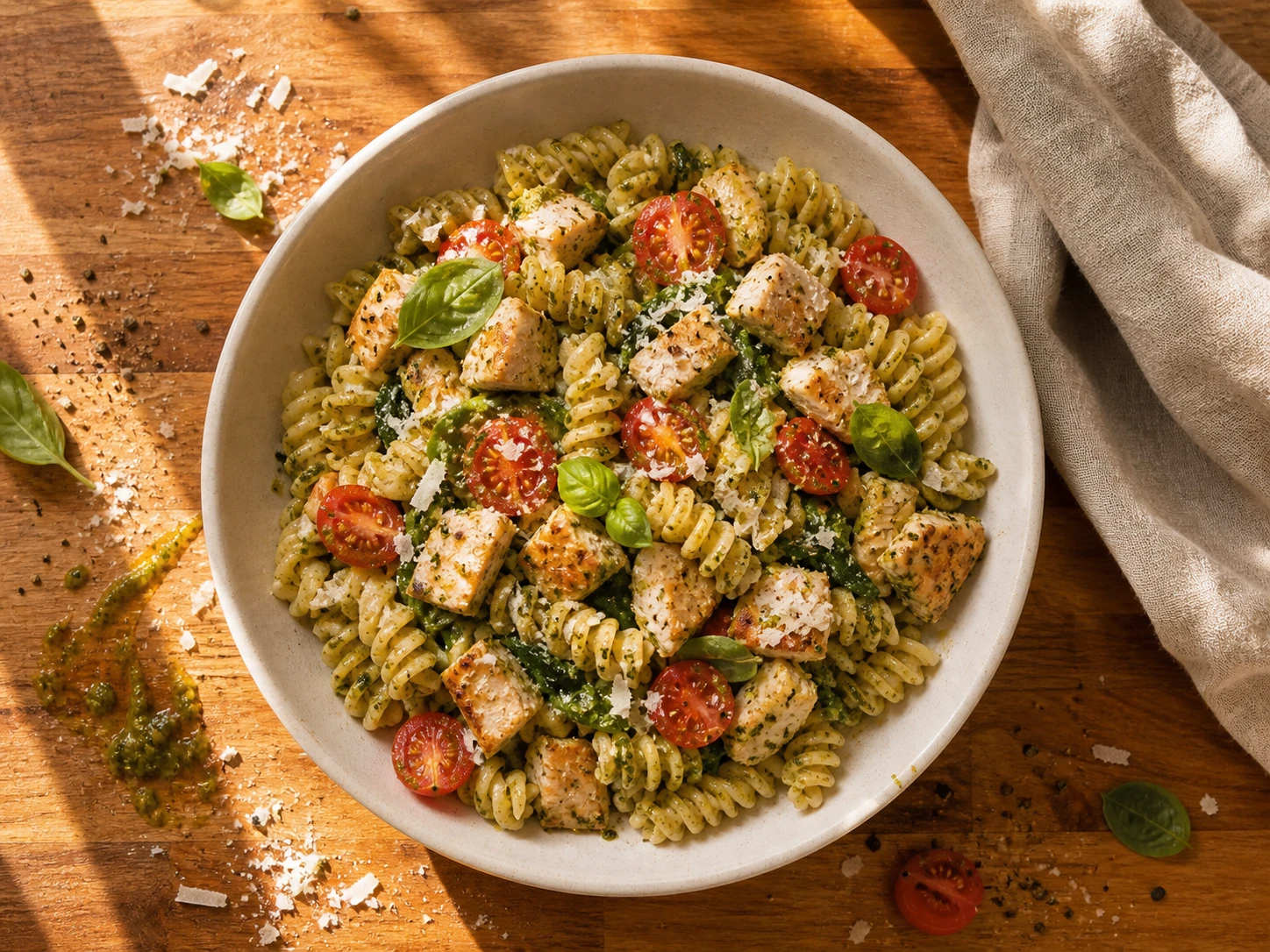
Chicken Pesto Protein Pasta tosses chickpea pasta with golden chicken, basil pesto, cherry tomatoes, spinach, Parmesan, and fresh basil. Reserved pasta water helps the pesto turn glossy instead of thick. It is fast, filling, and bright, with extra protein from chickpea noodles and chicken in every bowl.
Why You’ll Love This Recipe
This is the kind of pasta that feels comforting but still keeps you full. Chickpea pasta gives the bowl a little more protein and fiber than regular pasta, while cubed chicken makes it feel like a real meal instead of a side dish. Pesto brings big basil flavor without needing a long sauce, and the cherry tomatoes soften just enough to add juicy sweetness. Baby spinach wilts right into the skillet, so you get greens without extra work. The Parmesan and fresh basil finish everything with salty, fresh flavor. It also comes together quickly, which makes it helpful on nights when you want something warm and homemade but do not want a complicated recipe. Those cues make pesto chicken pasta easier for beginners because you can see when the pesto is ready instead of guessing.
What Makes This Recipe Work
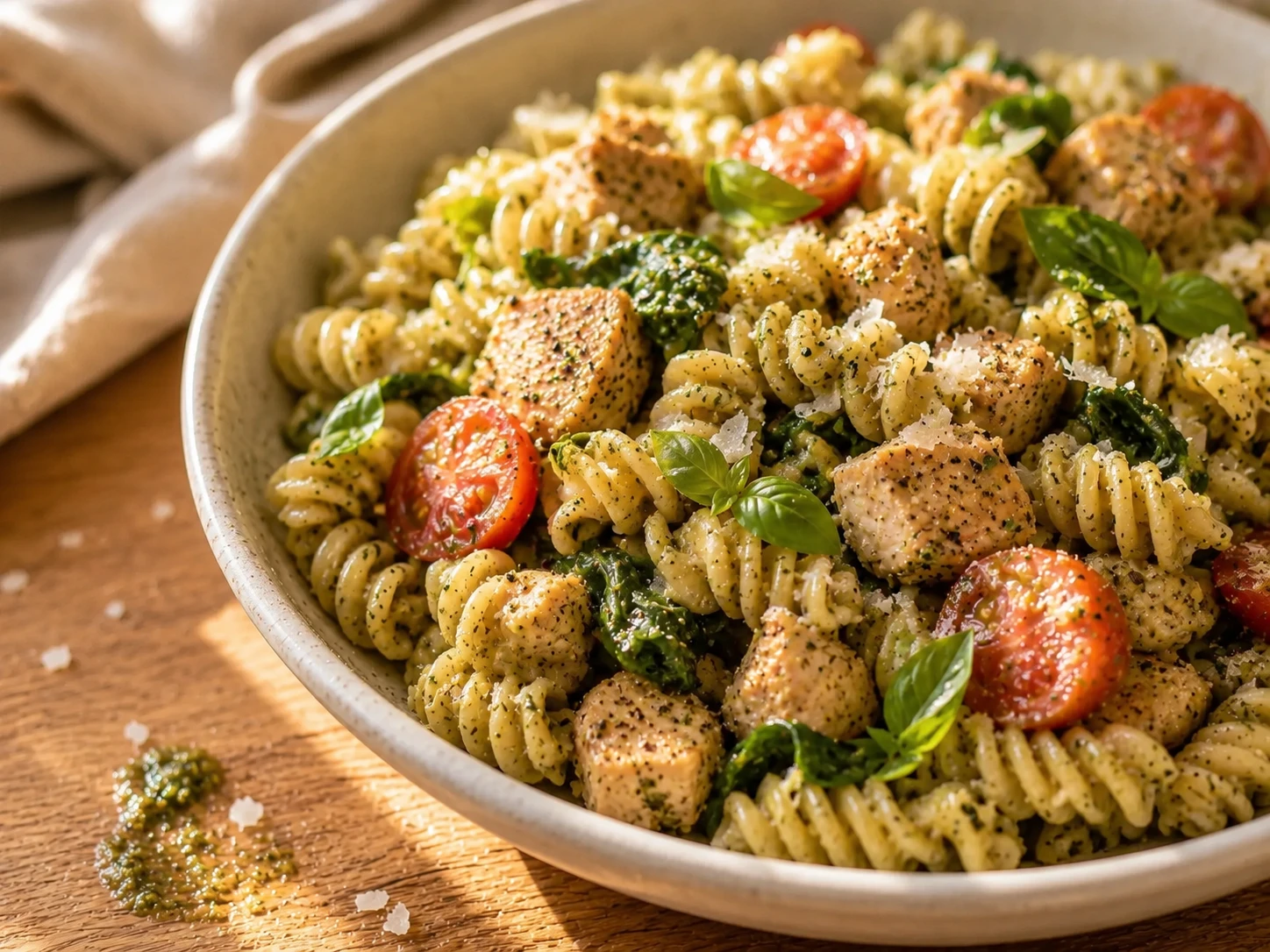
This pasta works because each step protects the texture. Chickpea pasta can thicken and turn sticky faster than regular wheat pasta, so saving some starchy pasta water is important. That water loosens the pesto and helps it coat every piece instead of clumping. The chicken is cooked first in a hot skillet so it gets golden edges and stays juicy inside. Cherry tomatoes and spinach only need a short time in the pan; the tomatoes soften and the spinach wilts without turning watery. Turning the heat off before adding pesto keeps the basil flavor fresh and prevents the sauce from tasting oily or dull. Parmesan and fresh basil go in at the end so they stay bright. That sequence keeps the glossy pesto balanced, so each bite tastes planned rather than thrown together at the last minute.
Before You Start
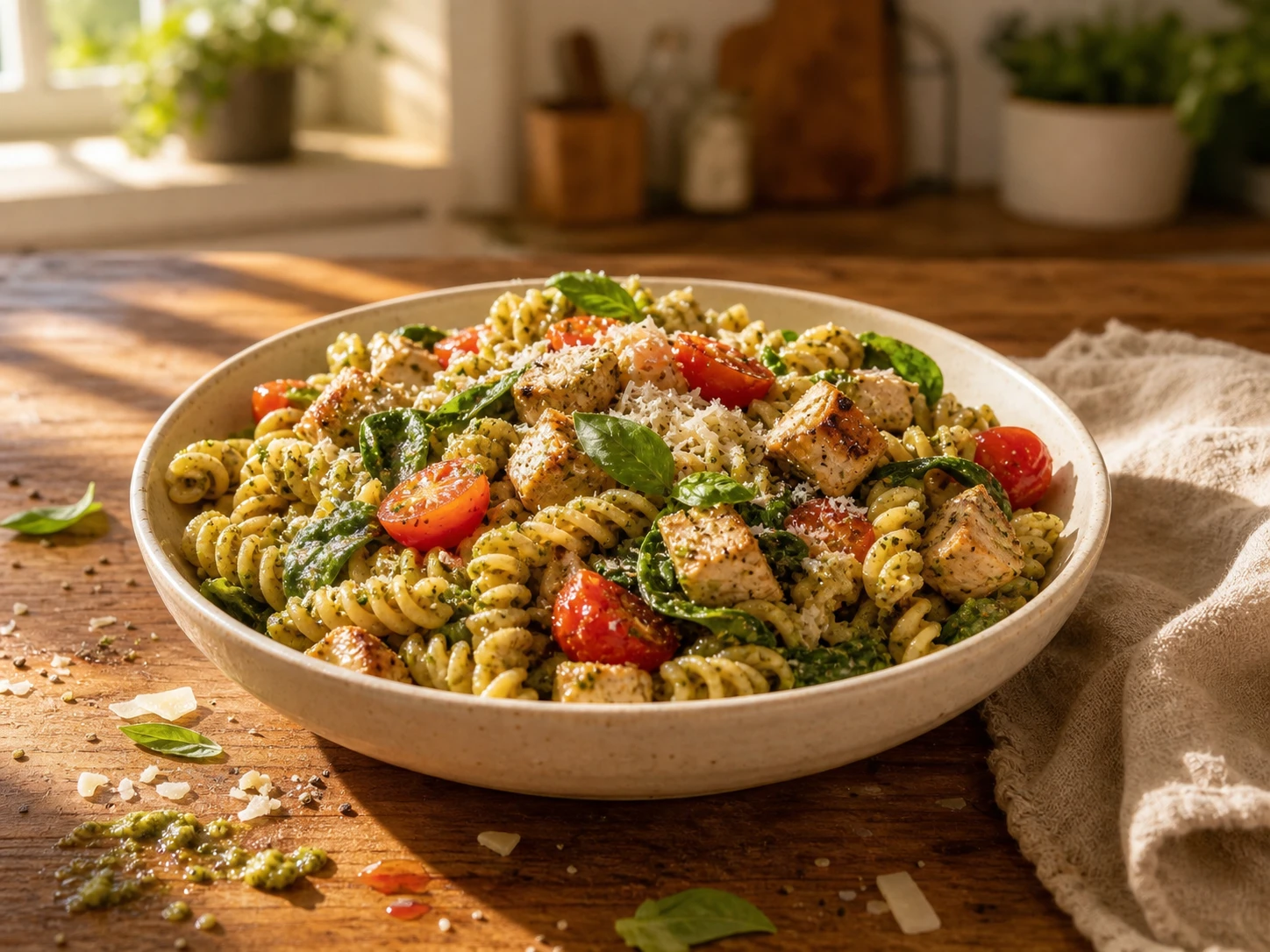
Have the pasta water boiling before you begin the chicken, because chickpea pasta cooks quickly and can over-soften if it sits too long. Pat the chicken cubes dry before seasoning so they brown instead of steaming. Keep the pesto measured, the tomatoes halved, the spinach nearby, and a heatproof cup ready for the pasta water. Once the chicken is cooked, the rest of the skillet moves fast. Do not rinse the drained pasta; the light starch on the outside helps the pesto cling. If your skillet is small, cook the chicken in two batches so the pieces have space to brown. Crowding the pan makes the chicken pale and watery. That setup matters because pesto can change quickly once heat is involved, and beginners need fewer pauses at the stove.
Ingredient Notes & Easy Swaps
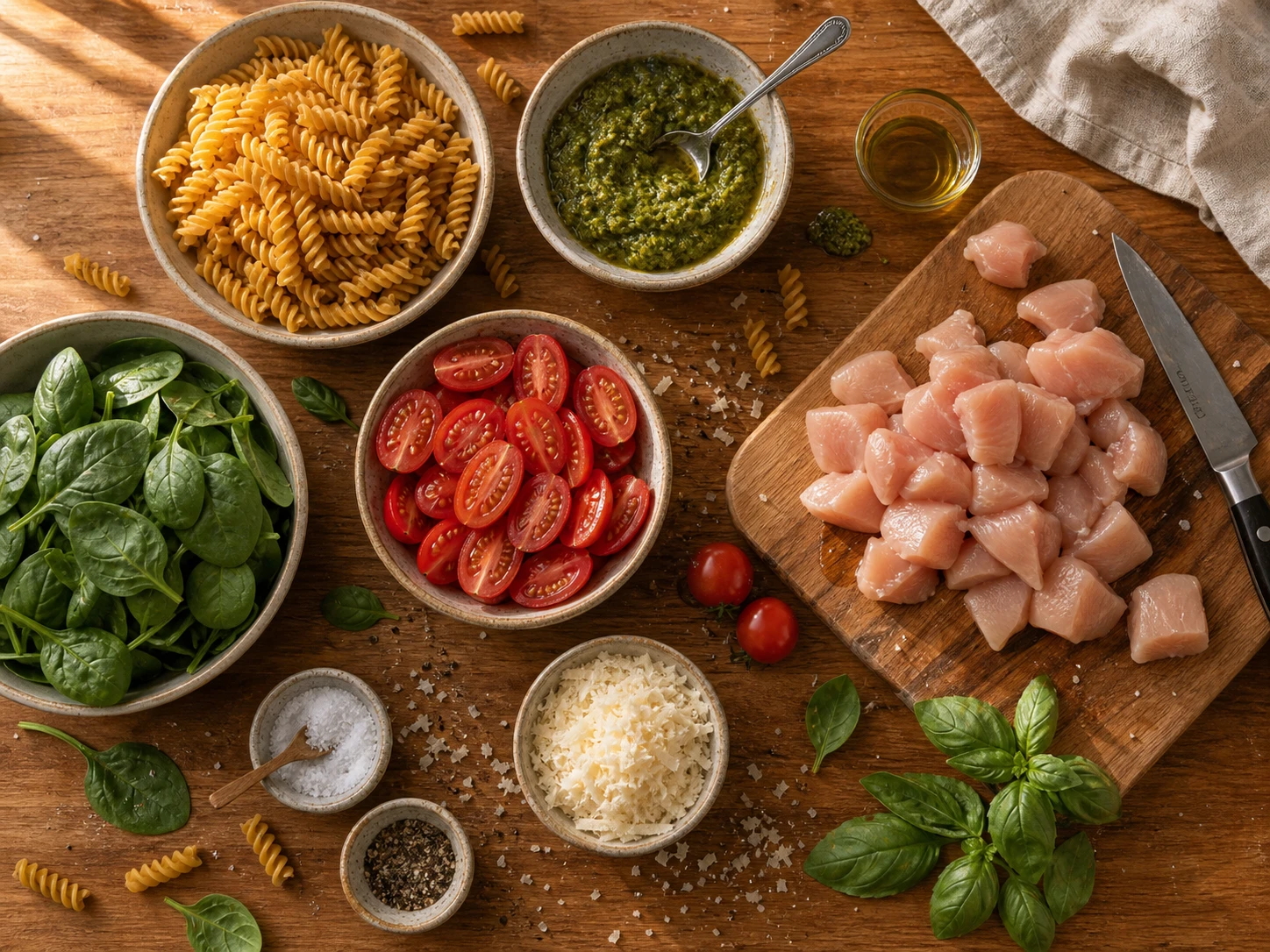
Chickpea pasta: Chickpea pasta adds extra protein and fiber, but it can soften faster than regular pasta. Start checking it early and do not rinse it after draining so the pesto can cling. For a gluten-free meal, check that the box says certified gluten-free, since some chickpea pastas are blended with wheat or made on shared equipment.
Chicken breast: Cut the chicken into even 1-inch cubes so every piece cooks at the same speed, and cook until an instant-read thermometer reads 165°F in each piece. Boneless skinless chicken thighs, cut the same size, give a juicier result; they usually need about 2 to 3 minutes longer and must also reach 165°F.
Olive oil: Olive oil helps the chicken brown and keeps the skillet from drying out. Avocado oil can work too because it handles medium-high heat well.
Basil pesto: Store-bought or homemade pesto both work, but most jarred pesto contains both pine nuts or cashews and Parmesan. For a nut-free version, use a pesto made with sunflower seeds or pumpkin seeds. For a dairy-free version, choose a pesto with no cheese, or blend basil, olive oil, garlic, lemon, and seeds at home. If the pesto looks thick or pasty, loosen it with reserved pasta cooking water instead of adding more oil.
Cherry tomatoes: Halved cherry tomatoes soften quickly and add juicy sweetness. Grape tomatoes can also work.
Baby spinach: Spinach wilts fast, so add it near the end. Baby kale can work too, but it may need another minute to soften.
Parmesan: Parmesan adds salty, nutty flavor. For a dairy-free bowl, you must replace both the Parmesan and the cheese in the pesto: use a dairy-free Parmesan-style topping or 2 tablespoons nutritional yeast, and add an extra teaspoon of olive oil plus a splash of pasta cooking water, since dairy-free toppings do not melt and can leave the sauce drier. Because pesto and Parmesan can both be salty, taste before adding extra salt.
Fresh basil: The 2 tablespoons of torn fresh basil leaves make the bowl taste brighter at the end. Add them off the heat so they stay green and fragrant.
Chicken Pesto Protein Pasta
Description
Chicken Pesto Protein Pasta tosses chickpea pasta with golden chicken, basil pesto, cherry tomatoes, spinach, Parmesan, and fresh basil. Reserved pasta water helps the pesto turn glossy instead of thick. It is fast, filling, and bright, with extra protein from chickpea noodles and chicken in every bowl.
Ingredients
- 10 oz chickpea pasta
- 4 quarts water, for boiling (reserve 1/2 cup before draining)
- 1 tbsp kosher salt, for the pasta water
- 1 lb boneless skinless chicken breast, cut into 1-inch cubes
- 1/8 tsp sea salt, for chicken
- 1/8 tsp black pepper, for chicken
- 1 tbsp olive oil
- 1/3 cup basil pesto
- 1.5 cups cherry tomatoes, halved
- 2 cups baby spinach
- 1/4 cup grated Parmesan
- 2 tbsp torn fresh basil leaves
Instructions
- 1Equipment: a large 6-quart pot, colander, heatproof measuring cup, 12-inch nonstick skillet, wooden spoon, tongs, one cutting board and knife used only for the raw chicken, a second clean cutting board for the tomatoes and basil, a clean plate for the cooked chicken, an instant-read thermometer, paper towels, and serving bowls.
- 2Food safety first: cut the raw chicken on its own board, and keep raw chicken away from the pasta, tomatoes, spinach, and basil. Wash your hands with soap and warm water for 20 seconds after touching raw chicken, and wash the raw-chicken board, knife, and any dish that held raw chicken before they touch cooked food.
- 3Fill the large pot with 4 quarts of water. Set it over high heat and wait for a strong rolling boil, meaning big bubbles keep breaking across the surface even when you stir.
- 4Add 1 tablespoon kosher salt to the boiling water. Add 10 oz chickpea pasta and stir right away so the pieces do not stick together or sink to the bottom.
- 5Cook the chickpea pasta for the time on the package, usually 7 to 9 minutes, until it is tender but still has a small bit of firmness when you bite a piece. Chickpea pasta can soften quickly, so start checking 1 minute early.
- 6About 1 minute before draining, carefully scoop out 1/2 cup pasta cooking water with a heatproof measuring cup. Set it near the stove. Drain the pasta in a colander, but do not rinse it.
- 7While the pasta cooks, pat the 1-inch chicken cubes dry with paper towels. Sprinkle them with 1/8 teaspoon sea salt and 1/8 teaspoon black pepper, then toss so the seasoning touches all sides.
- 8Heat 1 tablespoon olive oil in a 12-inch nonstick skillet over medium-high heat, about 7 out of 10, for about 1 minute. The oil should look shiny and move easily when you tilt the pan.
- 9Add the chicken in a single layer with a little space between pieces. Let it cook without moving for 2 minutes so the bottom can turn golden.
- 10Stir the chicken and cook for 4 to 6 more minutes, turning the pieces every minute or so, so the pale sides touch the hot pan, until the outside is golden and the centers are white with no pink.
- 11Check doneness with the instant-read thermometer. Test the largest cube and two other pieces in their thickest part; every piece must read 165°F. If any piece is lower, cook 1 more minute and check again. Wash the thermometer tip between checks.
- 12Lower the heat to medium-low, about 4 out of 10. Add 1 1/2 cups halved cherry tomatoes and 2 cups baby spinach to the skillet. Stir for 1 to 2 minutes, until the spinach looks dark green and wilted and the tomato skins look slightly wrinkled.
- 13Turn the heat off. Add the drained pasta, 1/3 cup basil pesto, and 2 tablespoons reserved pasta cooking water to the skillet.
- 14Toss gently with tongs for about 1 minute, until every piece of pasta looks glossy and lightly coated in green pesto.
- 15If the sauce looks thick, dry, or pasty, add reserved pasta cooking water 1 tablespoon at a time, tossing after each spoonful, until the pesto looks silky and clings to the pasta.
- 16Sprinkle 1/4 cup grated Parmesan over the pasta. Add 2 tablespoons torn fresh basil leaves, toss once more, and divide into bowls. Serve right away while the sauce is warm and glossy.
Tips and Tricks
- 1
Save 1/2 Cup Pasta Water: Save 1/2 cup pasta water before draining, even if the pesto looks loose in the jar. Chickpea pasta can make sauces feel thick quickly, and the starchy water helps the pesto spread into a glossy coating instead of sitting in clumps.
- 2
Give the Chicken Space: Give the chicken space in the skillet so it browns instead of steaming. Browning adds flavor and better texture, while crowded chicken releases liquid and cooks pale. Use two batches if your skillet is small. For pesto chicken pasta, that cue is easier to trust than guessing from the clock.
- 3
Add the Pesto Only: Add the pesto only after the heat is off. Pesto tastes freshest when it is warmed gently by the pasta and chicken, not cooked hard in the skillet. Too much heat can make the basil taste dull and oily. That keeps the glossy pesto texture closer to the tender, glossy bowl you want.
- 4
Reheat Leftovers with a Splash: Reheat leftovers with a splash of water and gentle heat. Chickpea pasta absorbs sauce in the fridge, so adding moisture brings back the silky texture. Stir carefully so the pasta stays intact and the chicken does not dry out. That makes the next serving of pesto chicken pasta taste closer to freshly made.
Nutrition
Serving size: 1 serving (1/4 recipe)
Calories: 490kcal, Protein: 44g, Carbs: 49g, Fat: 19g, Fiber: 8g, Sugar: 4g, Sodium: 600mg.
Nutrition information is an estimate and may vary based on ingredient brands, product sizes, preparation methods, and substitutions. It is not intended as medical or dietary advice.