
Greek Salmon Rice Bowls
 By Better Plate Recipes
Have a recipe from another site? Import it →
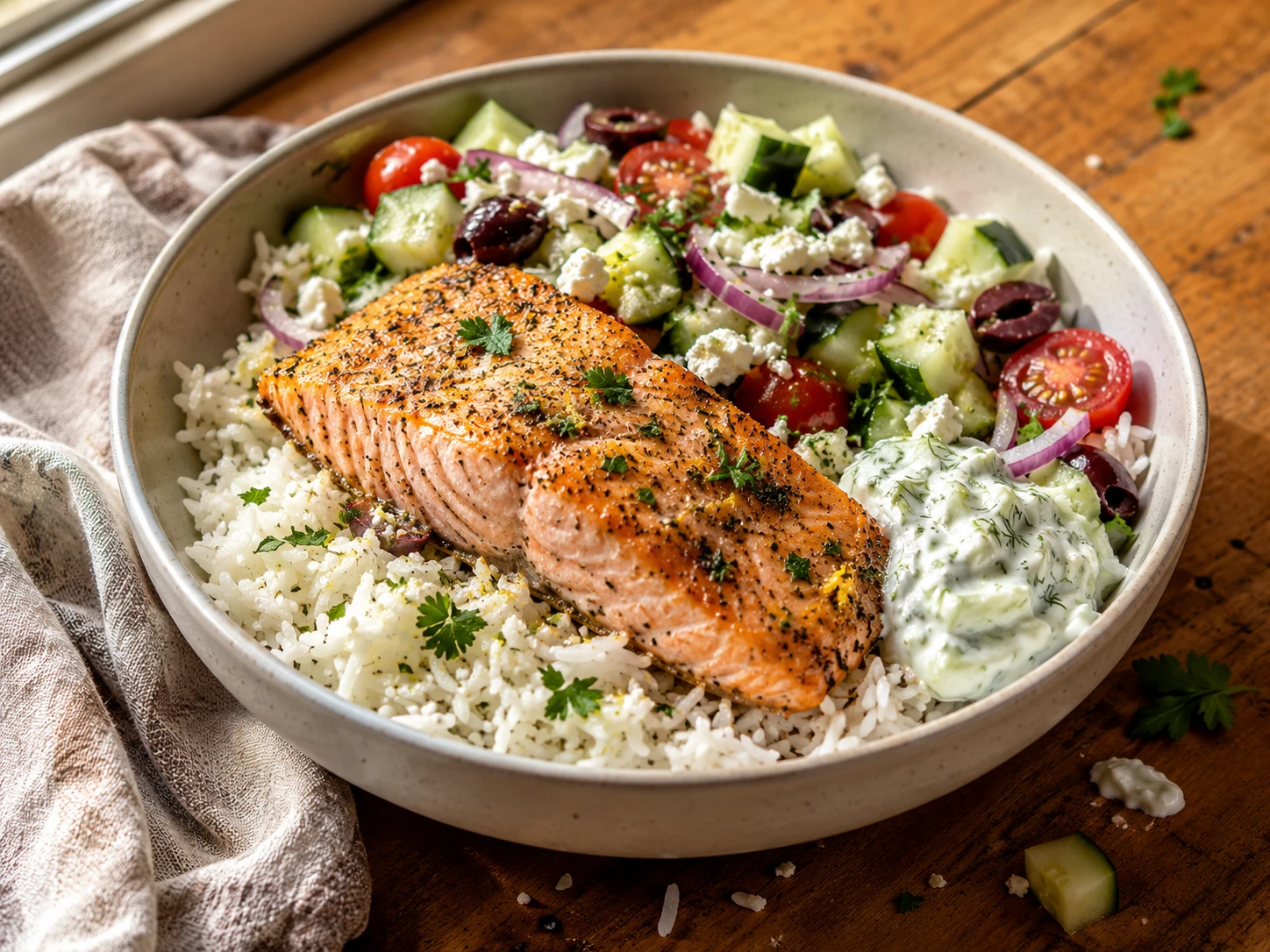
Greek Salmon Rice Bowls serve lemon oregano salmon over lemony rice with cucumber, tomatoes, red onion, Kalamata olives, feta, parsley, and homemade tzatziki. The salmon stays flaky and rich, while the cool vegetables and yogurt sauce make each bowl bright, creamy, briny, fresh, and satisfying.
Why You’ll Love This Recipe
This bowl feels fresh and complete without being complicated. The rice gets lemon zest, lemon juice, and olive oil, giving the base more flavor than plain rice. Salmon cooks quickly in a skillet with oregano, garlic powder, salt, and pepper, then sits over crisp cucumber, juicy tomatoes, sharp red onion, briny olives, and creamy feta. The homemade tzatziki uses grated cucumber, Greek yogurt, garlic, lemon, and dill, so the bowl has a cool sauce that balances the warm salmon. It is filling enough for dinner, but the lemon, herbs, and raw vegetables keep it from feeling heavy. Every bite has something warm, cool, creamy, salty, and bright, which makes the bowl satisfying without needing a heavy dressing. It has the feel of a Greek-style restaurant bowl, but the steps stay simple enough for home cooking.
What Makes This Recipe Work
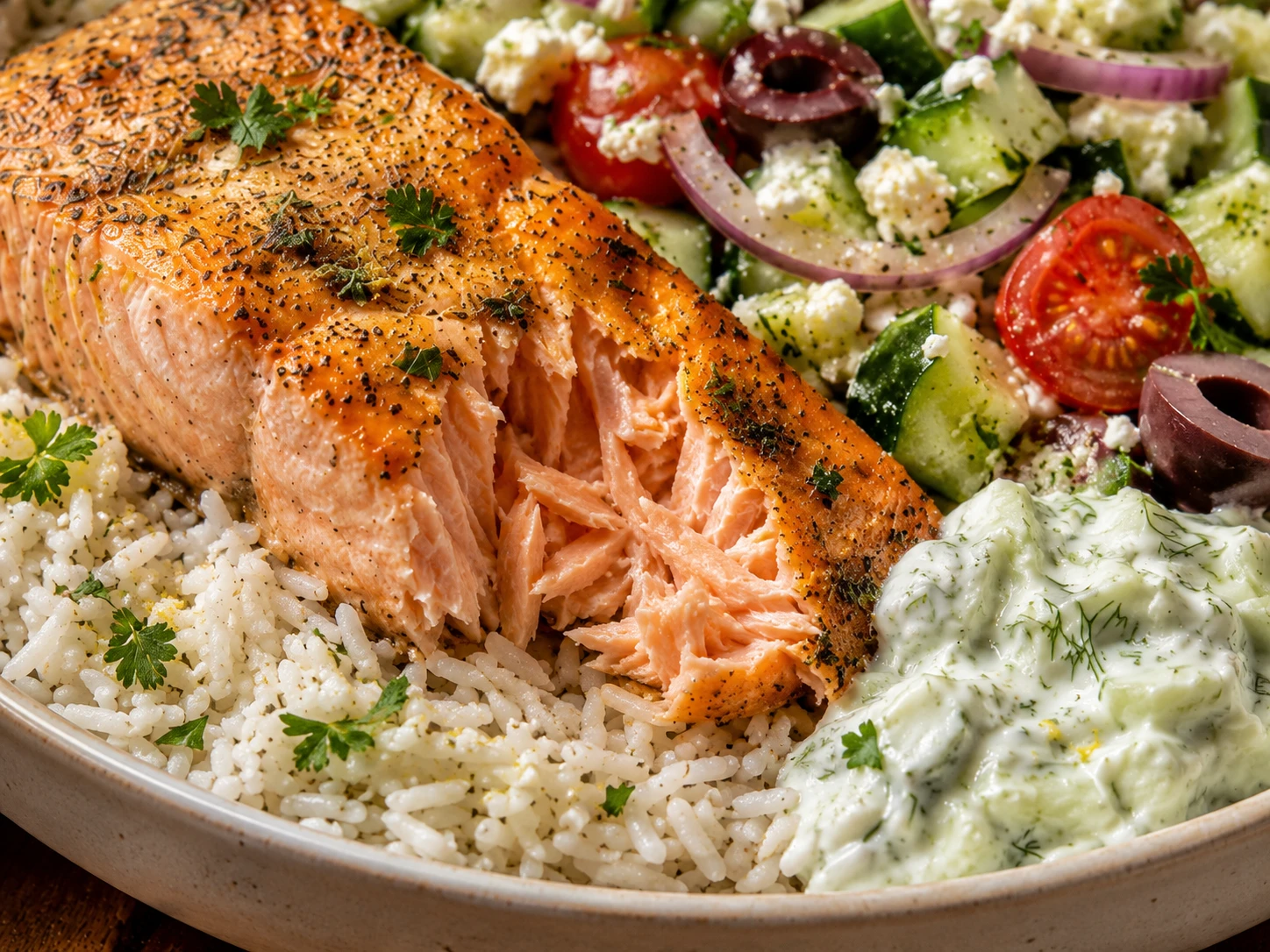
The contrast between warm salmon and cool toppings is the heart of this bowl. Lemon rice gives the salmon a bright base, while cucumber, tomatoes, red onion, olives, and feta bring crunch, juice, sharpness, briny flavor, and creaminess. Patting the salmon dry helps the seasoning stick and gives the fish better color in the skillet. The grated cucumber in the tzatziki must be squeezed dry so the yogurt sauce stays thick instead of watery. That sauce is important because it cools the salmon and ties the rice and vegetables together. Parsley goes on at the end for freshness, and the feta should stay in crumbles so each bite gets a salty pop. The bowl works because nothing is fighting for attention; each part balances the next, from rich fish to crisp vegetables.
Before You Start
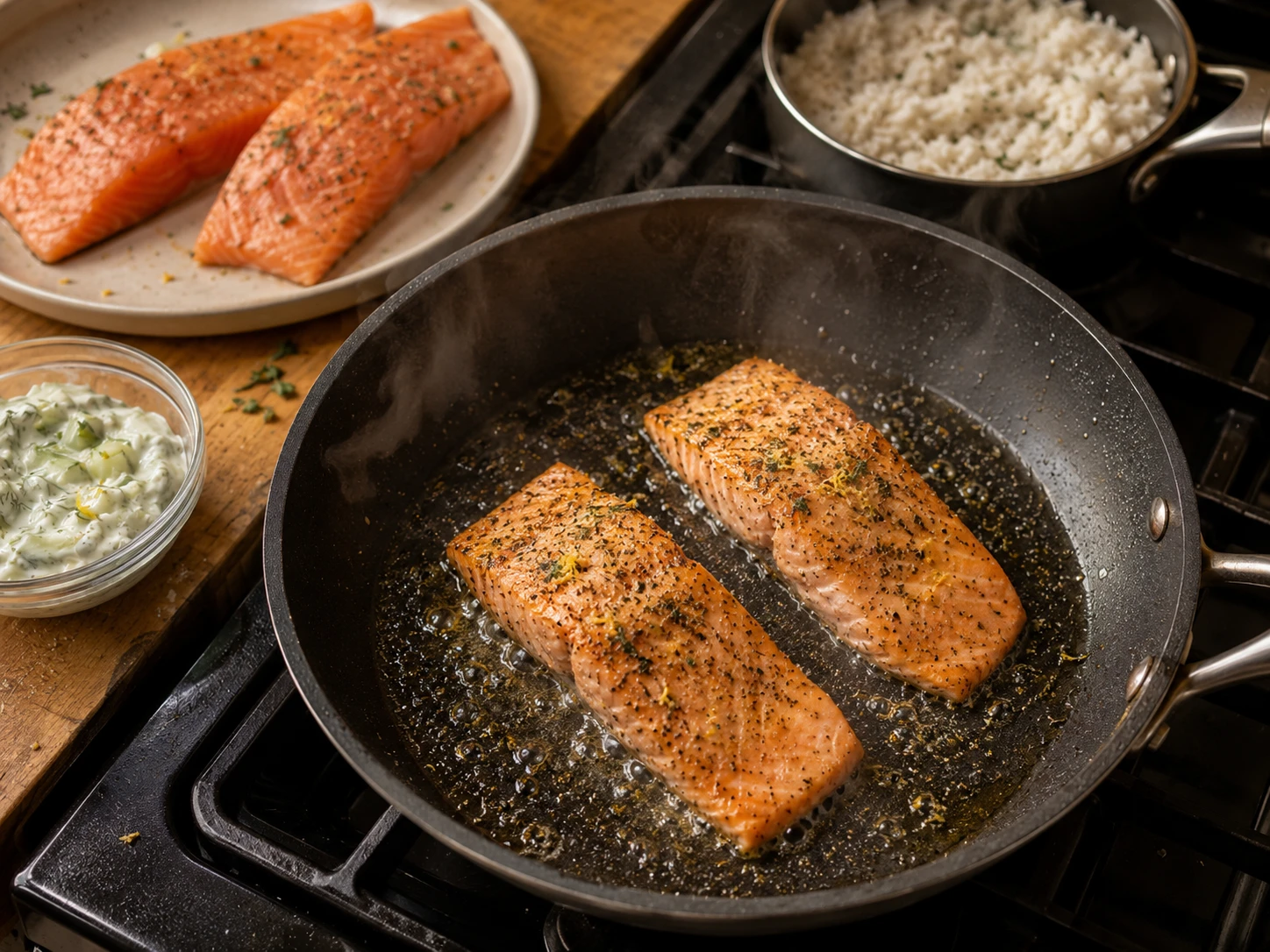
Start the rice first because it needs time to simmer and rest. While it cooks, dice half the cucumber for the bowls and grate the other half for the tzatziki. Squeeze the grated cucumber in a clean towel over the sink until it feels much drier. Pat the salmon fillets dry before adding the olive oil and seasonings. Heat the skillet before the fish goes in, then leave the salmon alone for the first few minutes so it can form a good surface. Have a thin spatula ready for flipping, because salmon can break if handled roughly. Keep the toppings ready before the fish finishes so the salmon can go into the bowls while it is still hot and flaky. If the red onion is sharp, slice it thin so it does not overpower the bowl.
Ingredient Notes & Easy Swaps
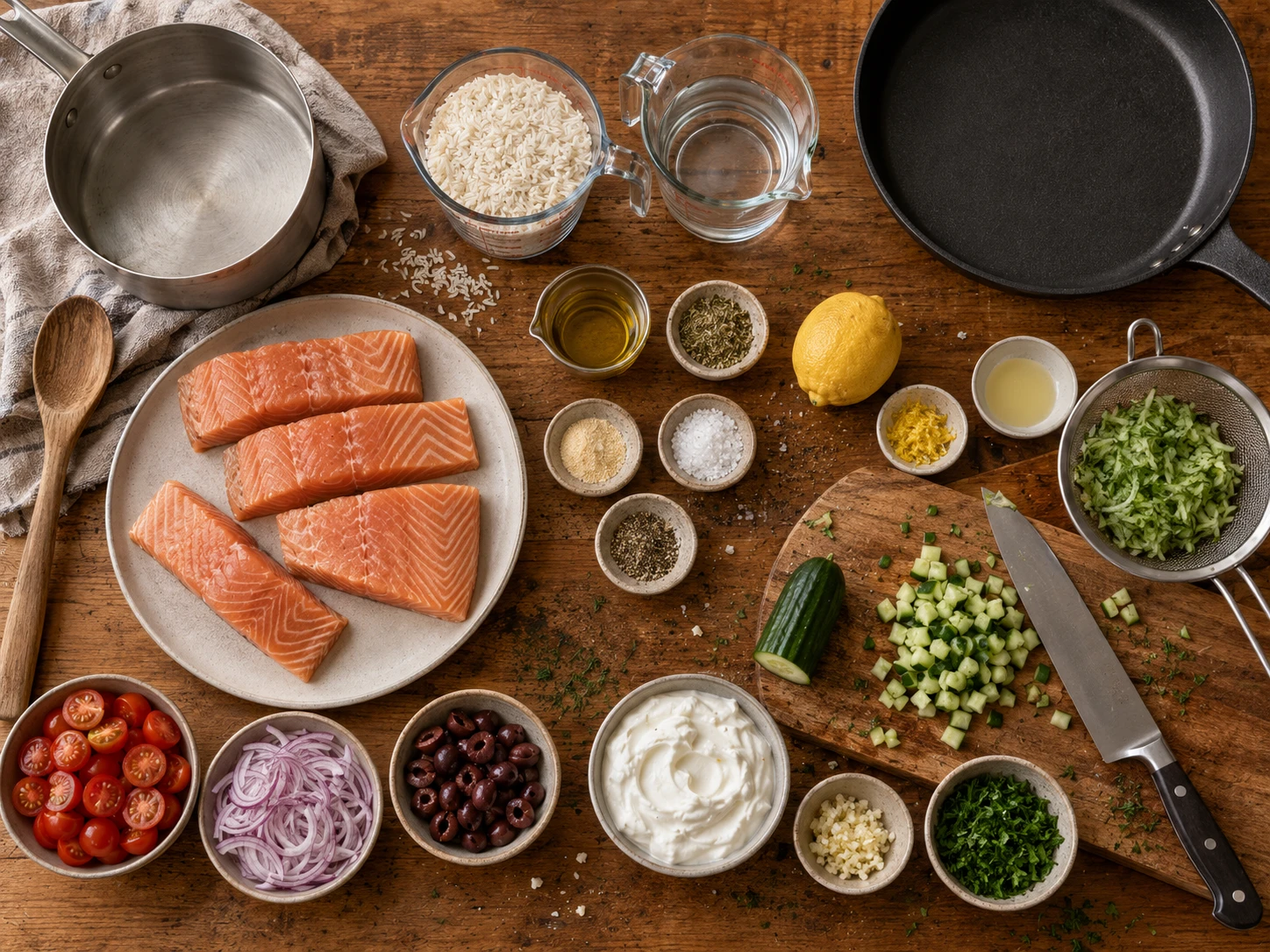
Salmon fillets: Salmon stays rich and flaky when it is not overcooked. Pat the fillets dry before seasoning so they brown better in the skillet.
Long grain white rice: This recipe uses dry rice cooked with water, then seasoned with lemon, olive oil, and zest. Jasmine rice, brown rice, or quinoa can also work if you follow their cooking times.
Olive oil, oregano, and garlic powder: These create a simple Greek-style seasoning for the salmon. Smoked paprika can be added if you want a slightly deeper flavor.
Lemon zest and lemon juice: Lemon brightens both the rice and the yogurt sauce. Zest the lemon before cutting it so it is easier to handle.
Cucumber: Half of the cucumber is diced for the bowl, and half is grated for the tzatziki. Squeeze the grated cucumber well so the sauce does not turn watery.
Tomatoes, red onion, and Kalamata olives: These toppings add freshness, crunch, and briny flavor. Use less onion or soak it briefly in cold water if you want a milder bite.
Greek yogurt, garlic, and dill: These make the homemade tzatziki creamy, tangy, and fresh. Dried dill works if fresh dill is not available.
Feta and parsley: Feta adds salty creaminess, while parsley finishes the bowl with freshness. Add them at the end so they stay bright and flavorful.
Greek Salmon Rice Bowls
Description
Greek Salmon Rice Bowls serve lemon oregano salmon over lemony rice with cucumber, tomatoes, red onion, Kalamata olives, feta, parsley, and homemade tzatziki. The salmon stays flaky and rich, while the cool vegetables and yogurt sauce make each bowl bright, creamy, briny, fresh, and satisfying.
Ingredients
- 4 salmon fillets (about 6 oz each)
- 1 cup long grain white rice
- 2 cups water
- 3 tbsp olive oil, divided
- 2 tsp dried oregano
- 1 tsp garlic powder
- 3/4 tsp salt, divided
- 1/2 tsp black pepper
- Zest of 1 lemon
- 3 tbsp fresh lemon juice, divided
- 1 English cucumber, half diced and half grated
- 2 cups cherry tomatoes, halved
- 1/2 small red onion, thinly sliced
- 1/2 cup pitted Kalamata olives, halved
- 1/2 cup crumbled feta cheese
- 1 cup plain Greek yogurt
- 1 small garlic clove, minced
- 1 tbsp chopped fresh dill (or 1 tsp dried)
- 2 tbsp chopped fresh parsley
Instructions
- 1Equipment: a medium pot with a tight-fitting lid, a large nonstick skillet, a box grater, a clean kitchen towel, paper towels, 2 small bowls, a fork, a cutting board, a knife, a thin spatula, an instant-read thermometer, measuring cups, measuring spoons, and 4 serving bowls.
- 2Add the rice, water, and 1/4 teaspoon salt to a medium pot with a tight-fitting lid.
- 3Bring to a boil over high heat. Reduce the heat to the lowest setting, cover, and simmer for 15 minutes.
- 4Turn off the heat and let the rice sit covered for 5 minutes.
- 5Fluff the rice with a fork. Stir in 1 tablespoon olive oil, lemon zest, and 1 tablespoon lemon juice.
- 6Pat the salmon fillets dry with paper towels.
- 7In a small bowl, mix 1 tablespoon olive oil, 2 teaspoons oregano, 1 teaspoon garlic powder, 1/4 teaspoon salt, and 1/2 teaspoon black pepper.
- 8Rub the oregano mixture evenly over the top of each salmon fillet.
- 9Heat 1 tablespoon olive oil in a large nonstick skillet over medium-high heat for about 1 minute.
- 10Place the salmon in the pan flesh side down.
- 11Cook without moving for 4 minutes, until the surface is lightly browned and releases more easily.
- 12Flip carefully with a thin spatula.
- 13Cook for 3 to 4 more minutes, until the salmon flakes easily and reaches 145 degrees F in the thickest part on an instant-read thermometer.
- 14While the salmon cooks, grate half the cucumber on the box grater, then squeeze the grated cucumber in a clean kitchen towel over the sink to remove excess water.
- 15In the second small bowl, mix the squeezed grated cucumber, 1 cup Greek yogurt, the minced garlic clove, 2 tablespoons lemon juice, 1 tablespoon chopped fresh dill or 1 teaspoon dried dill, and 1/4 teaspoon salt.
- 16Divide the lemon rice between 4 bowls.
- 17Top with the diced cucumber, cherry tomatoes, red onion, and Kalamata olives.
- 18Add 1 salmon fillet to each bowl.
- 19Spoon the tzatziki over the top, then divide the 1/2 cup crumbled feta and 2 tablespoons chopped fresh parsley evenly among the 4 bowls.
- 20Serve warm.
Tips and Tricks
- 1
Dry the salmon before seasoning. A dry surface helps the oregano garlic mixture stick and helps the fish brown instead of steam. It also makes the fillets easier to flip cleanly and protects the crust. This matters because salmon is delicate and can tear easily.
- 2
Squeeze the grated cucumber for thick tzatziki. Cucumber holds a lot of water, and skipping this step can make the yogurt sauce thin. A thicker sauce sits nicely over the rice and salmon. The extra squeeze is what keeps tzatziki creamy instead of watery.
- 3
Let the salmon cook undisturbed on the first side. Moving it too early can tear the fillet. Wait until the surface has a little color and the fish releases more easily from the skillet. A little patience makes flipping much easier and cleaner.
- 4
Store fresh toppings separately for leftovers. Rice and salmon can be warmed, but cucumber, tomatoes, feta, parsley, and tzatziki taste best cold. Keeping them separate protects the bowl from turning watery or flat. Keep the cold toppings cold so the bowl still tastes fresh the next day.
Nutrition
Per serving — Calories: 630kcal, Protein: 46g, Carbs: 25g, Fat: 37g, Fiber: 3g, Sugar: 6g, Sodium: 740mg.
Nutrition information is an estimate and may vary based on ingredient brands, product sizes, preparation methods, and substitutions. It is not intended as medical or dietary advice.
Recipe Guides
This recipe appears in
44 High-Protein Dinner Ideas
Dinner recipes that reach at least 40 grams of protein per listed serving on their own, without counting optional sides, toppings, or shakes.
Explore high-protein dinners →