
Honey Garlic Chicken Pasta
 By Better Plate Recipes
Have a recipe from another site? Import it →
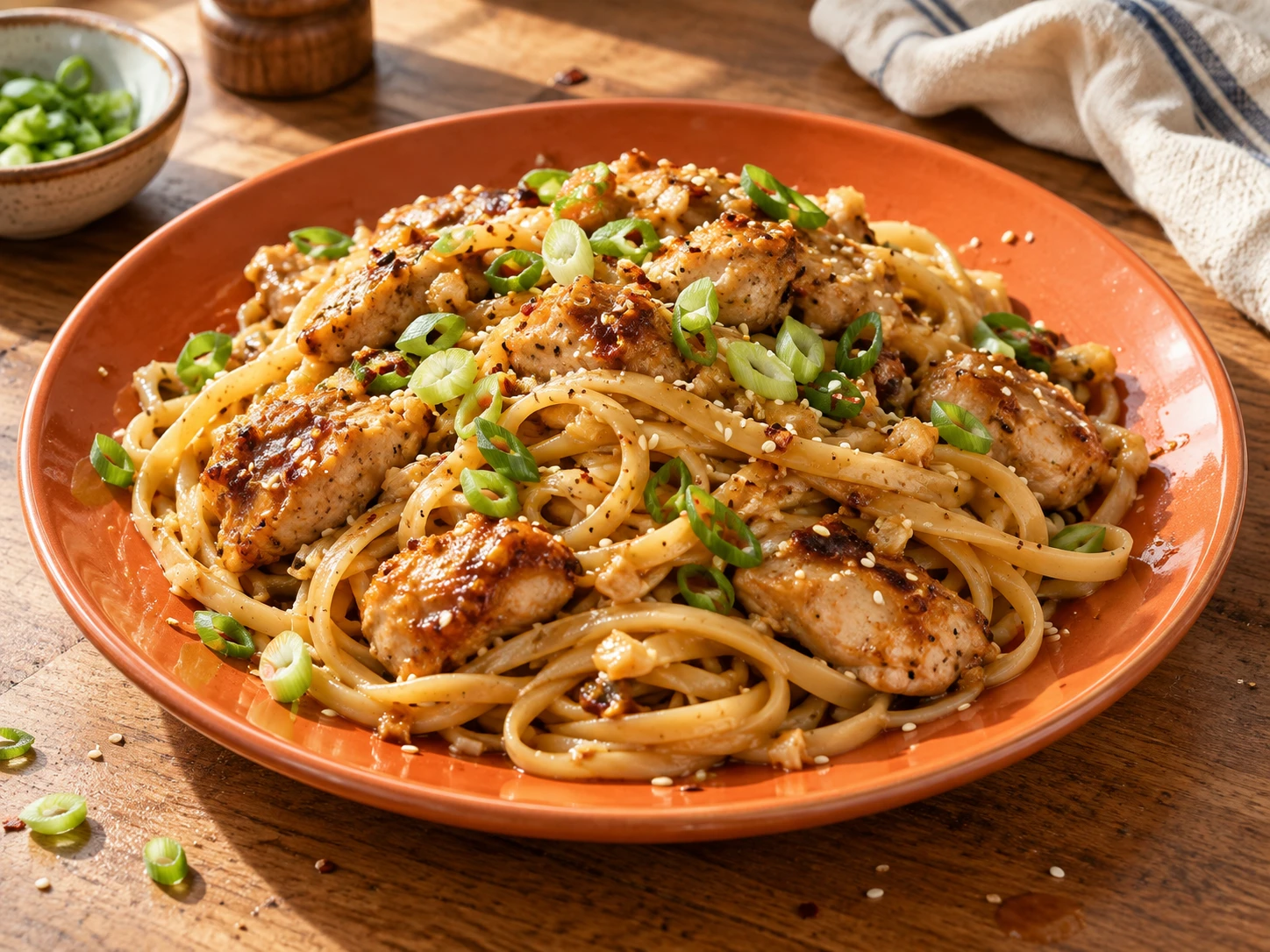
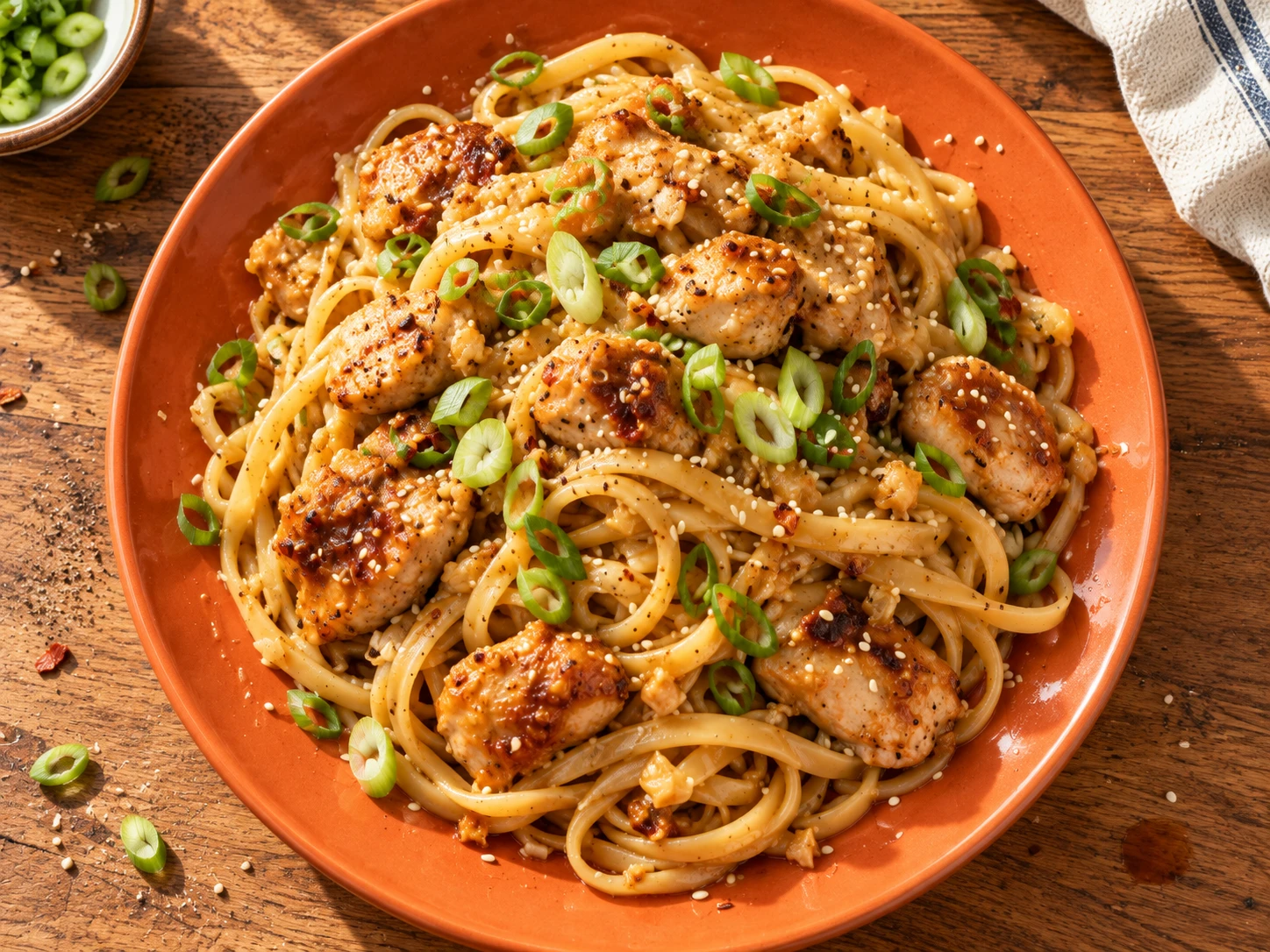
Honey Garlic Chicken Pasta coats spaghetti or linguine with tender chicken thighs in a glossy honey, soy, garlic, and rice-vinegar sauce. Cornstarch helps the sauce cling to each strand, while scallions, sesame seeds, and optional red pepper flakes keep it bright.
Why You’ll Love This Recipe
You will love Honey Garlic Chicken Pasta because it gives you comfort and balance in the same bowl. Chicken thighs stay juicy and the honey garlic sauce gives the pasta a sweet-savory flavor that feels takeout-inspired but homemade. The flavors are familiar enough for a weeknight, but the little details make it feel more special than plain pasta. The sauce turns shiny and lightly sticky, the noodles stay saucy, and scallions add a fresh bite at the end. It is also practical: the sauce ingredients whisk together quickly while the pasta cooks. The instructions walk you through the heat level, timing, and visual cues, so you are not guessing when the protein is cooked or when the sauce is ready. It is the kind of recipe that helps a beginner feel confident while still giving an experienced cook something satisfying to make.
What Makes This Recipe Work
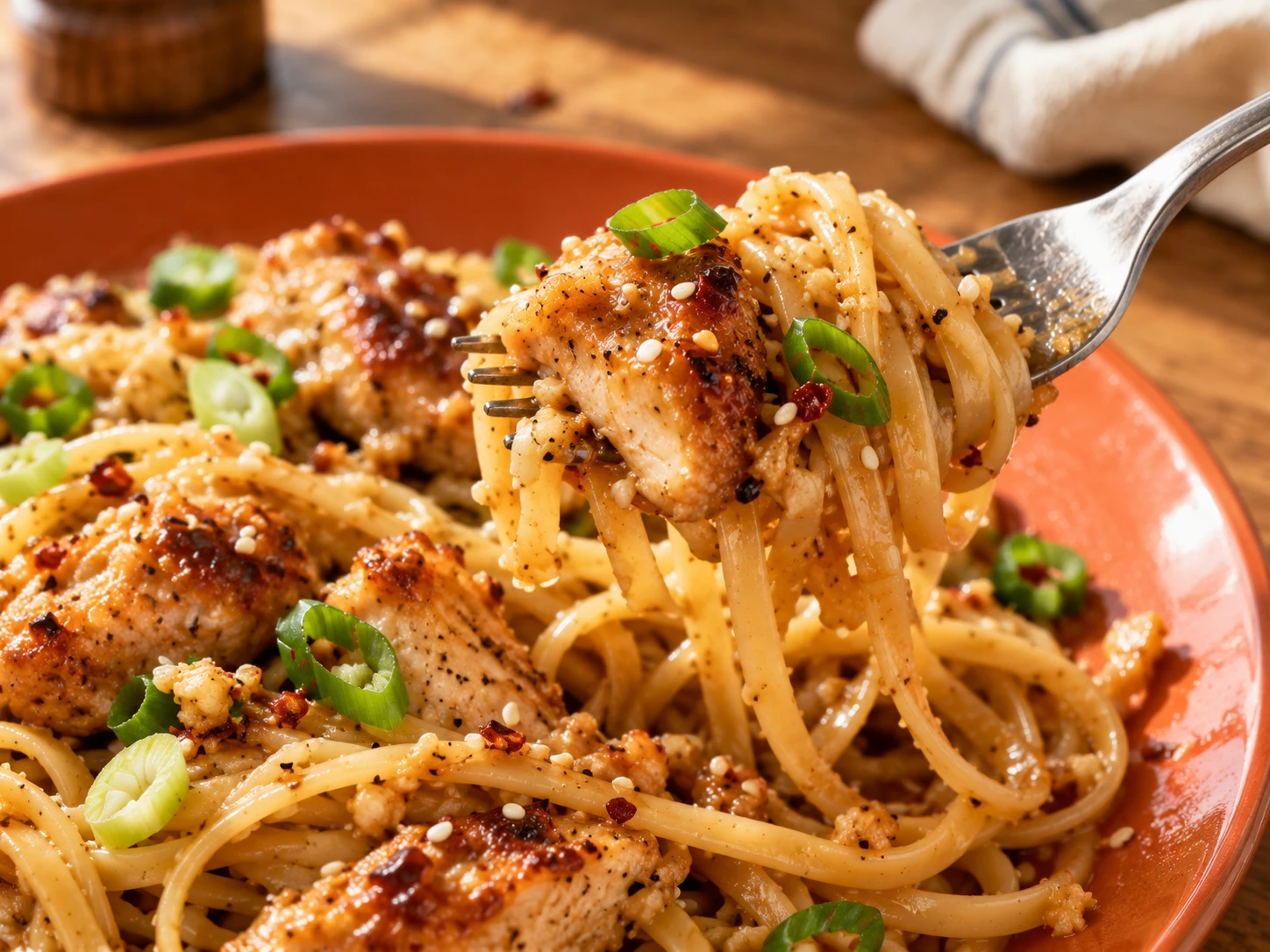
Honey Garlic Chicken Pasta works because the bowl has balance instead of just pasta and sauce. The hearty base (Chicken thighs) gives the meal real staying power. The texture piece (scallions) keeps each bite from feeling one-note, whether it adds freshness, color, tenderness, or a little bite. The sauce layer (Honey, low-sodium soy sauce, rice vinegar, garlic, cornstarch, and pasta water) ties everything together and gives the pasta something flavorful to hold onto. The finish (sesame seeds and optional red pepper flakes) adds the bright, salty, creamy, or herby note that makes the dish taste complete. The trick is not rushing the skillet work. Cooking the main ingredients carefully, warming the aromatics, and loosening the sauce with pasta water all build flavor in small layers. Once you understand those little steps, the recipe feels easy instead of fussy, and the final bowl tastes more intentional than the short cook time suggests.
Before You Start
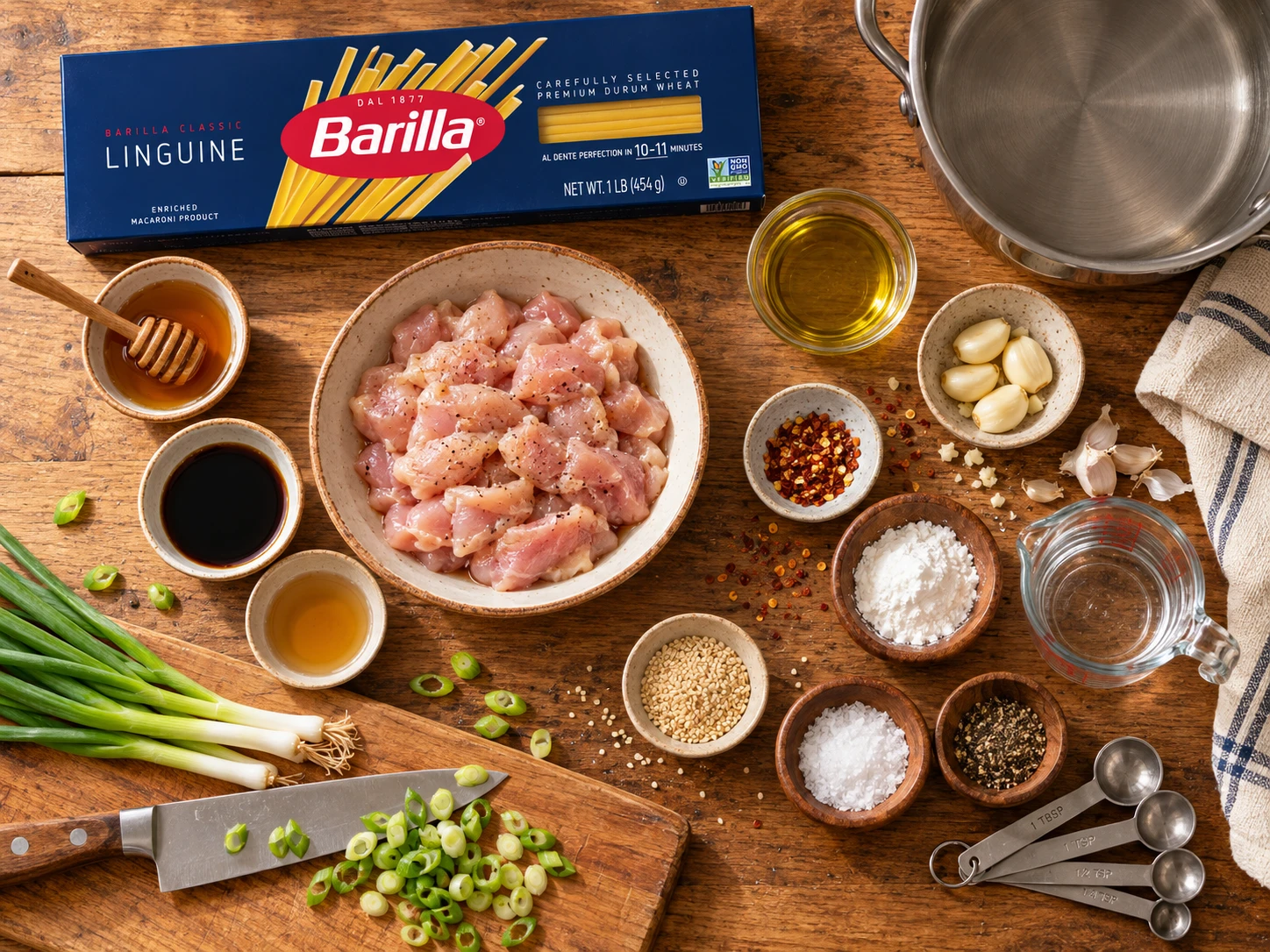
Before you start Honey Garlic Chicken Pasta, take five quiet minutes to set up your station. Put the pasta pot, colander, 12-inch skillet, cutting board, knife, measuring cups, and tongs where you can reach them. Mincing the garlic, slicing the scallions, mixing the cornstarch slurry, and whisking the honey-soy sauce. Keep a heatproof measuring cup beside the stove so you remember to save pasta water before draining. That one habit makes a huge difference because pasta water can loosen a thick sauce without watering down the flavor. Read the steps once, especially the part where the cooked pasta goes back into the skillet. The sauce thickens fast after the cornstarch goes in, so the pasta should already be drained and ready. When everything is ready before the burner turns on, the cooking feels calm and the food comes out cleaner.
Ingredient Notes & Easy Swaps
Spaghetti or linguine: Long strands are the point here, since the glossy glaze wraps around them. Whole wheat versions work and add fiber with a nuttier taste.
Chicken thighs: Thighs stay juicy in a fast, sweet pan sauce and are forgiving if you overshoot by a minute. Trim any large fat pockets and cut even 1-inch pieces. Breast can be used but dries out quickly, so pull it the instant it reads 165°F.
Honey: Real honey is what gives the glaze its shine and body as it reduces. A mild clover or wildflower honey keeps the flavor balanced; a strong buckwheat honey will dominate. Sugar-free syrups do not caramelize and are not a good substitute.
Maple syrup swap: Use the same 1/3 cup of pure maple syrup. Maple is thinner and less viscous than honey, so the sauce will not tighten as readily; either add about 1/2 teaspoon extra cornstarch to the slurry or simmer the sauce roughly 1 minute longer before the pasta goes in. Expect a slightly deeper, less floral sweetness.
Low-sodium soy sauce: Low sodium is important because a quarter cup of regular soy sauce plus salted pasta water makes the dish very salty. Taste before adding anything extra.
Rice vinegar: Two tablespoons cut the honey so the glaze tastes balanced instead of candy-sweet. Use unseasoned rice vinegar; seasoned versions have added sugar and salt. Apple cider vinegar is a workable stand-in.
Garlic: Five cloves sounds like a lot but the sauce is sweet and needs it. Mince fresh and stir only 30 seconds before the liquid goes in, since browned garlic turns bitter in a honey sauce.
Cornstarch slurry: One teaspoon of cornstarch in 2 tablespoons of cold water is what makes the sauce cling instead of pooling. Always mix it with cold liquid; stirring dry cornstarch straight into hot sauce creates instant lumps.
Gluten-free swap: Two ingredients carry gluten, so change both. Use a certified gluten-free spaghetti or linguine, cooked a minute short since it keeps softening in the glaze, and replace the soy sauce with an equal 1/4 cup of tamari, a certified gluten-free soy sauce, or coconut aminos. Coconut aminos are noticeably sweeter and less salty, so add a pinch of salt and taste before serving.
Sesame seeds and scallions: Both go on at the end for texture and freshness. For a sesame-free version, simply leave the sesame seeds out; nothing else in the recipe needs to change, and thinly sliced scallions alone still finish the bowl well.
Honey Garlic Chicken Pasta
Description
Honey Garlic Chicken Pasta coats spaghetti or linguine with tender chicken thighs in a glossy honey, soy, garlic, and rice-vinegar sauce. Cornstarch helps the sauce cling to each strand, while scallions, sesame seeds, and optional red pepper flakes keep it bright.
Ingredients
- 10 oz spaghetti or linguine
- 4 quarts water
- 1 tbsp kosher salt, for pasta water
- 1 1/4 lb boneless skinless chicken thighs, cut into 1-inch pieces
- 1 tbsp olive oil
- 5 garlic cloves, minced
- 1/3 cup honey
- 1/4 cup low-sodium soy sauce
- 2 tbsp rice vinegar
- 1/2 tsp red pepper flakes (optional)
- 1 tsp cornstarch mixed with 2 tbsp water
- 2 scallions, thinly sliced
- 1 tsp sesame seeds
- 1/2 tsp sea salt
- 1/2 tsp black pepper
Instructions
- 1Equipment: a 6-quart pot, colander, heatproof measuring cup, 12-inch skillet, a small bowl for the slurry and sauce, whisk, tongs, paper towels, an instant-read thermometer, a separate cutting board and knife reserved for the raw chicken, a clean plate for the cooked chicken, and 4 bowls.
- 2Pour 4 quarts water into the pot and bring it to a strong rolling boil over high heat. Add 1 tablespoon kosher salt, then add 10 oz spaghetti or linguine and stir once right away so the strands do not clump.
- 3Cook the pasta for the time on the package, stirring once or twice, until tender with a small firm bite. Scoop out 1 cup cloudy pasta water before draining, then drain and do not rinse.
- 4On the board reserved for raw chicken, cut 1 1/4 lb boneless skinless chicken thighs into 1-inch pieces and pat them very dry. Season with 1/2 teaspoon sea salt and the full 1/2 teaspoon black pepper, tossing to coat every side. Wash your hands, the board, and the knife with hot soapy water before touching anything else.
- 5In the small bowl, whisk 1/3 cup honey, 1/4 cup low-sodium soy sauce, 2 tablespoons rice vinegar, 1/2 teaspoon red pepper flakes if using, and the cornstarch stirred into 2 tablespoons water. Whisk until completely smooth with no white lumps; any lump left now will show up as a gluey speck in the finished sauce.
- 6Heat 1 tablespoon olive oil in the skillet over medium-high heat, about 7 out of 10, until it is hot and moves easily around the pan. Add the chicken in one layer with space between the pieces and cook in two batches if the pan looks crowded, since a packed pan traps steam and the chicken turns grey instead of golden.
- 7Let the chicken sit undisturbed 2 minutes, then cook 4 to 5 minutes more, turning every minute or two, until an instant-read thermometer in the thickest piece reads 165°F. Do not judge by color alone. Move the chicken to a clean plate.
- 8Lower the heat to medium. Add 5 minced garlic cloves and stir 30 seconds, just until you can smell it. Whisk the sauce once more to re-suspend the cornstarch, pour it in, and stir constantly for 1 to 2 minutes. Watch it closely: it thickens all at once, going from thin to glossy enough to coat a spoon in a matter of seconds.
- 9Add the drained pasta and the cooked chicken and toss 1 minute so every strand is coated. If the sauce has tightened and is dragging rather than sliding, loosen it with reserved pasta water 1 tablespoon at a time before you keep tossing, so the noodles look shiny instead of sticky.
- 10Turn off the heat, add 2 thinly sliced scallions and 1 teaspoon sesame seeds, toss once more, and serve right away in 4 bowls while the glaze is warm.
Tips and Tricks
- 1
Whisk the Slurry Completely Smooth: Stir the cornstarch into its 2 tablespoons of water until no white settles at the bottom, then whisk it into the honey-soy mixture. Cornstarch sinks within a minute, so give the bowl one more whisk right before it goes into the pan or you will get gluey specks.
- 2
Give the Chicken Room: A 12-inch skillet holds about a pound of thigh pieces in a single layer. Beyond that they steam in their own moisture and never brown, and browning is where most of this dish's savory depth comes from. Two quick batches beat one crowded one.
- 3
Watch the Sauce as It Thickens: Cornstarch sets the instant it reaches a simmer, so the glaze goes from watery to spoon-coating in seconds. Stay at the pan, stir constantly, and pull it off the heat as soon as it turns glossy rather than waiting for it to look thicker.
- 4
Loosen the Glaze Before You Toss: If the sauce has tightened while the chicken rested, add reserved pasta water a tablespoon at a time before the noodles go in. Trying to toss dry pasta into a stiff glaze coats the first few strands and leaves the rest bare.
Nutrition
Serving size: 1 serving (1/4 recipe)
Calories: 545kcal, Protein: 38g, Carbs: 79g, Fat: 14g, Fiber: 4g, Sugar: 22g, Sodium: 1020mg.
Nutrition information is an estimate and may vary based on ingredient brands, product sizes, preparation methods, and substitutions. It is not intended as medical or dietary advice.