
Honey Garlic Salmon
 By Better Plate Recipes
Have a recipe from another site? Import it →
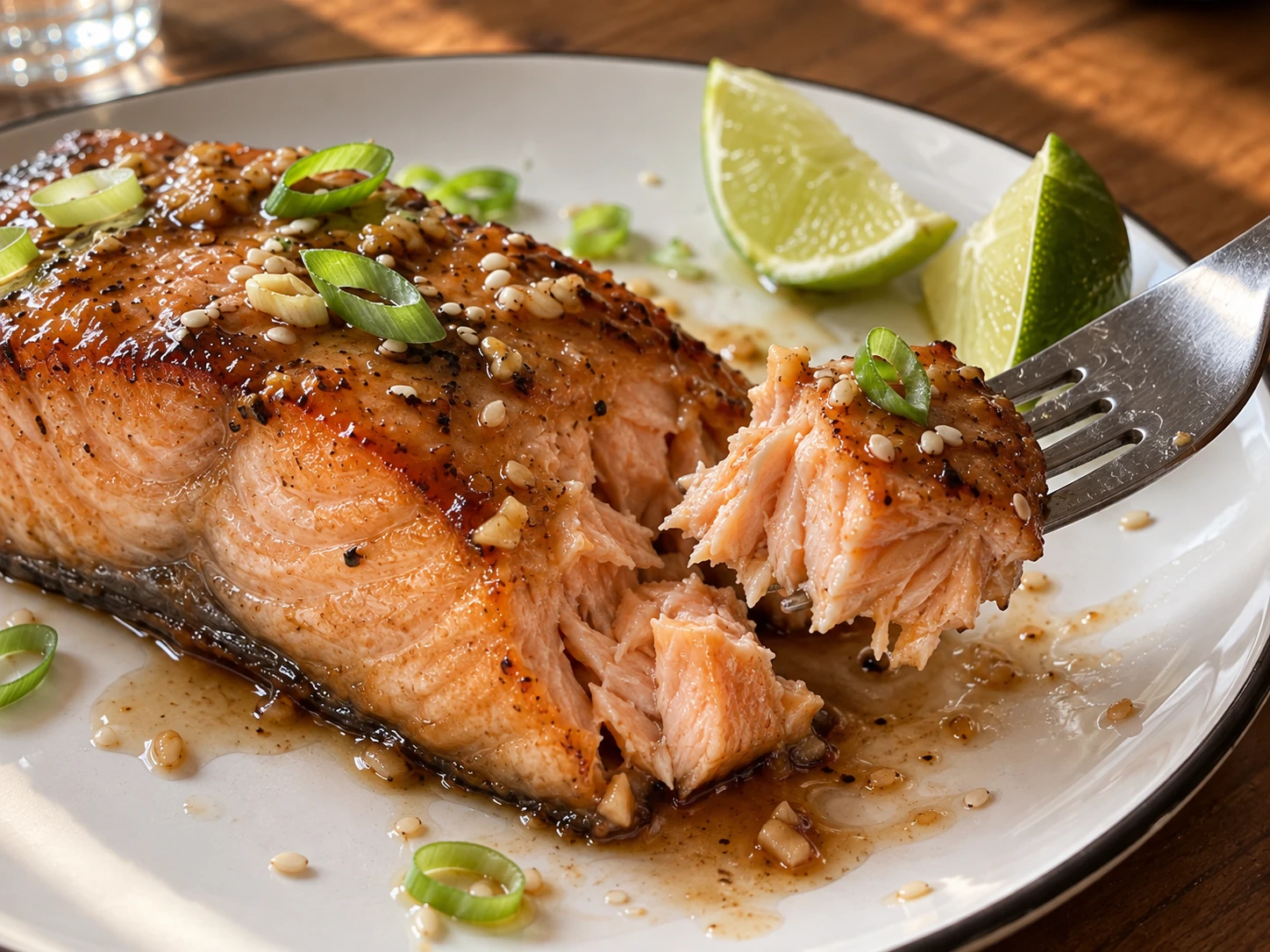
Honey Garlic Salmon is a quick skillet dinner with tender salmon, honey, low sodium soy sauce or coconut aminos, garlic, ginger, rice vinegar, sesame seeds, scallions, and lime. The glaze turns sticky and glossy while the salmon stays flaky, rich, and tender inside for a quick dinner.
Why You’ll Love This Recipe
This salmon tastes special but cooks quickly enough for a weeknight. The honey gives the glaze shine and a gentle sweetness, while soy sauce or coconut aminos adds savory depth. Garlic and ginger make it warm and fragrant, and rice vinegar keeps the sauce from tasting too sweet. The salmon starts skin side down so the skin can crisp while the flesh cooks gently. At the end, a small amount of clean reserved glaze bubbles around the fish and turns glossy. Sesame seeds, scallions, and lime make the finished plate feel fresh, bright, and a little restaurant-style without much work. You also get easy visual cues as you cook: crisping skin, opaque salmon, and a bubbling glaze, which makes this recipe friendly even if salmon feels intimidating.
What Makes This Recipe Work
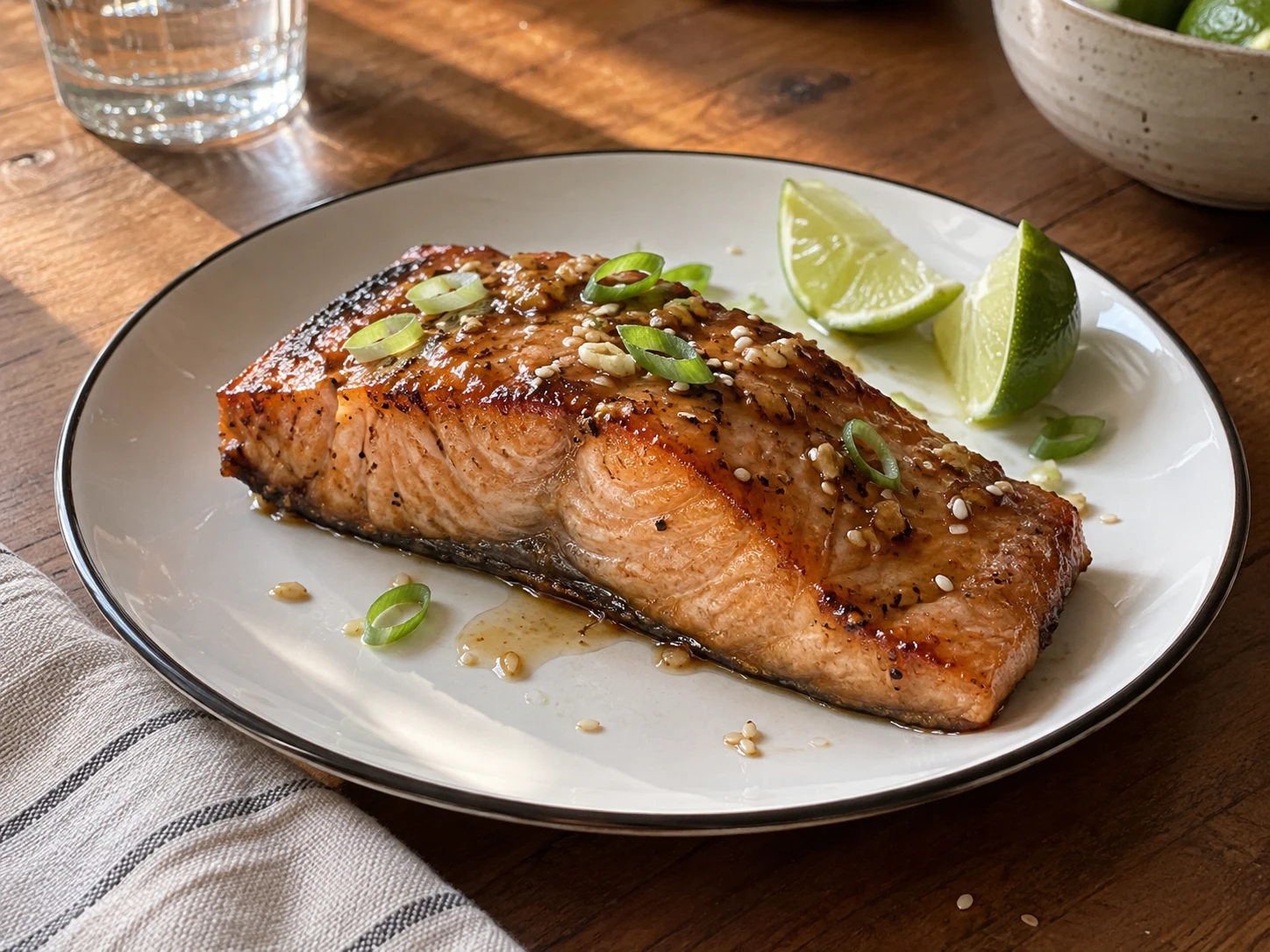
The glaze works because it has balance. Honey gives the sauce body, shine, and sweetness, while soy sauce or coconut aminos brings the salty-savory flavor salmon needs. Garlic and ginger add depth, and rice vinegar gives the glaze a small tangy lift. Salmon is naturally rich, so that little bit of vinegar and the lime at the end matter. Starting skin side down helps protect the fish and gives the skin time to crisp. Saving 2 tablespoons of sauce before it touches the fish gives you a clean finishing glaze. That final minute in the pan makes the salmon look glossy without overcooking the fillets. The method also protects texture, which matters for a healthy dinner. The heartier ingredients get enough heat, while the brighter finishes stay fresh enough to lift the whole plate.
Before You Start
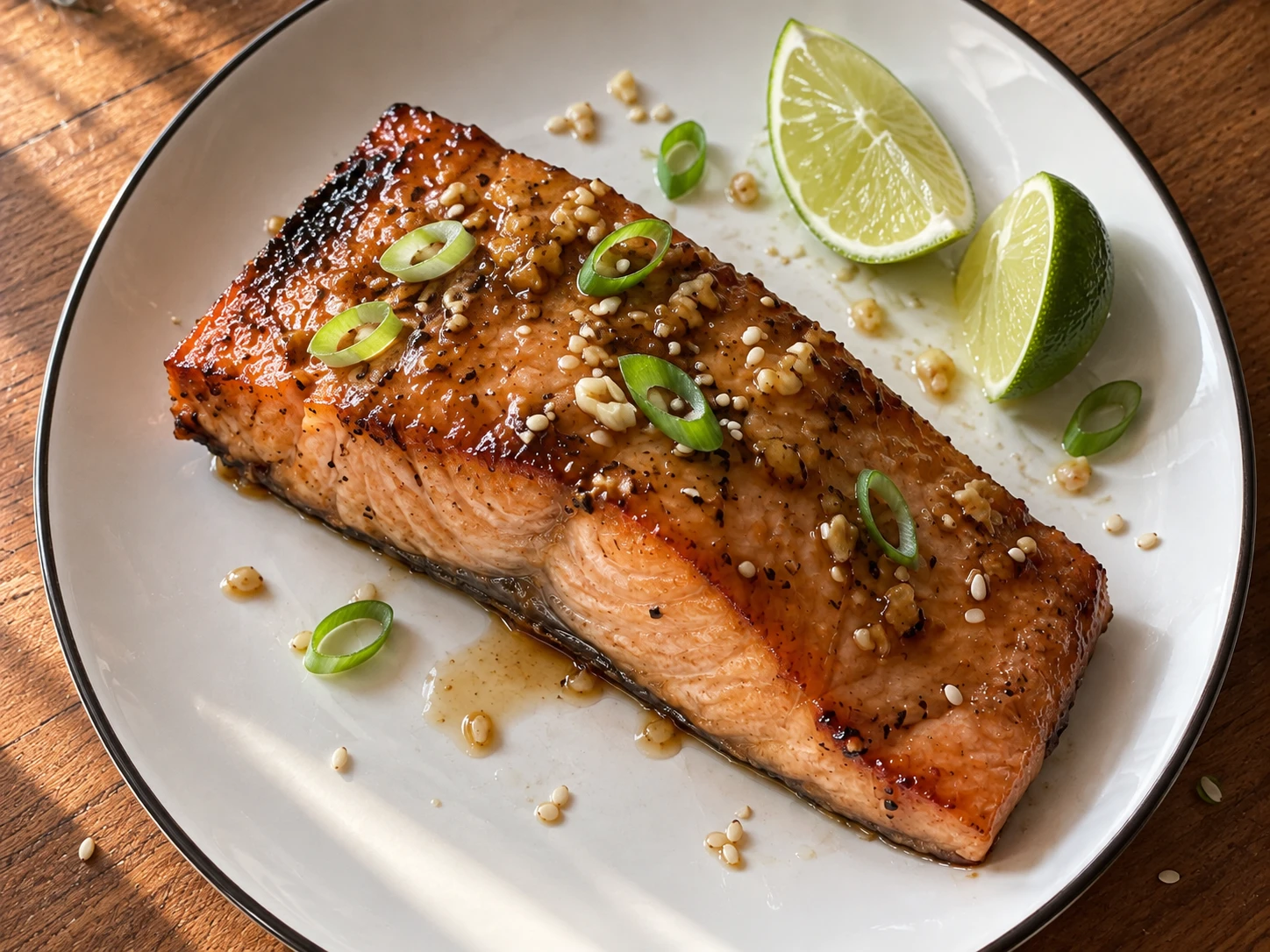
Pat the salmon dry on both sides before adding the glaze. If the surface is wet, the fish can steam instead of sear, and the sauce may slide off. Use a large nonstick skillet or a well-seasoned pan because honey-based glazes can stick. Keep the heat medium-high for the skin side, then lower it to medium after flipping so the honey does not scorch. Have sesame seeds, scallions, and lime wedges ready before the salmon finishes cooking. Once the reserved glaze goes into the skillet, it thickens fast, so this recipe is best served right away. Having the small pieces ready makes the cooking feel smoother. It also prevents overcooking, because you are not stopping mid-recipe to chop, measure, or search for a tool.
Ingredient Notes & Easy Swaps
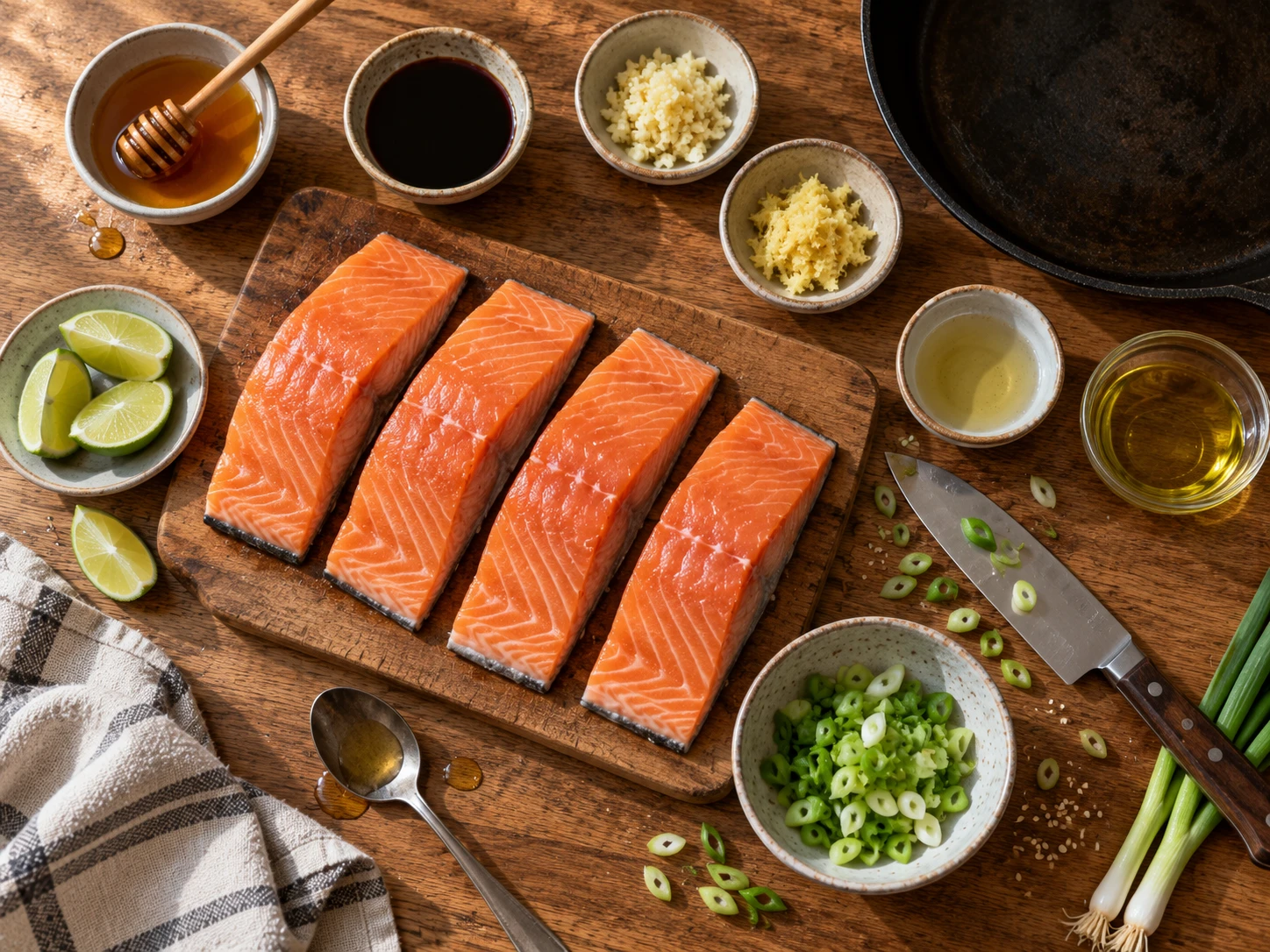
Salmon fillets: Skin-on salmon helps protect the fish while it cooks and can get crisp in the skillet. Pat the salmon dry first so the glaze sticks better.
Honey: Honey gives the glaze its sticky, glossy texture. Maple syrup can work as a swap, but the flavor will be a little less classic.
Low sodium soy sauce or coconut aminos: Low sodium soy sauce keeps the glaze savory without getting too salty. Coconut aminos are a good soy-free option, but they taste slightly sweeter.
Garlic and ginger: Fresh garlic and ginger give the sauce the strongest flavor. If using ground ginger, use only a small pinch because it is more concentrated.
Rice vinegar: Rice vinegar balances the sweetness of the honey. Lime juice can work in a pinch, but it will make the sauce taste brighter and less teriyaki-style.
Olive oil: Olive oil helps the salmon sear without sticking. Avocado oil can also work well for skillet cooking.
Reserved sauce: Keeping 2 tablespoons of clean sauce separate is important because it does not touch raw salmon. Use that clean sauce for the final glaze.
Sesame seeds, scallions, and lime: These are finishing toppings. Add them after cooking so they stay fresh and make the salmon look finished.
Honey Garlic Salmon
Description
Honey Garlic Salmon is a quick skillet dinner with tender salmon, honey, low sodium soy sauce or coconut aminos, garlic, ginger, rice vinegar, sesame seeds, scallions, and lime. The glaze turns sticky and glossy while the salmon stays flaky, rich, and tender inside for a quick dinner.
Ingredients
- 4 salmon fillets, skin on (about 6 oz each)
- 3 tbsp honey
- 3 tbsp low sodium soy sauce or coconut aminos
- 4 cloves garlic, minced
- 1 tbsp fresh ginger, grated
- 1 tbsp rice vinegar
- 1 tbsp olive oil
- 1 tsp sesame seeds
- 2 scallions, thinly sliced
- Lime wedges, for serving
Instructions
- 1Set out a large nonstick skillet, a small bowl, a small cup, a whisk, a pastry brush or spoon, paper towels, a cutting board, a knife, measuring cups, measuring spoons, a thin spatula, a meat thermometer, and 4 serving plates.
- 2In a small bowl, whisk together 3 tablespoons honey, 3 tablespoons low sodium soy sauce or coconut aminos, 4 minced garlic cloves, 1 tablespoon grated ginger, and 1 tablespoon rice vinegar until smooth.
- 3Spoon 2 tablespoons of the sauce into a separate clean cup and set it aside for finishing.
- 4Pat the salmon dry on both sides with paper towels. Throw away the paper towels and wash your hands with soap and warm water.
- 5Keep the larger portion of sauce nearby for after flipping. Do not brush it on yet, because honey and garlic burn if they sit against the hot pan.
- 6Heat 1 tablespoon olive oil in a large nonstick skillet over medium-high heat until the oil looks shiny.
- 7Place the salmon skin side down in the skillet.
- 8Cook undisturbed for 4 to 5 minutes, until the skin looks crisp and the sides of the salmon begin turning opaque.
- 9Lower the heat to medium. Flip the salmon carefully with a thin spatula and cook it flesh side down for 2 minutes. Flip it back so the skin side is down again, then spoon the larger portion of sauce over the top of each fillet.
- 10Cook for 1 to 2 minutes more, until the thickest part reaches 145 degrees F and the salmon flakes easily with a fork.
- 11Pour the clean reserved 2 tablespoons sauce into the skillet.
- 12Spoon the bubbling glaze over the salmon for about 1 minute, until it looks thick and glossy.
- 13Turn off the heat and transfer the salmon to serving plates.
- 14Sprinkle with sesame seeds and scallions.
- 15Serve with lime wedges for squeezing over the top.
Tips and Tricks
- 1
Dry the salmon before it goes into the pan. A dry surface helps the skin crisp and keeps the glaze from sliding away. This small step makes the difference between a glossy seared fillet and fish that steams in its own moisture.
- 2
Keep a clean portion of sauce for the end. Spoon it out before brushing the raw salmon so it can safely become the shiny finishing glaze. That last minute of bubbling gives the salmon its sticky, restaurant-style look. It gives you shine without risking raw-fish contamination.
- 3
Lower the heat after flipping. Honey can burn quickly if the pan stays too hot, especially once the glaze touches the skillet. Medium heat gives the salmon time to finish cooking while the sauce thickens without turning bitter. That keeps the glaze sweet and smooth.
- 4
Add lime at the table. The glaze is sweet and savory, and fresh lime cuts through that richness. A small squeeze right before eating makes the salmon taste brighter and keeps the sauce from feeling heavy. It also makes the final bite feel fresher.
Nutrition
Per serving — Calories: 470kcal, Protein: 36g, Carbs: 20g, Fat: 26g, Fiber: 1g, Sugar: 15g, Sodium: 760mg.
Nutrition information is an estimate and may vary based on ingredient brands, product sizes, preparation methods, and substitutions. It is not intended as medical or dietary advice.
Recipe Guides
This recipe appears in
25 Quick 30-Minute Dinners
Dinner recipes with a verified total time of 30 minutes or less, sorted from fastest to slowest so you can cook to the clock.
Explore quick 30-minute dinners →