
Lemon Garlic Salmon Pasta
 By Better Plate Recipes
Have a recipe from another site? Import it →
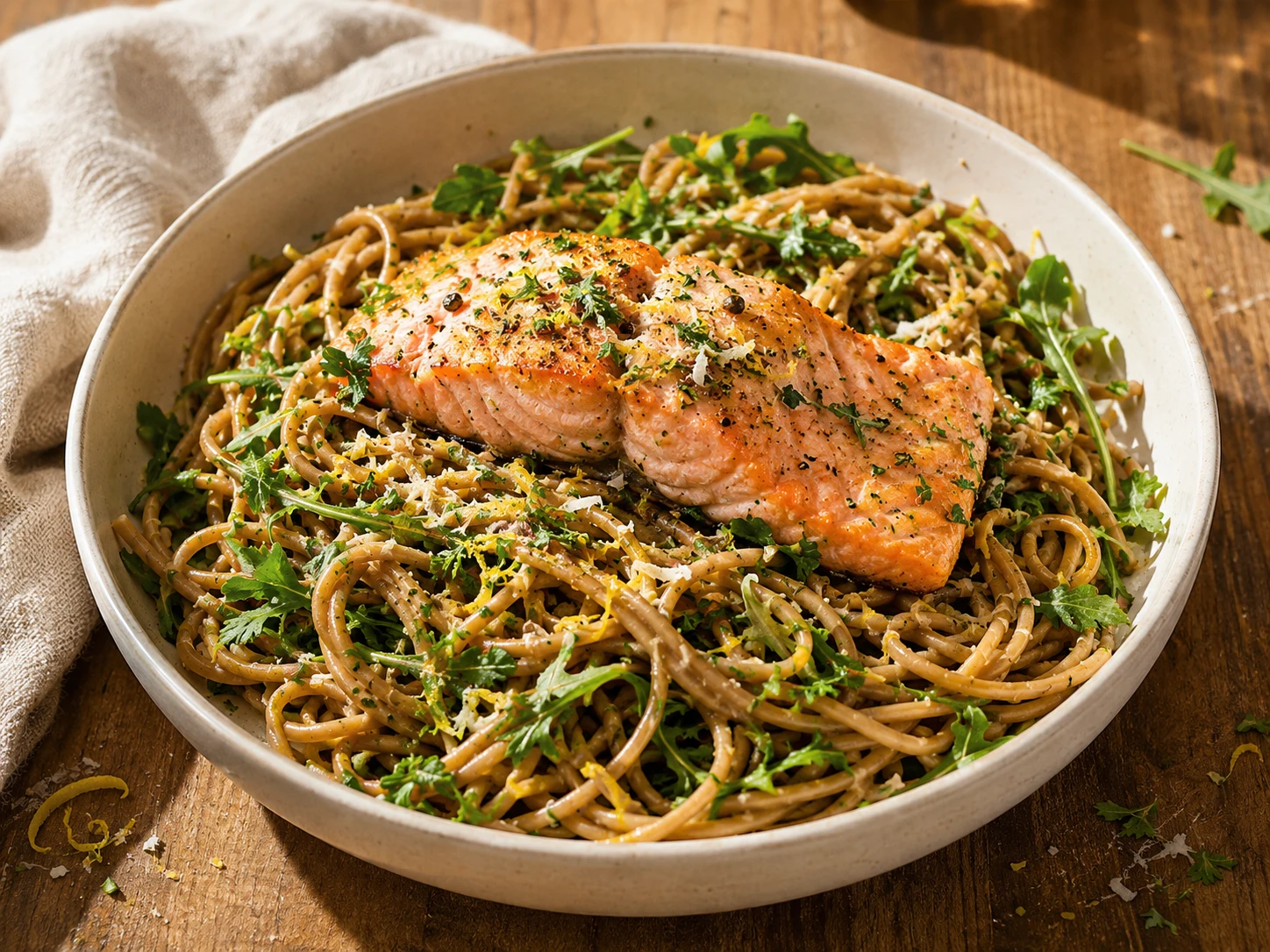
Lemon Garlic Salmon Pasta pairs whole wheat spaghetti with flaky salmon, olive oil, garlic, lemon zest, lemon juice, butter, arugula, parsley, and Parmesan. The sauce is light and glossy, the salmon stays tender, and the lemon keeps each bite bright enough for busy weeknights at home.
Why You’ll Love This Recipe
This pasta feels a little special, but it is still simple enough for a weeknight. Salmon adds rich, flaky protein, while whole wheat spaghetti gives the dish a hearty base. Garlic, olive oil, butter, lemon zest, and lemon juice create a light sauce that tastes fresh instead of creamy or heavy. Baby arugula wilts into the warm noodles and adds a peppery bite, and Parmesan brings just enough salty finish. The recipe is also beginner-friendly because salmon gives clear cues when it is done: it turns opaque and flakes with gentle pressure. When you cook the fish first and fold it in at the end, the pieces stay tender instead of breaking apart into mush. Those cues make lemon garlic salmon pasta easier for beginners because you can see when the salmon is ready instead of guessing.
What Makes This Recipe Work
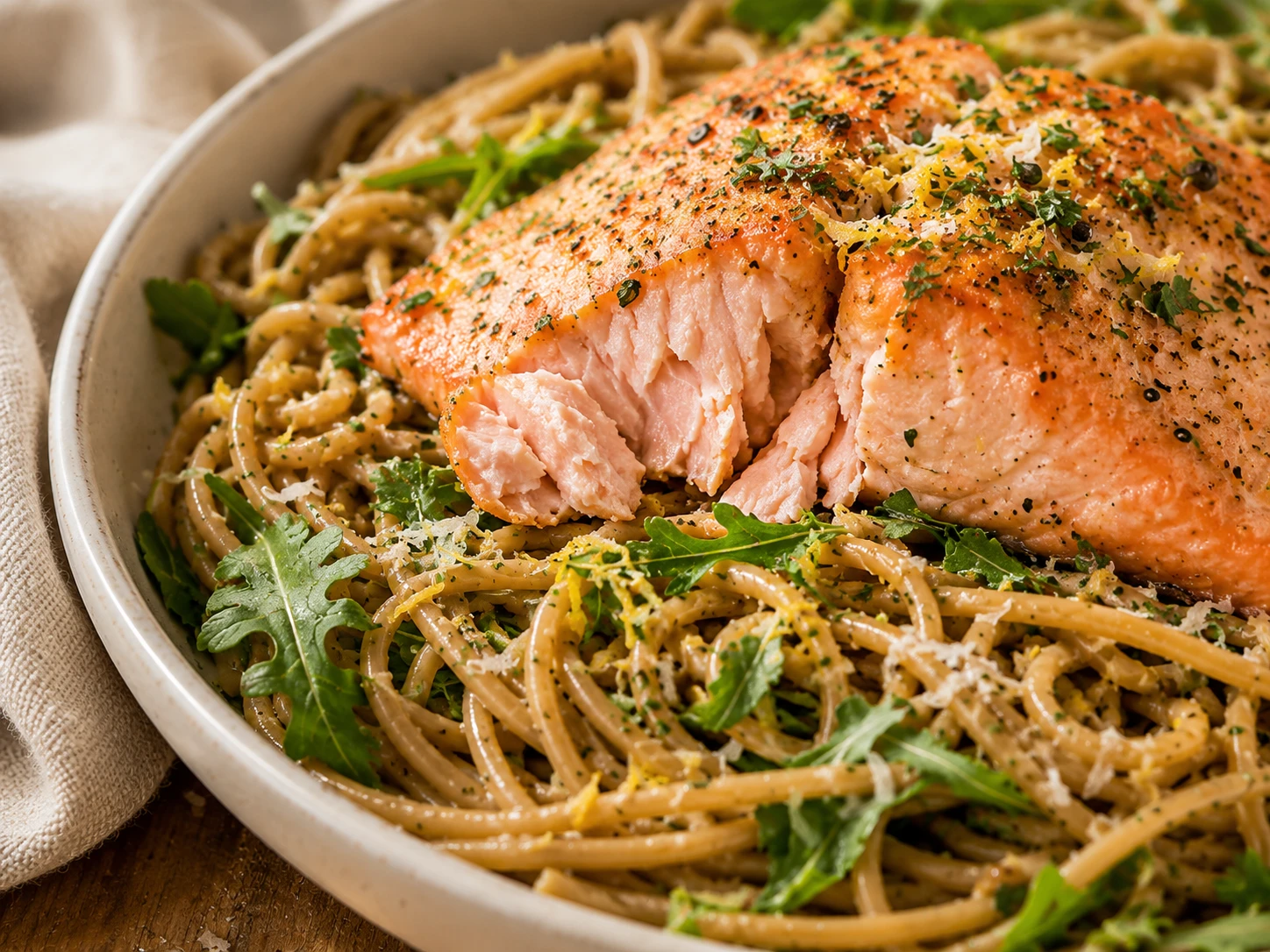
The best part of this pasta is the balance between richness and brightness. Salmon and butter bring richness, while lemon zest, lemon juice, arugula, and parsley keep the bowl fresh. Cooking the salmon separately gives it a golden surface and lets you control doneness before the pasta is tossed. The garlic cooks in the same skillet, picking up a little flavor from the salmon without needing a heavy sauce. Reserved pasta water helps the lemon butter mixture coat the spaghetti in a thin glossy layer. The salmon goes back in at the end with gentle folding, not hard stirring, so it stays in large flaky pieces. That sequence keeps the flaky salmon balanced, so each bite tastes planned rather than thrown together at the last minute.
Before You Start
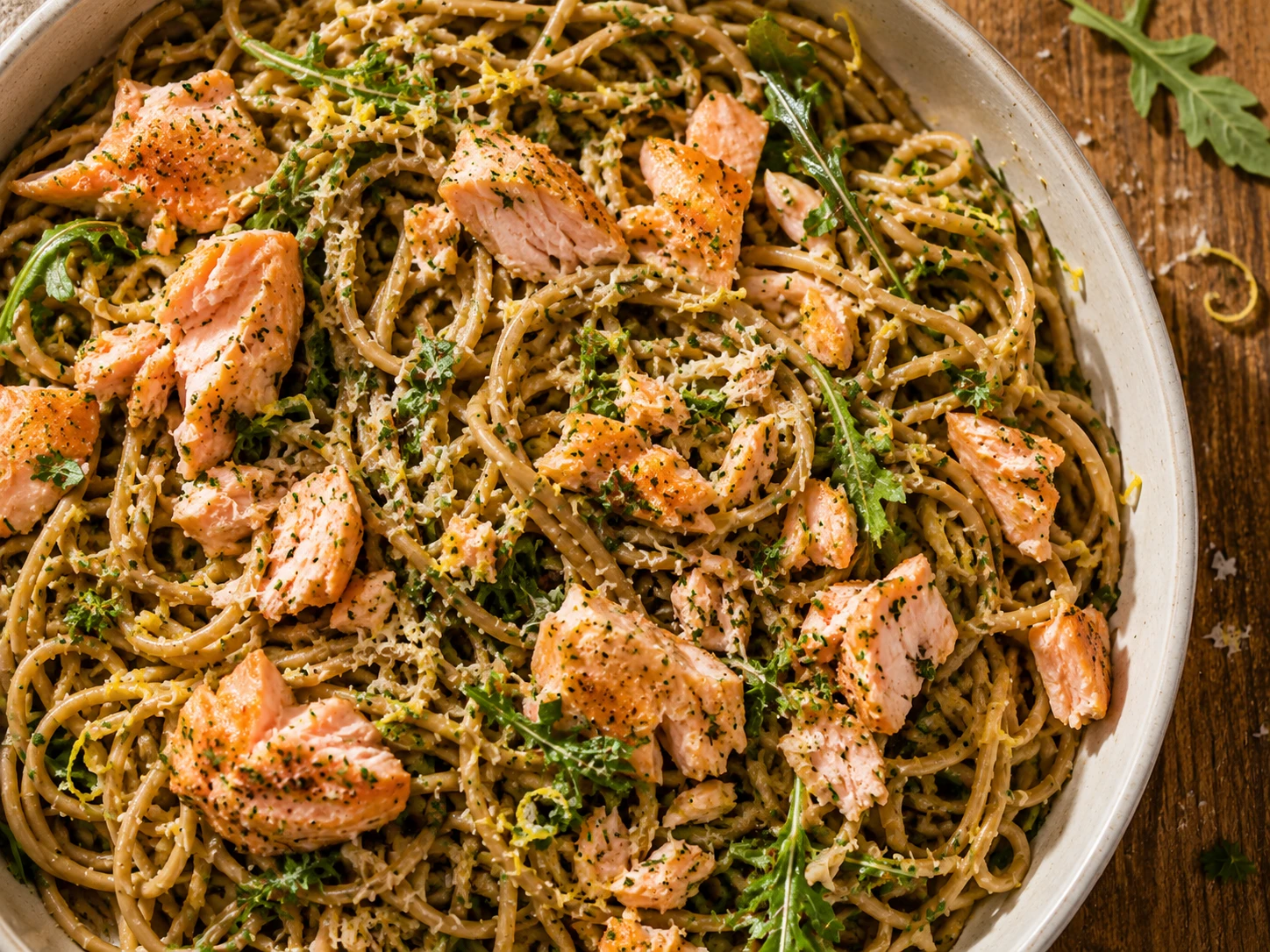
Pat the salmon dry before seasoning so it browns instead of steaming. If the fillets have skin, cook them skin side down first; if they are skinless, place the flatter side down first. Keep the pasta water cup ready because the sauce depends on a little starchy water. Zest the lemon before juicing it, and have the arugula, parsley, and Parmesan ready before the spaghetti is drained. The final toss happens quickly, and salmon is delicate once cooked. Use tongs to lift the pasta and a spatula or spoon to fold in the fish so the pieces do not fall apart too much. That setup matters because salmon can change quickly once heat is involved, and beginners need fewer pauses at the stove. It also keeps lemon garlic salmon pasta easier to serve.
Storage Tips
This pasta is best right after cooking, when the salmon is flaky and the lemon sauce is glossy. If you have leftovers, cool them quickly and store them in an airtight container for up to 2 days. Reheat gently in a covered skillet over low heat with a splash of water, or use short microwave bursts at lower power. Salmon dries out if heated hard, so stop as soon as the pasta is warm. A fresh squeeze of lemon after reheating helps bring back the brightness. If you know you are saving some, keep a little extra parsley and Parmesan separate so the leftovers look and taste fresher. That fresh finish helps lemon garlic salmon pasta taste bright again after chilling, when flavors naturally settle and soften.
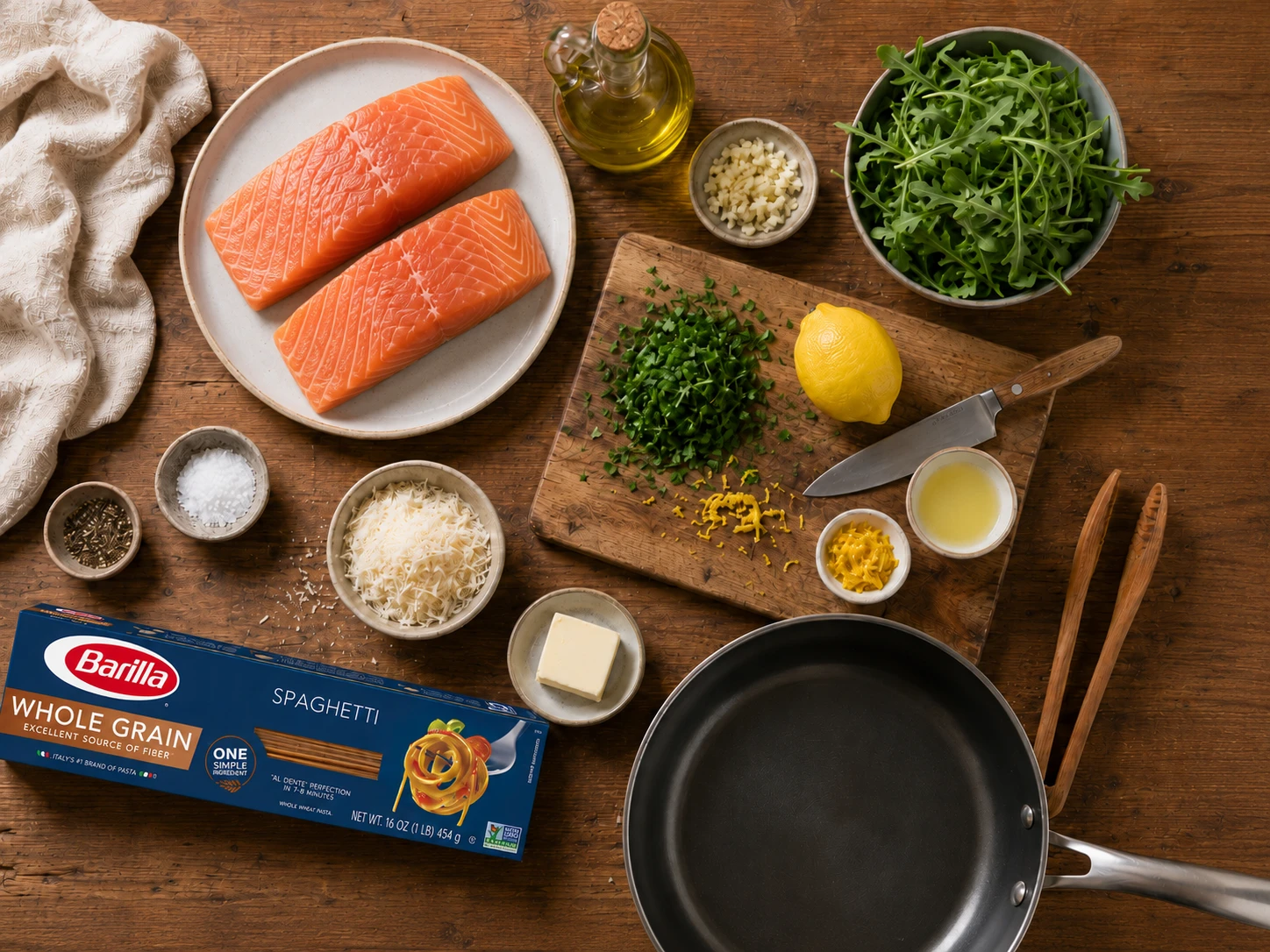
Ingredient Notes & Easy Swaps
Whole wheat spaghetti: Whole wheat spaghetti gives the bowl a hearty base and works well with the light lemon sauce. Linguine or regular spaghetti can also work.
Gluten-free swap: Use an equal 10 oz of certified gluten-free spaghetti made from corn and rice or brown rice. It usually cooks faster, often 7 to 9 minutes, and softens quickly, so taste 2 minutes early and drain as soon as it is just tender. Gluten-free strands release more starch, so add the pasta cooking water a tablespoon at a time to keep the sauce glossy instead of gluey.
Salmon: One 20 oz fillet cut into 4 even portions cooks more evenly than mismatched pieces. Pat it dry before cooking so the outside browns instead of steaming, and check that the thickest portion reaches 145°F.
Fish alternatives: Cod, halibut, or trout can replace the salmon using the same 20 oz weight. Thin cod or trout cooks faster, about 3 minutes per side, while thick halibut may need 4 to 5 minutes per side; all of them are done at 145°F and flake easily with a fork.
Olive oil and butter: Olive oil helps cook the salmon and garlic, while a small amount of butter rounds out the lemon sauce.
Dairy-free swap: Going dairy-free here means replacing two things, not one: use 1 extra tablespoon olive oil in place of the butter and 1/4 cup dairy-free Parmesan-style topping or 2 tablespoons nutritional yeast in place of the Parmesan. The sauce will be lighter and less creamy, so add an extra tablespoon of pasta cooking water and a little more lemon juice.
Garlic, lemon zest, and juice: Fresh garlic gives the sauce its best flavor, so keep it pale rather than browned. Zest adds fragrant lemon flavor and the juice brightens the pasta; add the juice after the garlic has softened.
Baby arugula, Parmesan, and pasta cooking water: Arugula wilts slightly into the warm pasta for a peppery bite, and baby spinach works for a milder flavor. Add the Parmesan at the end so it stays flavorful, and use the reserved pasta cooking water a little at a time until the noodles look glossy.
Lemon Garlic Salmon Pasta
Description
Lemon Garlic Salmon Pasta pairs whole wheat spaghetti with flaky salmon, olive oil, garlic, lemon zest, lemon juice, butter, arugula, parsley, and Parmesan. The sauce is light and glossy, the salmon stays tender, and the lemon keeps each bite bright enough for busy weeknights at home.
Ingredients
- 10 oz whole wheat spaghetti
- 4 quarts water, for boiling (reserve 1/2 cup before draining)
- 1 tbsp kosher salt, for the pasta water
- 20 oz salmon fillet, cut into 4 even portions
- 1/8 tsp sea salt
- 1/8 tsp black pepper
- 3 tbsp olive oil, divided
- 4 garlic cloves, minced
- Zest and juice of 1 lemon
- 1 tbsp butter
- 2 cups baby arugula
- 2 tbsp fresh parsley, chopped
- 1/4 cup grated Parmesan
Instructions
- 1Equipment: a large 6-quart pot, colander, heatproof measuring cup, 12-inch nonstick skillet, fish spatula or thin spatula, tongs, a cutting board and knife for the raw salmon, a clean plate for the cooked salmon, an instant-read thermometer, paper towels, a fork, a zester, and serving bowls.
- 2Food safety first: keep the raw salmon on its own plate and board, wash your hands with soap and warm water for 20 seconds after handling it, and wash the board, knife, and raw-fish plate before they touch cooked food.
- 3Fill the pot with 4 quarts of water. Set it over high heat and bring it to a strong rolling boil.
- 4Add 1 tablespoon kosher salt to the boiling water. Add 10 oz whole wheat spaghetti and stir for 10 seconds so the strands separate.
- 5Cook according to the package directions, usually 9 to 11 minutes, until the spaghetti is tender but still slightly firm in the center.
- 6Before draining, scoop out 1/2 cup pasta cooking water. Drain the spaghetti in a colander and do not rinse it.
- 7While the pasta cooks, cut the 20 oz salmon fillet into 4 even portions of about 5 oz each. Pat every side dry with paper towels, then season all over with 1/8 teaspoon sea salt and 1/8 teaspoon black pepper.
- 8Heat 1 tablespoon olive oil in a 12-inch nonstick skillet over medium-high heat, about 7 out of 10, for 1 minute.
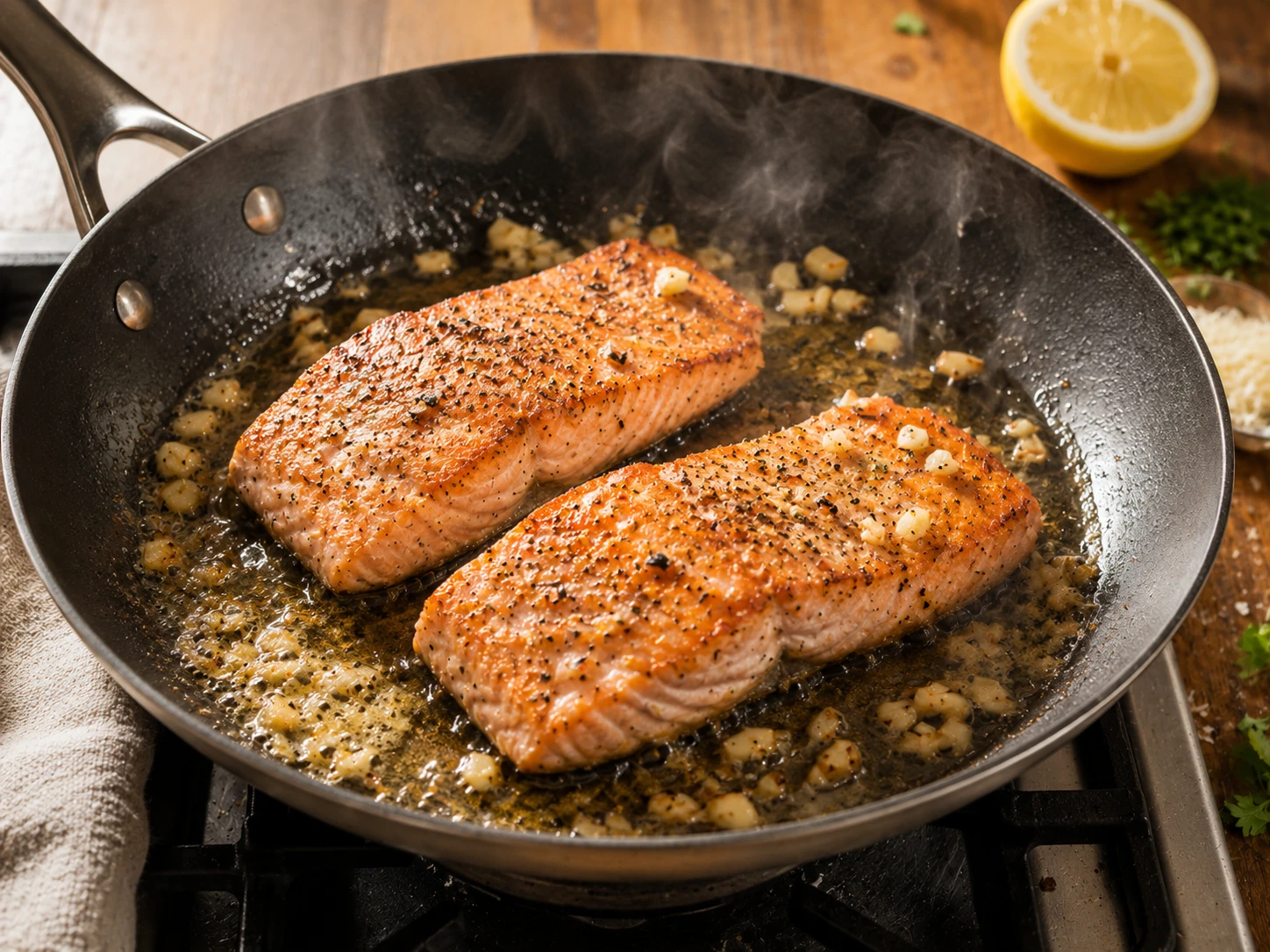
- 9Add the salmon portions in a single layer. Cook for 4 minutes on the first side without moving them, until the bottom looks golden.
- 10Flip carefully with a thin spatula and cook for 3 to 4 more minutes, until the salmon looks opaque and flakes when you press gently with a fork. Slide the instant-read thermometer into the thickest portion; it must read 145°F.
- 11Move the salmon to a clean plate, not the one that held it raw. Let it rest for 2 minutes, then break it into large bite-size chunks with a fork.
- 12Lower the heat to medium, about 5 out of 10. Add 2 tablespoons olive oil, 4 minced garlic cloves, lemon zest, and 1 tablespoon butter to the same skillet.
- 13Stir for about 1 minute, until the butter melts and you can smell the garlic. Keep the garlic pale; do not let it brown.
- 14Add the drained spaghetti, lemon juice, and 1/4 cup reserved pasta cooking water to the skillet.
- 15Toss with tongs for 1 to 2 minutes, until the spaghetti looks glossy and lightly coated. If the noodles look dry, add reserved pasta cooking water 1 tablespoon at a time, tossing after each addition, until the spaghetti moves easily and stays lightly coated.
- 16Turn off the heat. Add 2 cups baby arugula and gently toss with tongs until slightly wilted.
- 17Gently place the salmon chunks back into the pasta. Gently stir 3 or 4 times so the salmon stays in pieces.
- 18Sprinkle with 2 tablespoons chopped parsley and 1/4 cup grated Parmesan. Divide into bowls and serve right away.
Tips and Tricks
- 1
Pat the Salmon Dry: Pat the salmon dry before it touches the skillet. A dry surface browns better and is less likely to stick. Wet salmon steams, which gives you a softer outside and less flavor in the pan. This keeps lemon garlic salmon pasta easier to manage once the first hot step begins.
- 2
Use Gentle Pressure to Check Salmon: Use gentle pressure to check salmon doneness. When the fish turns opaque and separates into flakes with a fork, it is ready. Cooking it much longer can make it dry, especially after it returns to warm pasta. For lemon garlic salmon pasta, that cue is easier to trust than guessing from the clock.
- 3
Keep the Lemon Sauce Light: Keep the lemon sauce light and glossy with pasta water. The sauce should coat the spaghetti in a thin shine, not sit in a puddle. Add the water gradually so the noodles loosen without becoming watery. That keeps the flaky salmon texture closer to the tender, glossy bowl you want.
- 4
Fold the Salmon in Last: Fold the salmon in last instead of stirring hard. Cooked salmon is delicate, and rough tossing breaks it into tiny pieces. Three or four gentle folds leave visible tender flakes throughout the bowl, which looks more generous and keeps the texture soft instead of shredded.
Nutrition
Serving size: 1 serving (1/4 recipe)
Calories: 665kcal, Protein: 42g, Carbs: 51g, Fat: 34g, Fiber: 10g, Sugar: 2g, Sodium: 525mg.
Nutrition information is an estimate and may vary based on ingredient brands, product sizes, preparation methods, and substitutions. It is not intended as medical or dietary advice.