
Lemon Garlic Shrimp Protein Pasta
 By Better Plate Recipes
Have a recipe from another site? Import it →
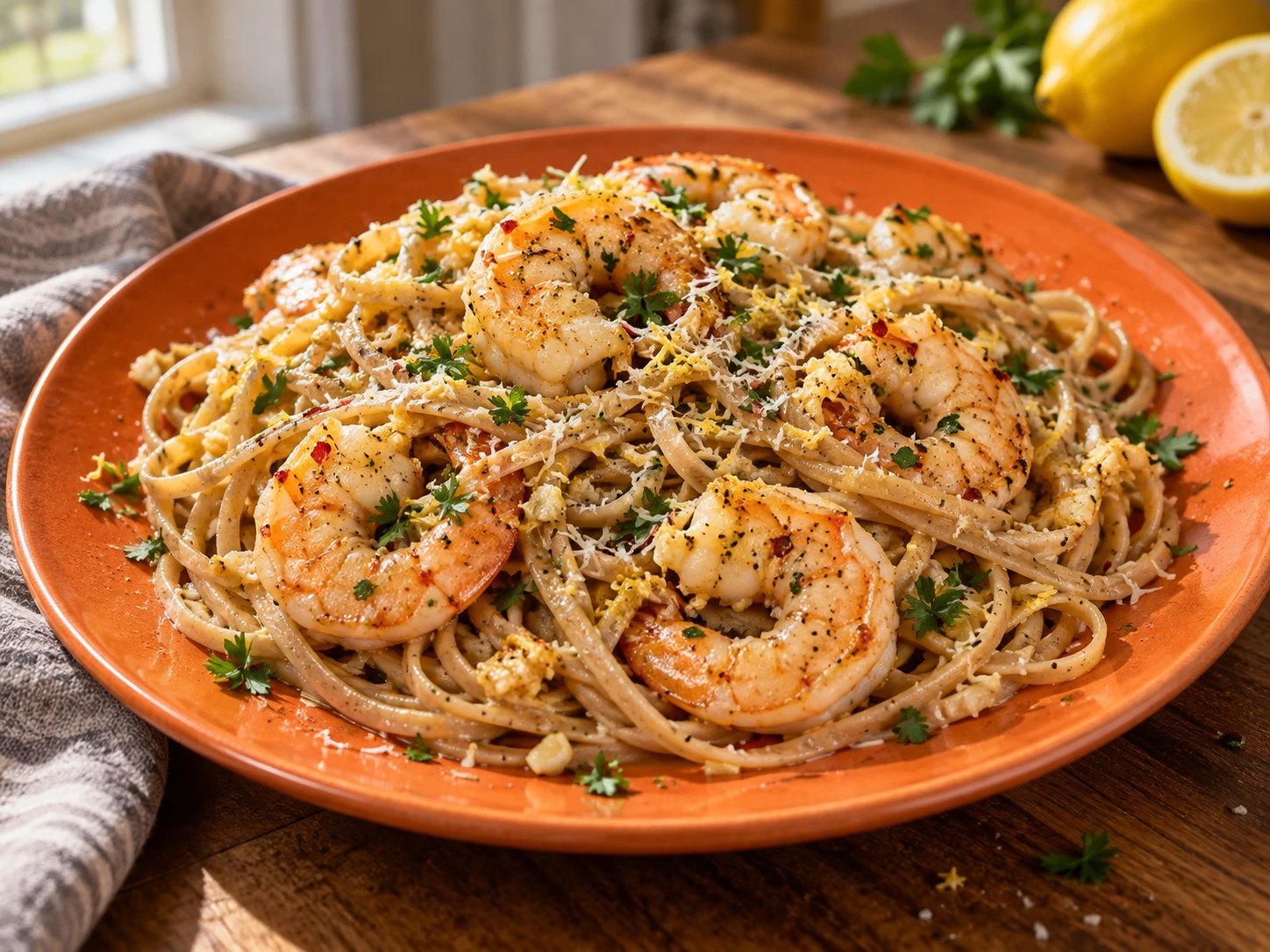
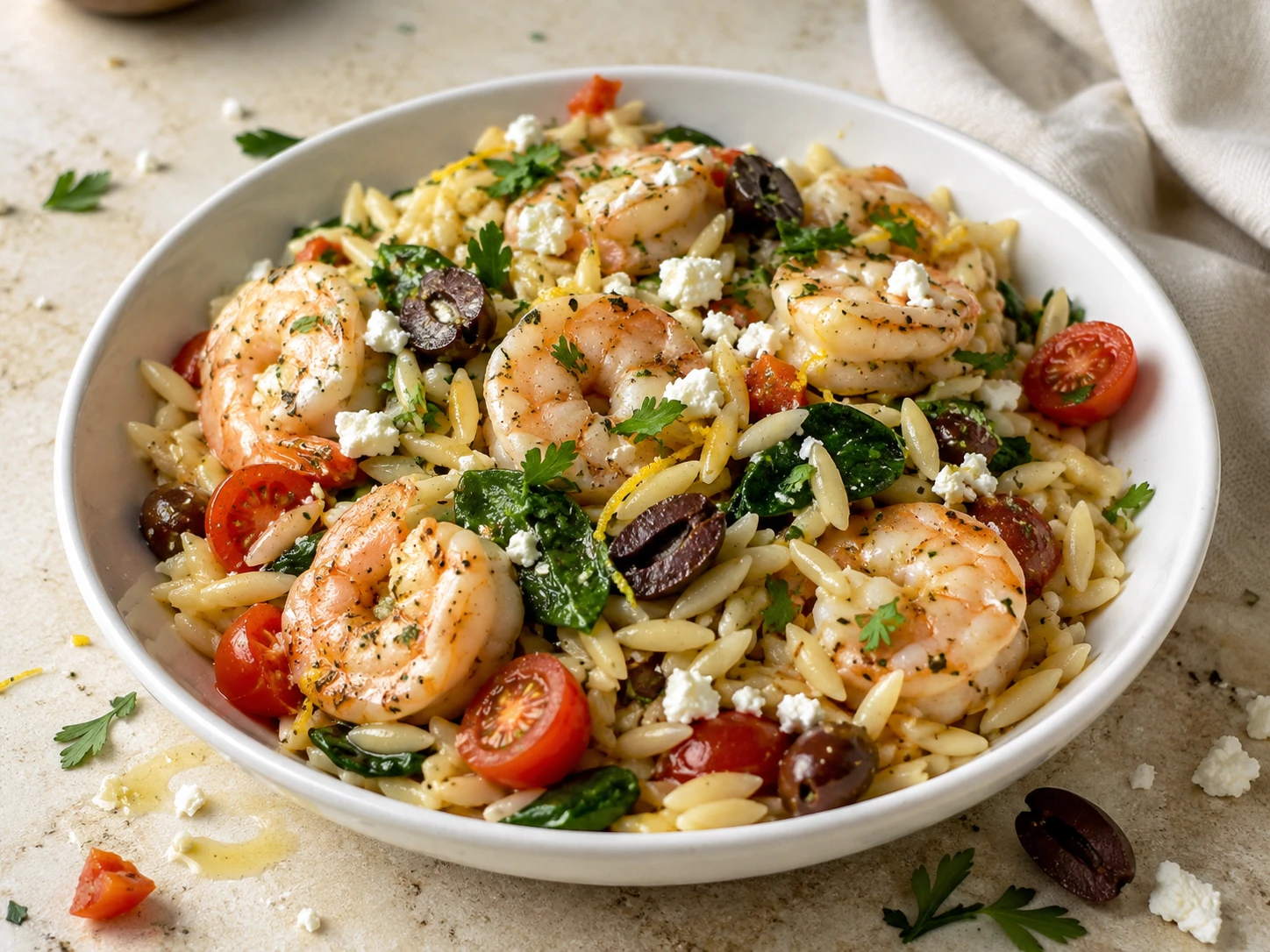
Lemon Garlic Shrimp Protein Pasta tosses whole wheat linguine with tender shrimp, olive oil, garlic, red pepper flakes, lemon zest, lemon juice, butter, Parmesan, and parsley. The sauce is light, glossy, and citrusy, letting the shrimp stay the main flavor while the pasta feels satisfying.
Why You’ll Love This Recipe
This pasta tastes fresh and restaurant-like, but it comes together with simple pantry ingredients. Shrimp cook quickly and bring lean protein, while whole wheat linguine makes the bowl filling without needing a heavy sauce. Garlic, olive oil, butter, lemon zest, lemon juice, and a little red pepper create a bright coating that clings to the noodles with help from reserved pasta water. Parmesan adds a salty finish, and parsley keeps the flavor clean. It is also a good recipe for learning shrimp doneness because the signs are easy to see. When the shrimp turn pink, opaque, and curl into a loose C shape, they are ready. The whole dish feels light, garlicky, and satisfying. Those cues make lemon garlic shrimp linguine easier for beginners because you can see when the shrimp is ready instead of guessing.
What Makes This Recipe Work
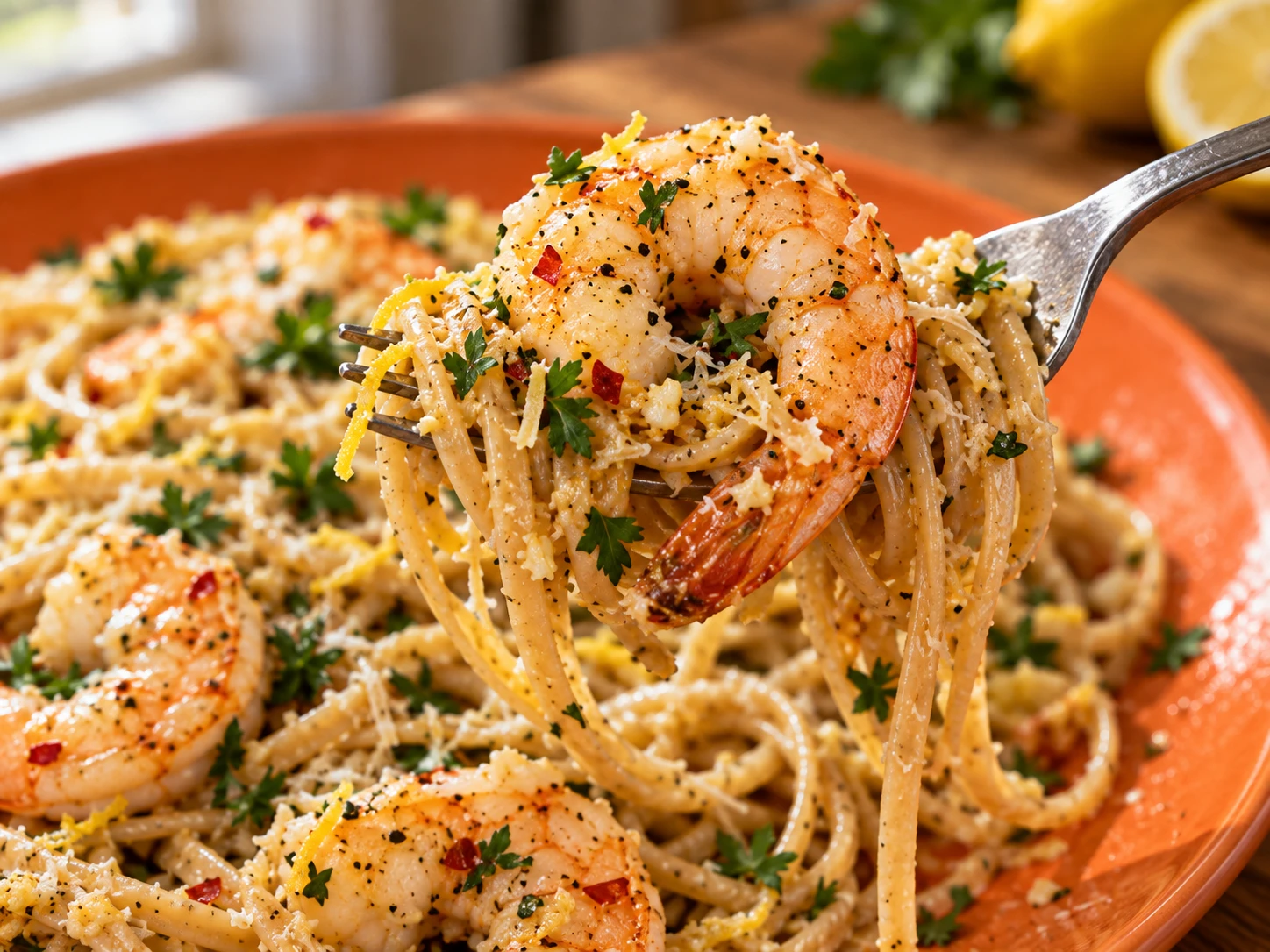
This recipe is all about timing and restraint. Shrimp need only a few minutes in a hot skillet, so they cook first and then leave the pan before the garlic sauce is made. That keeps them tender instead of rubbery. Garlic, red pepper flakes, and lemon zest warm in olive oil just long enough to become fragrant. Butter and lemon juice bring the sauce together, while reserved pasta water helps it coat the linguine instead of staying oily. The pasta returns with the shrimp at the end for a quick toss. Parmesan and parsley finish the bowl after the sauce is glossy, giving it salty flavor and freshness without weighing it down. That sequence keeps the glossy linguine balanced, so each bite tastes planned rather than thrown together at the last minute.
Before You Start
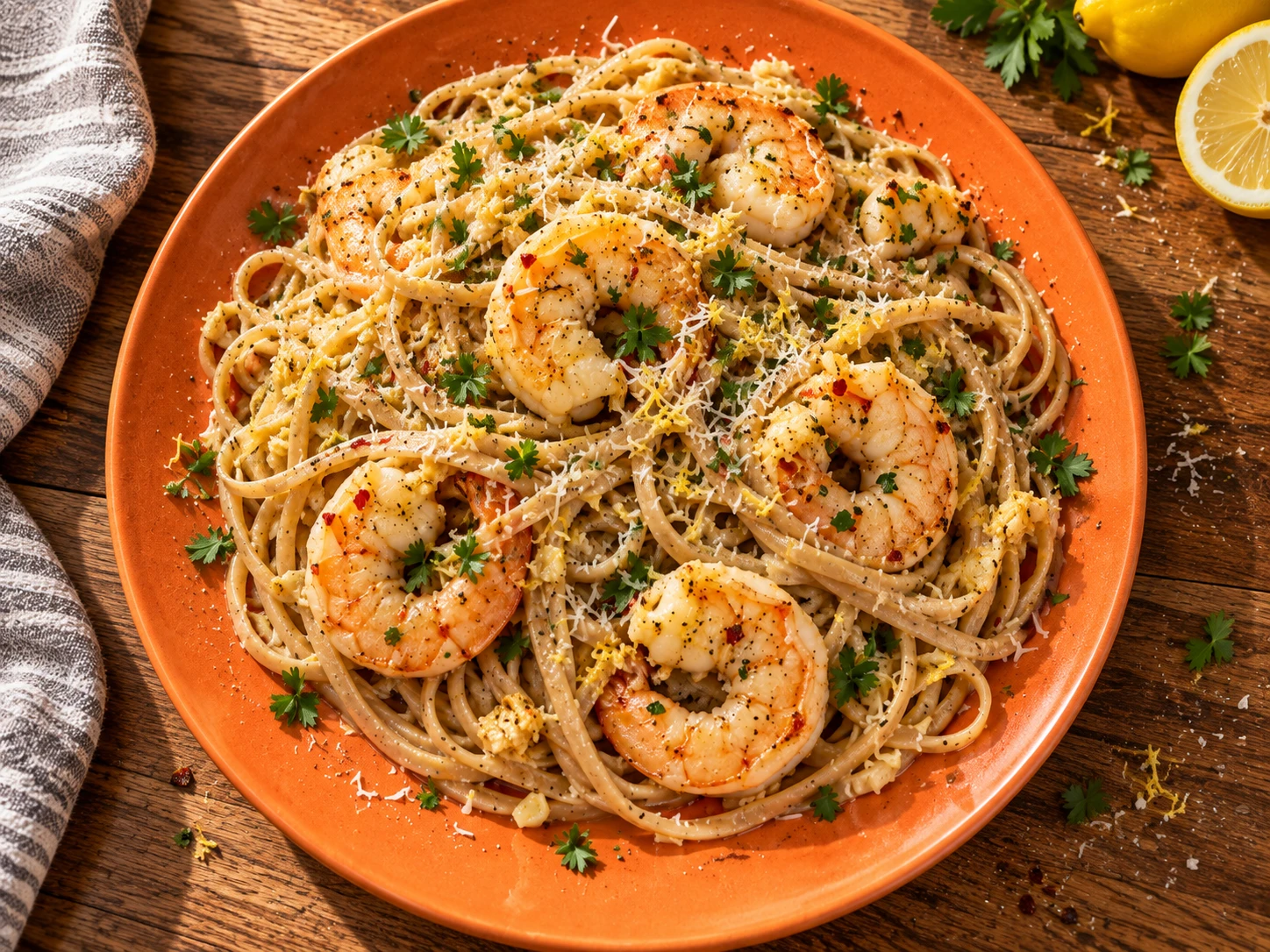
Pat the shrimp dry and keep them in one layer before cooking. Wet shrimp release liquid, which makes it harder to get a good sear. Have the garlic minced, lemon zested and juiced, parsley chopped, and Parmesan measured before the linguine drains. The skillet moves quickly once the shrimp are cooked. Save pasta water right before draining, when it is cloudy and starchy. That water is what turns the lemon garlic mixture into a light sauce instead of a thin oil slick. Keep the heat at medium when the garlic goes in. Garlic can go from pale and fragrant to bitter and brown in less than a minute. That setup matters because shrimp can change quickly once heat is involved, and beginners need fewer pauses at the stove.
Ingredient Notes & Easy Swaps
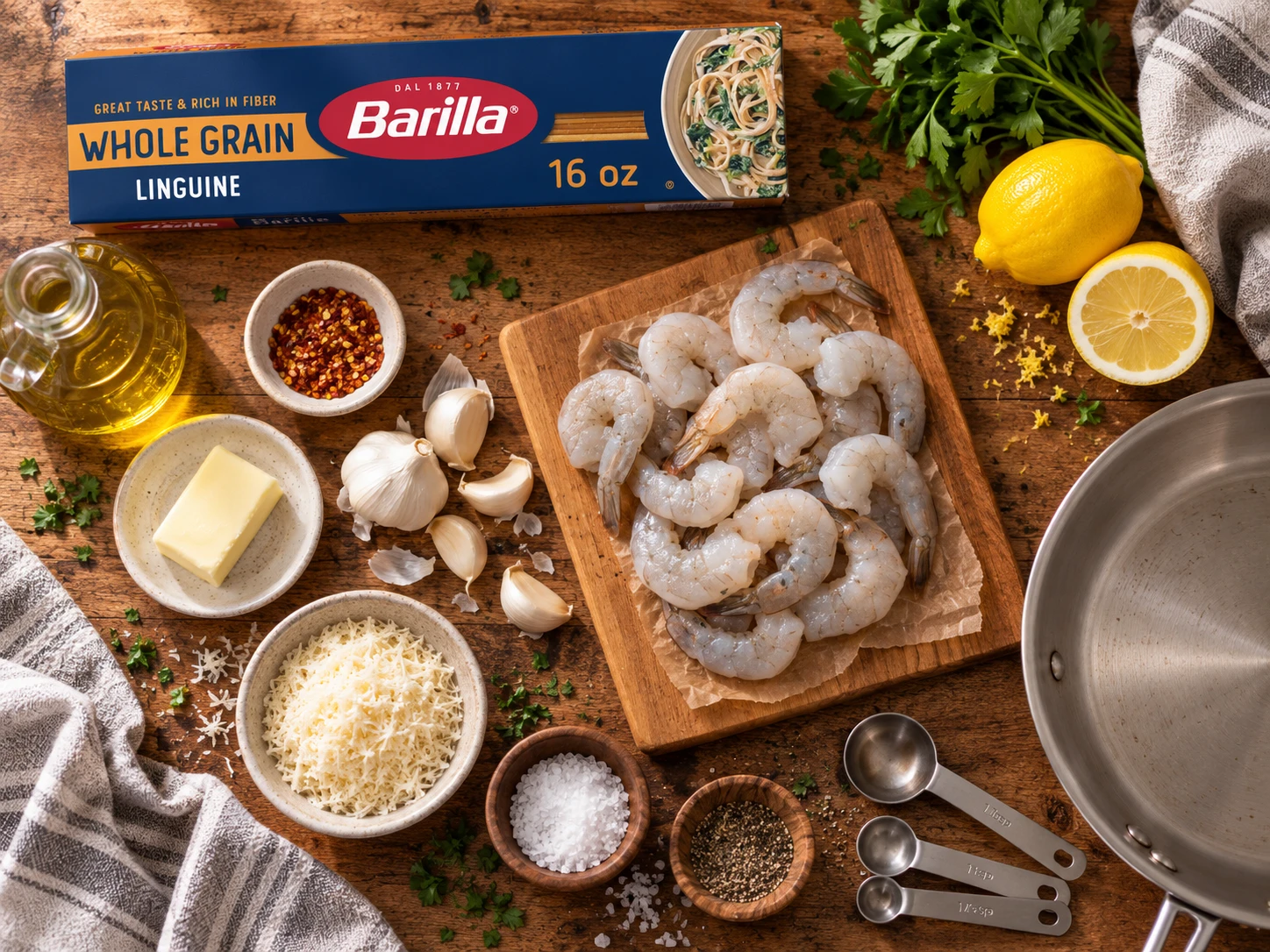
Whole wheat linguine: Linguine works well with the light lemon garlic sauce. Whole wheat spaghetti or regular linguine can also work.
Gluten-free swap: Use an equal 10 oz of certified gluten-free linguine or spaghetti made from corn and rice, brown rice, or chickpeas. These cook faster, often 6 to 9 minutes, and soften quickly, so taste 2 minutes early. They release more starch, so add the pasta cooking water slowly to keep the sauce glossy rather than gluey.
Shrimp: Shrimp cook very quickly, so keep an eye on the loose C shape. Tight circles usually mean the shrimp are starting to overcook.
Shellfish-free swap: Replace the shrimp with 1 lb boneless skinless chicken breast cut into thin 1/2-inch strips. Chicken needs longer than shrimp, about 6 to 8 minutes total instead of 3 to 4, and must reach 165°F on an instant-read thermometer. Use a separate board for the raw chicken and a clean plate for the cooked strips.
Olive oil and butter: Olive oil keeps the sauce light, while butter adds a little richness.
Dairy-free swap: Dairy shows up twice here, so replace both: use 1 extra tablespoon olive oil in place of the butter and 1/4 cup dairy-free Parmesan-style topping or 2 tablespoons nutritional yeast in place of the Parmesan. The sauce will be thinner and less rich, so add an extra tablespoon of pasta cooking water and a squeeze more lemon.
Garlic, red pepper flakes, and lemon: Fresh garlic gives the strongest flavor, so stir it just until fragrant and keep it pale. Red pepper flakes add mild heat and can be left out, and lemon keeps the pasta tasting fresh; zest first, then squeeze the juice.
Reserved pasta cooking water: Pasta cooking water helps the lemon sauce cling to the linguine. Add it slowly if the noodles look dry.
Lemon Garlic Shrimp Protein Pasta
Description
Lemon Garlic Shrimp Protein Pasta tosses whole wheat linguine with tender shrimp, olive oil, garlic, red pepper flakes, lemon zest, lemon juice, butter, Parmesan, and parsley. The sauce is light, glossy, and citrusy, letting the shrimp stay the main flavor while the pasta feels satisfying.
Ingredients
- 10 oz whole wheat linguine
- 4 quarts water, for boiling (reserve 1/2 cup before draining)
- 1 tbsp kosher salt, for the pasta water
- 1 lb large shrimp, peeled and deveined
- 1/8 tsp sea salt
- 1/8 tsp black pepper
- 3 tbsp olive oil, divided
- 4 garlic cloves, minced
- 1/2 tsp red pepper flakes
- Zest and juice of 1 lemon
- 1 tbsp butter
- 1/4 cup grated Parmesan
- 2 tbsp fresh parsley, chopped
Instructions
- 1Equipment: a large 6-quart pot, colander, heatproof measuring cup, 12-inch nonstick skillet, tongs, paper towels, cutting board, sharp knife, a bowl for the raw shrimp, a separate clean bowl for the cooked shrimp, a zester, and serving bowls.
- 2Fill the pot with 4 quarts of water. Set it over high heat and bring it to a rolling boil.
- 3Add 1 tablespoon kosher salt. Add 10 oz whole wheat linguine and stir for 10 seconds so the strands separate.
- 4Cook according to the package directions, usually 9 to 11 minutes, until the linguine is tender but still slightly firm in the center.
- 5Before draining, scoop out 1/2 cup pasta cooking water. Drain the linguine in a colander and do not rinse.
- 6While the pasta cooks, pat 1 lb peeled and deveined shrimp dry with paper towels and place them in a bowl. Season with 1/8 teaspoon sea salt and 1/8 teaspoon black pepper, then wash your hands after handling the raw shrimp.
- 7Heat 1 tablespoon olive oil in a 12-inch nonstick skillet over medium-high heat, about 7 out of 10, for about 1 minute.
- 8Add the shrimp in a single layer. Cook for 1 to 2 minutes on the first side, until the bottom edges turn pink.
- 9Flip with tongs and cook 1 to 2 minutes more, until the shrimp are pink, opaque all the way through, and curled into loose C shapes.
- 10Move the shrimp to a clean bowl, not the bowl that held them raw. Keep them in one layer so they do not keep steaming.
- 11Lower the heat to medium, about 5 out of 10. Add 2 tablespoons olive oil, 4 minced garlic cloves, 1/2 teaspoon red pepper flakes, and lemon zest to the skillet.
- 12Stir constantly for about 45 seconds, until you can smell the garlic and it stays pale golden.
- 13Add 1 tablespoon butter, lemon juice, and 1/4 cup reserved pasta cooking water. Stir for about 30 seconds, until the butter melts and the sauce looks lightly glossy.
- 14Add the drained linguine and cooked shrimp, including any shrimp juices from the clean bowl.
- 15Toss with tongs for 1 to 2 minutes, until the linguine is shiny and evenly coated. If the noodles look dry, add reserved pasta cooking water 1 tablespoon at a time, tossing after each addition, until the linguine moves easily and stays lightly coated.
- 16Turn off the heat. Sprinkle with 1/4 cup grated Parmesan and 2 tablespoons chopped parsley. Toss once more and serve right away.
Tips and Tricks
- 1
Save Pasta Water: Save pasta water before draining the linguine. Lemon garlic sauce is light, so it needs starchy water to help it cling to the noodles. Without it, the oil and lemon can slide to the bottom of the skillet. This keeps lemon garlic shrimp linguine easier to manage once the first hot step begins.
- 2
Cook Shrimp in One Layer: Cook shrimp in one layer and watch for the loose C shape. Shrimp cook faster than most beginners expect, and crowded shrimp steam. Pull them as soon as they are pink and opaque so they stay juicy. For lemon garlic shrimp linguine, that cue is easier to trust than guessing from the clock.
- 3
Keep Garlic Pale: Keep garlic pale, not brown. Garlic gives this pasta its main flavor, but browned garlic tastes bitter. Medium heat and constant stirring help it soften into the oil without burning. That keeps the glossy linguine texture closer to the tender, glossy bowl you want.
- 4
Finish with Lemon, Parmesan, and Parsley Off the Heat: Add the lemon juice, Parmesan, and parsley at the very end with the burner off. Lemon loses its brightness when it simmers, and parsley loses its clean herb flavor, so finishing off the heat keeps both flavors sharp while the Parmesan melts gently into the sauce instead of clumping.
Nutrition
Serving size: 1 serving (1/4 recipe)
Calories: 485kcal, Protein: 40g, Carbs: 52g, Fat: 17g, Fiber: 10g, Sugar: 2g, Sodium: 575mg.
Nutrition information is an estimate and may vary based on ingredient brands, product sizes, preparation methods, and substitutions. It is not intended as medical or dietary advice.