
Lemon Herb Chicken Orzo
 By Better Plate Recipes
Have a recipe from another site? Import it →
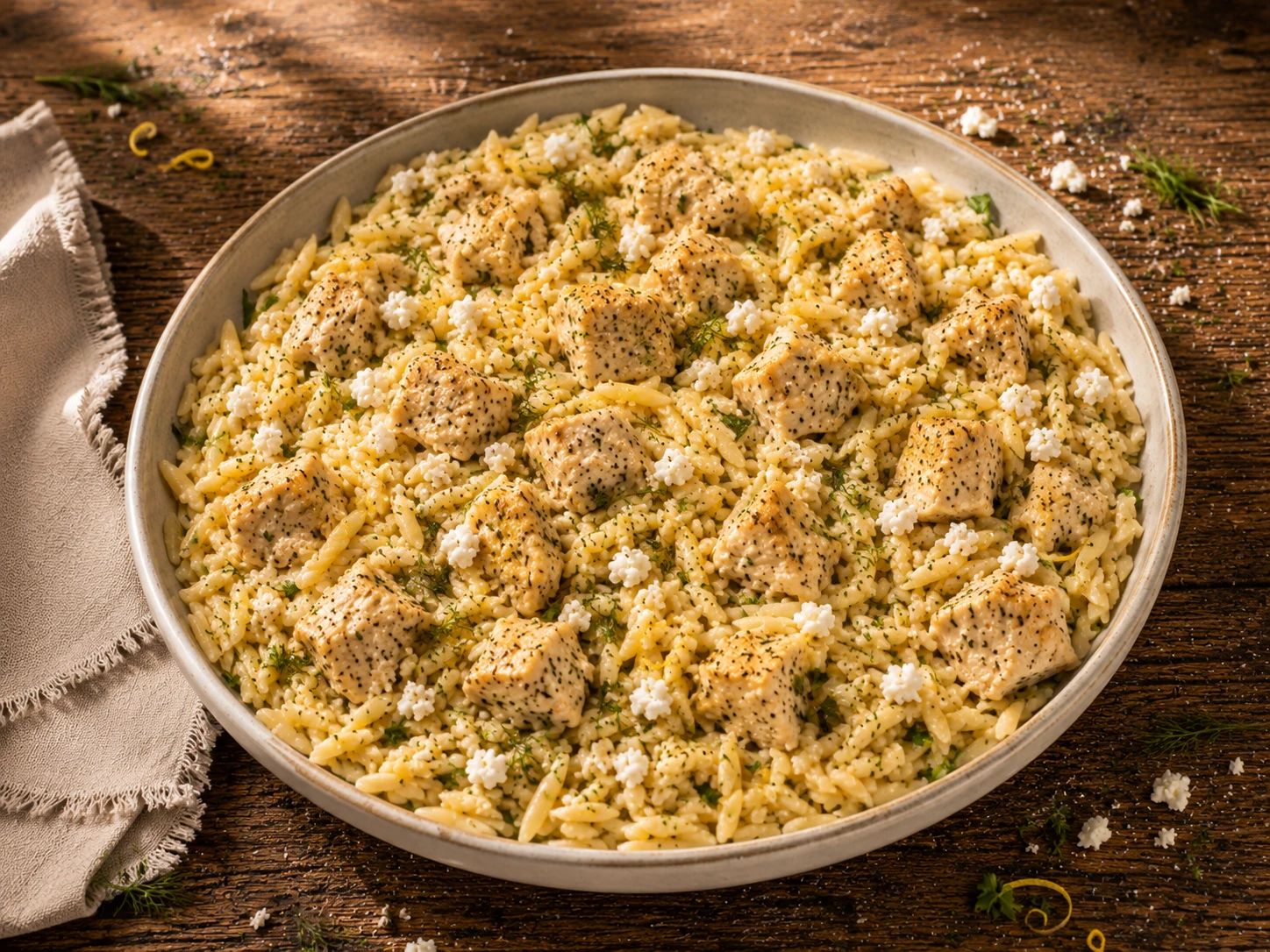
Lemon Herb Chicken Orzo cooks tender orzo with golden chicken, garlic, lemon, broth, dill, parsley, and feta in one skillet. The orzo absorbs the broth and releases starch for a creamy texture without cream.
Why You’ll Love This Recipe
You will love Lemon Herb Chicken Orzo because it gives you comfort and balance in the same bowl. The lemon and herbs make the chicken and orzo taste bright instead of heavy. The flavors are familiar enough for a weeknight, but the little details make it feel more special than plain pasta. The orzo turns creamy from broth, the chicken stays golden, and feta adds salty little pockets at the end. It is also practical: it cooks in one skillet after the chicken is browned. The instructions walk you through the heat level, timing, and visual cues, so you are not guessing when the protein is cooked or when the sauce is ready. It is the kind of recipe that helps a beginner feel confident while still giving an experienced cook something satisfying to make.
What Makes This Recipe Work
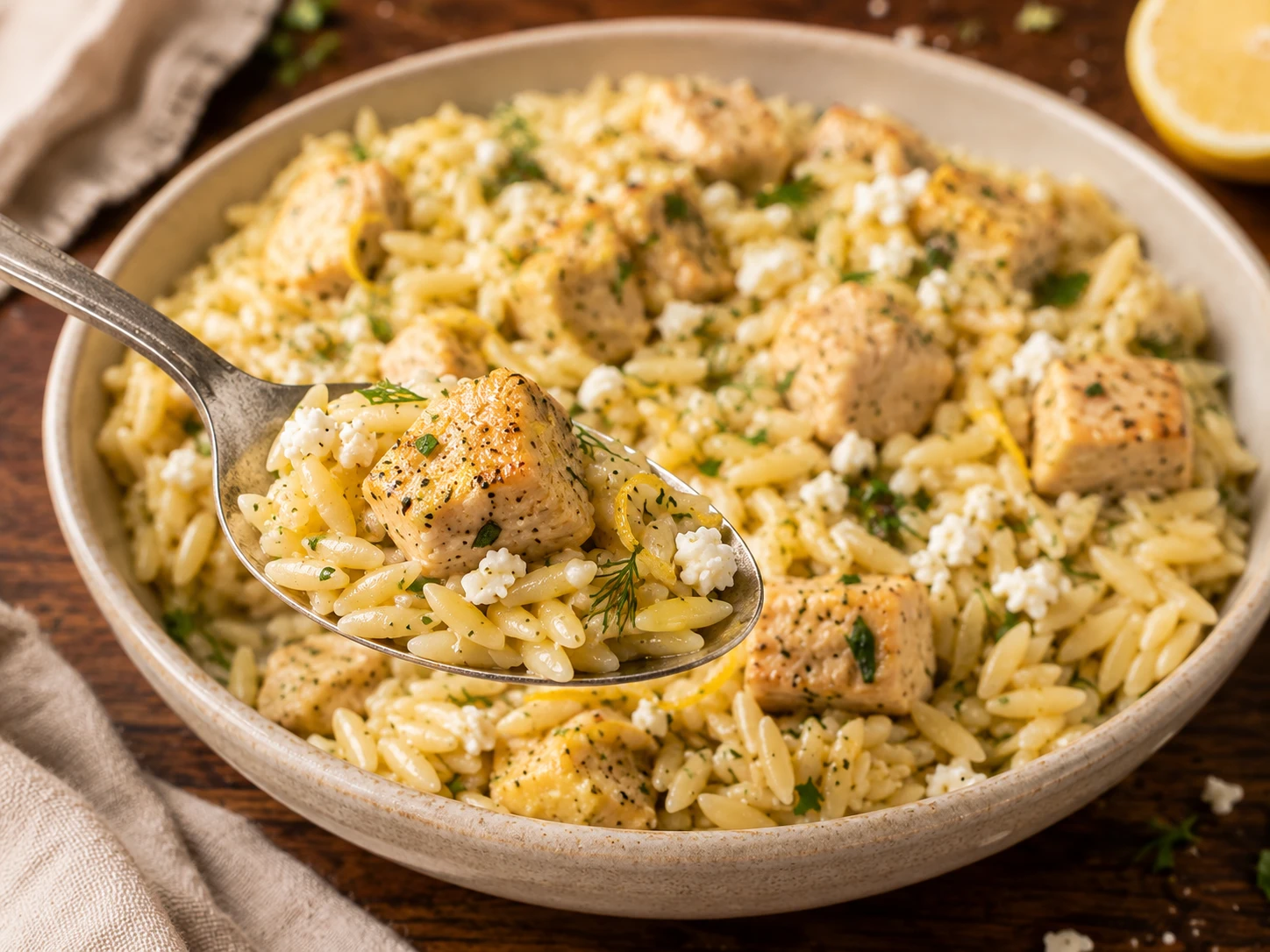
Lemon Herb Chicken Orzo works because the bowl has balance instead of just pasta and sauce. The hearty base (Chicken and orzo) gives the meal real staying power. The texture piece (fresh dill and parsley) keeps each bite from feeling one-note, whether it adds freshness, color, tenderness, or a little bite. The sauce layer (Low-sodium broth, garlic, lemon juice, lemon zest, and olive oil) ties everything together and gives the pasta something flavorful to hold onto. The finish (crumbled feta) adds the bright, salty, creamy, or herby note that makes the dish taste complete. The trick is not rushing the skillet work. Cooking the main ingredients carefully, warming the aromatics, and loosening the sauce with pasta water all build flavor in small layers. Once you understand those little steps, the recipe feels easy instead of fussy, and the final bowl tastes more intentional than the short cook time suggests.
Before You Start
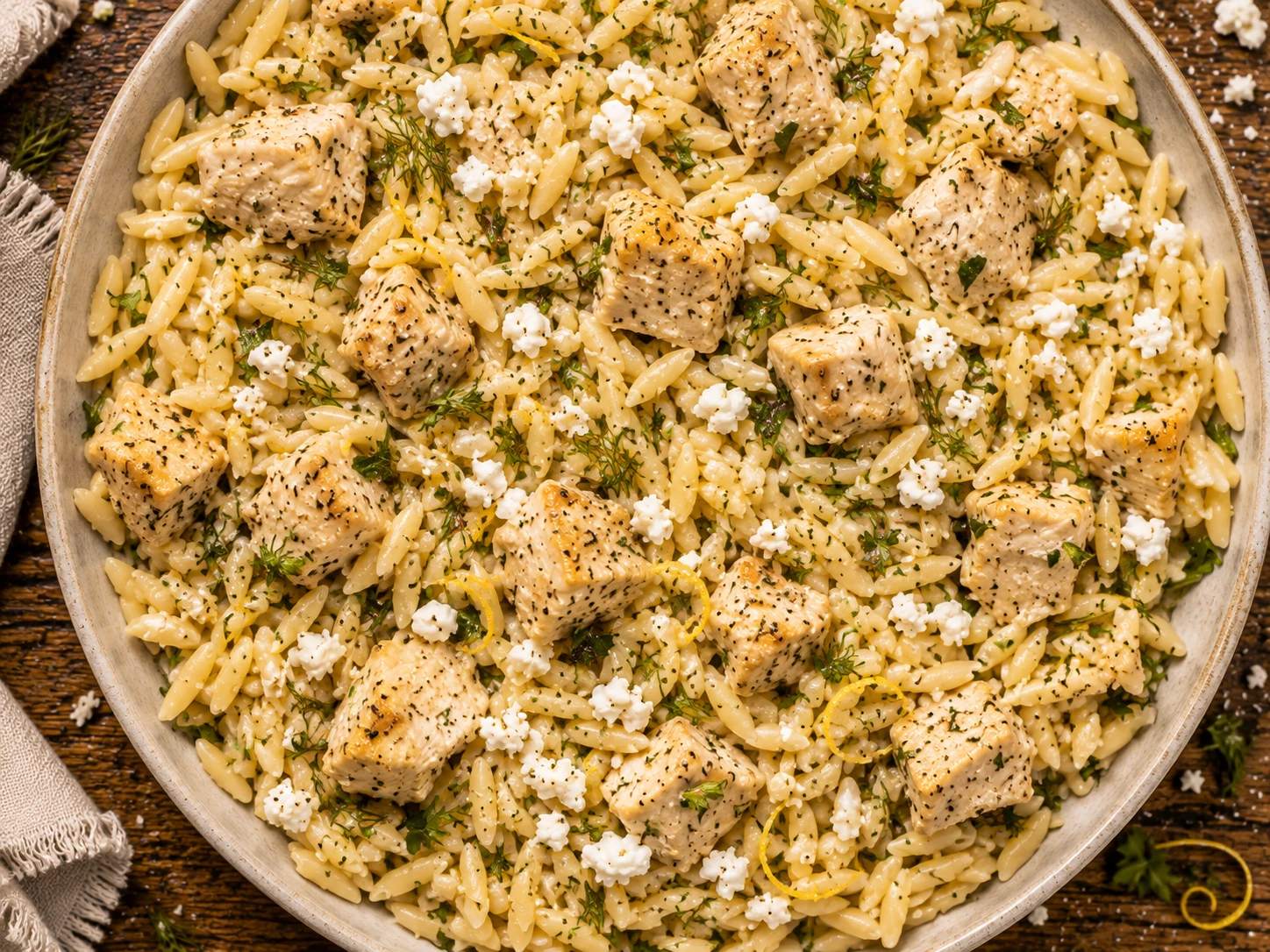
Before you start Lemon Herb Chicken Orzo, take five quiet minutes to set up your station. Put the pasta pot, colander, 12-inch skillet, cutting board, knife, measuring cups, and tongs where you can reach them. Mince the garlic, zest and juice the lemon, chop the herbs, measure the broth, and crumble the feta. Keep a heatproof measuring cup beside the stove so you remember to save pasta water before draining. That one habit makes a huge difference because pasta water can loosen a thick sauce without watering down the flavor. Read the steps once, especially the part where the cooked pasta goes back into the skillet. Orzo absorbs liquid as it cooks, so stir often and watch the texture near the end. When everything is ready before the burner turns on, the cooking feels calm and the food comes out cleaner.
Simple Swaps and Serving Ideas
Lemon Herb Chicken Orzo is easy to adjust as long as you keep the same basic balance: pasta, protein or hearty add-in, sauce, and a fresh finish. Use all parsley if you do not like dill, or swap feta for parmesan. If you change the pasta shape, choose one that can hold the sauce in a similar way; ridged penne, rotini, rigatoni, or fettuccine all grab sauce differently. Serve it warm in bowls or pack it for lunch after cooling slightly. Taste at the end before serving. If the dish feels flat, it usually needs a pinch of salt, a squeeze of lemon, a spoonful of pasta water, or a little more herb rather than a whole new ingredient. Small final adjustments are what make leftovers and weeknight dinners taste fresh.
Ingredient Notes & Easy Swaps
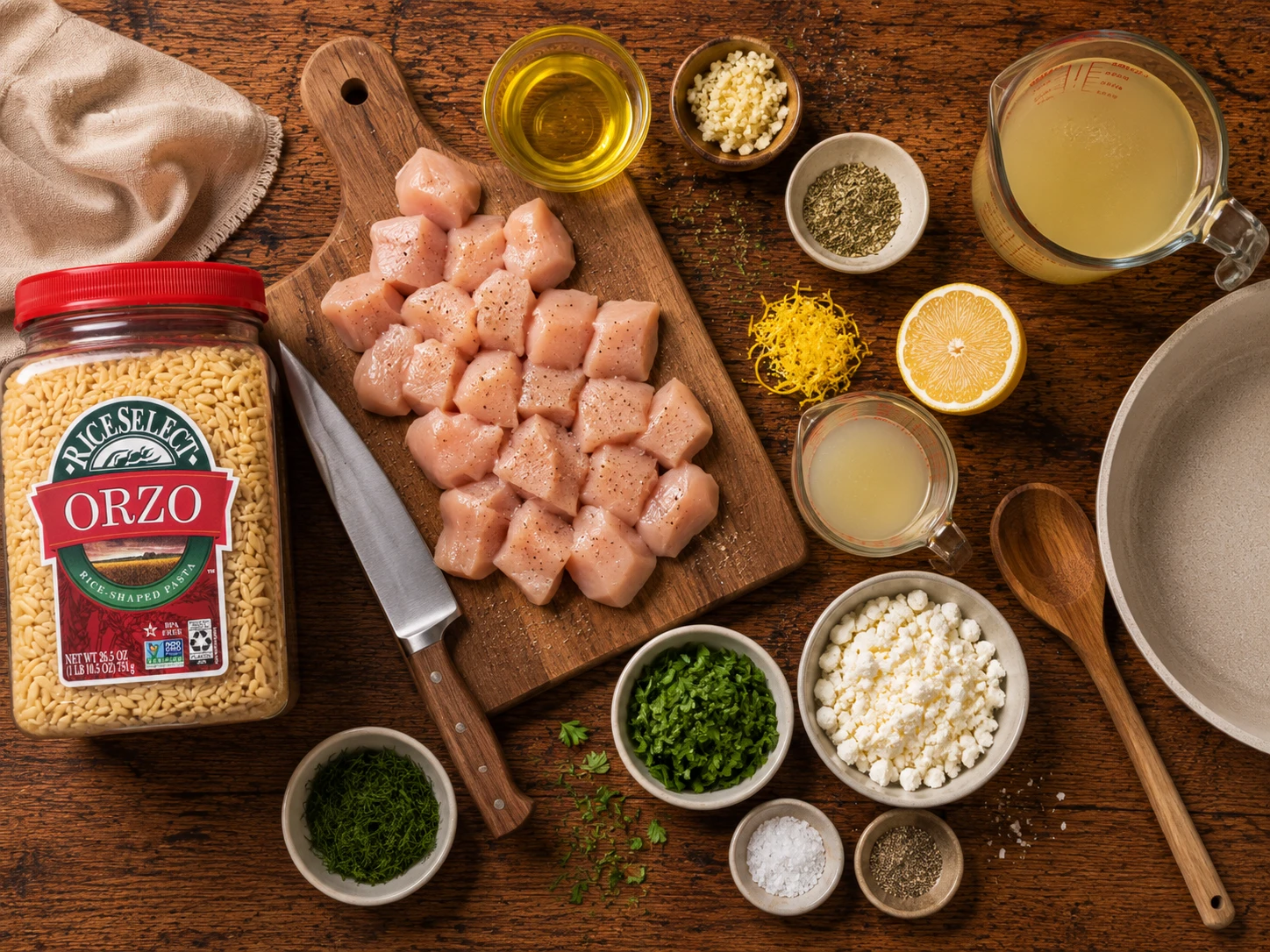
Dry orzo: Orzo is rice-shaped pasta, not a grain, so it cooks in under 10 minutes and sticks easily. Stir every 2 minutes and cook only until tender with the faintest bite.
Gluten-free swap: Use 1 1/2 cups gluten-free orzo, usually made from corn and rice or from lentils. It absorbs liquid faster and can go from firm to soft in about a minute, so start checking at 6 minutes and keep the extra broth handy since some brands drink up noticeably more.
Dairy-free swap: Replace the 1/3 cup crumbled feta with 1/3 cup dairy-free feta-style crumbles or with 2 tbsp capers plus an extra squeeze of lemon for the same briny lift. Dairy-free feta is usually saltier and softer, so fold it in off the heat and taste before adding the final 1/4 tsp sea salt.
Vegetable broth: Swapping vegetable broth for the chicken broth changes the flavor toward something rounder and slightly sweeter, and works fine. It does not make the dish vegetarian, because the chicken stays in the recipe.
Broth sodium varies by brand: Low-sodium broths range from about 70 mg to 500 mg of sodium per cup, and this recipe uses 3 cups plus feta. Taste before the final salt; the sodium figure here assumes a genuinely low-sodium broth.
Fresh dill, parsley, and lemon: Fresh dill and parsley are what make this taste bright; dried dill is flat here, though you can use 2 tsp if it is all you have. Zest the lemon before juicing it, and add the zest with the broth so its oils infuse the orzo while the juice keeps the finish sharp.
Nutrition estimate: Nutrition is an estimate, not a lab measurement. It assumes RiceSelect or similar regular orzo, low-sodium broth, and standard feta, and no pasta-water salt since the orzo cooks directly in broth.
Lemon Herb Chicken Orzo
Description
Lemon Herb Chicken Orzo cooks tender orzo with golden chicken, garlic, lemon, broth, dill, parsley, and feta in one skillet. The orzo absorbs the broth and releases starch for a creamy texture without cream.
Ingredients
- 1 1/2 cups dry orzo
- 1 1/4 lb boneless skinless chicken breast, cut into 1-inch cubes
- 2 tbsp olive oil, divided
- 3 garlic cloves, minced
- 1 tsp dried oregano
- 1 tsp lemon zest
- 3 tbsp fresh lemon juice
- 3 cups low-sodium chicken broth, plus up to 1/2 cup more as needed
- 2 tbsp chopped fresh dill
- 3 tbsp chopped fresh parsley
- 1/3 cup crumbled feta
- 3/4 tsp sea salt
- 1/2 tsp black pepper
Instructions
- 1Equipment: a 12-inch skillet with a lid, wooden spoon, tongs, paper towels, a cutting board and knife used only for raw chicken, a second board for the garlic and herbs, an instant-read thermometer, measuring cups, measuring spoons, and serving bowls.
- 2On the raw-chicken board, pat 1 1/4 lb boneless skinless chicken breast, cut into 1-inch cubes, very dry with paper towels. Put it in a bowl and season with 1 tsp dried oregano, 1/2 tsp sea salt, 1/4 tsp black pepper, and 1 tbsp olive oil, tossing until every side is coated. Wash your hands, the board, the knife, and the bowl with hot soapy water before you touch anything else in the kitchen.
- 3Heat the remaining 1 tbsp olive oil in a 12-inch skillet over medium-high heat, about 7 out of 10. When the oil is hot and moves easily around the pan, add the chicken in a single layer with space between the pieces, cooking in two batches if the pan looks crowded.
- 4Let the chicken sit without moving for 2 minutes so the bottom browns, then stir and cook 4 to 5 minutes more, turning every 1 to 2 minutes. Check the thickest piece with an instant-read thermometer; it must read 165°F. Color alone is not a reliable sign of doneness, so a golden outside or white center does not prove the chicken is safe. Move the cooked chicken to a clean plate or bowl, never back onto the plate or board that held it raw.
- 5Lower the heat to medium. Add 3 minced garlic cloves to the oil left in the skillet and stir 30 seconds until you can smell the garlic. Add 1 1/2 cups dry orzo and stir for 1 minute, until the grains smell nutty and look lightly toasted and coated in the garlicky oil. Toasting builds flavor and helps the orzo hold its shape instead of turning to mush.
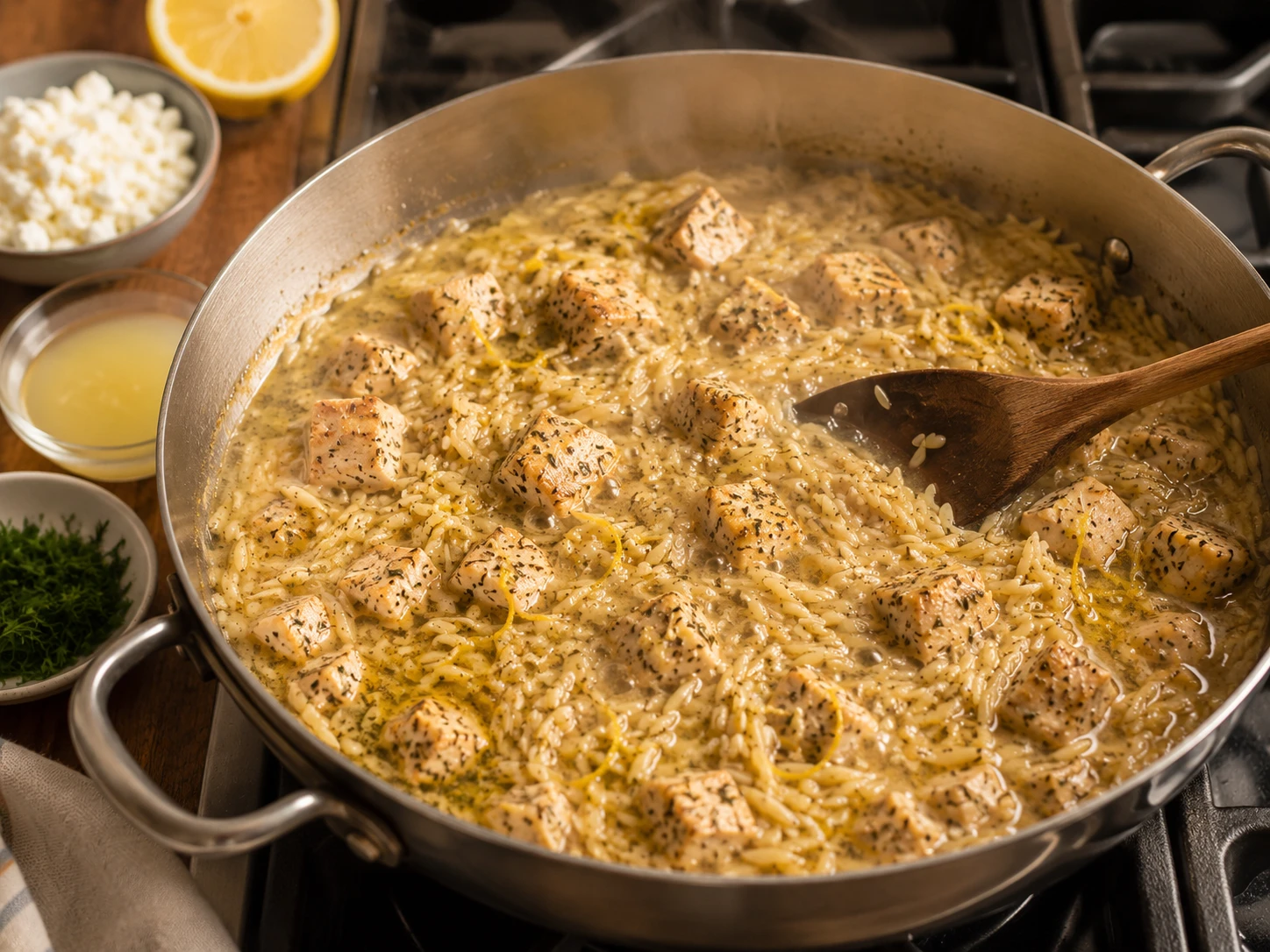
- 6Pour in 3 cups low-sodium chicken broth, 2 tbsp of the fresh lemon juice, and 1 tsp lemon zest. Bring to a gentle simmer with small bubbles across the surface, not a hard boil, then cook 8 to 10 minutes, stirring every 2 minutes and scraping the bottom so the orzo does not stick and scorch.
- 7Judge by look, not the clock: the orzo is ready when the grains are tender with the faintest bite and the liquid has thickened into a creamy, risotto-like coating rather than a soupy pool. If it looks dry or the grains are still chalky, add the extra broth 2 tablespoons at a time, up to 1/2 cup, and keep simmering.
- 8Turn off the heat. Return the cooked chicken with any juices and gently stir in the remaining 1 tbsp fresh lemon juice, 2 tbsp chopped dill, 3 tbsp chopped parsley, 1/3 cup crumbled feta, 1/4 tsp sea salt, and 1/4 tsp black pepper. Adding these off the heat keeps the herbs green and leaves the feta in soft salty crumbles instead of melting away. Taste and serve right away. Reserving that last tablespoon of lemon juice until the burner is off keeps the lemon finish bright, since the simmered juice loses much of its fresh punch.
Tips and Tricks
- 1
Toast the Orzo Before the Liquid: That one minute of stirring the dry orzo in the garlicky oil gives the grains a nutty flavor and a slightly sealed surface. Skipping it is the difference between creamy orzo and a pan of soft, pasty grains.
- 2
Stir Every Two Minutes: Orzo is small and heavy, so it settles onto the skillet bottom and scorches faster than boiled pasta. Scrape the bottom with a wooden spoon every couple of minutes; the stirring also releases the starch that makes this creamy without any cream.
- 3
Add the Extra Broth by Sight: Do not follow the clock alone. Chalky grains sitting in a nearly dry pan need more liquid, so add the reserved broth two tablespoons at a time, up to 1/2 cup. A loose, soupy pan needs no broth at all, just another minute uncovered.
- 4
Feta and Herbs Off the Heat, Then Balance the Lemon: Kill the burner before folding in the feta, dill, and parsley so the cheese stays in crumbles and the herbs keep their color. Taste at that point: feta is salty and lemon fades as it cooks, so adjust the last pinch of salt only after everything is in.
Nutrition
Serving size: 1 serving (1/4 recipe)
Calories: 510kcal, Protein: 43g, Carbs: 51g, Fat: 14g, Fiber: 3g, Sugar: 3g, Sodium: 1040mg.
Nutrition information is an estimate and may vary based on ingredient brands, product sizes, preparation methods, and substitutions. It is not intended as medical or dietary advice.