
Mango Pineapple Protein Bowl
 By Better Plate Recipes
Have a recipe from another site? Import it →
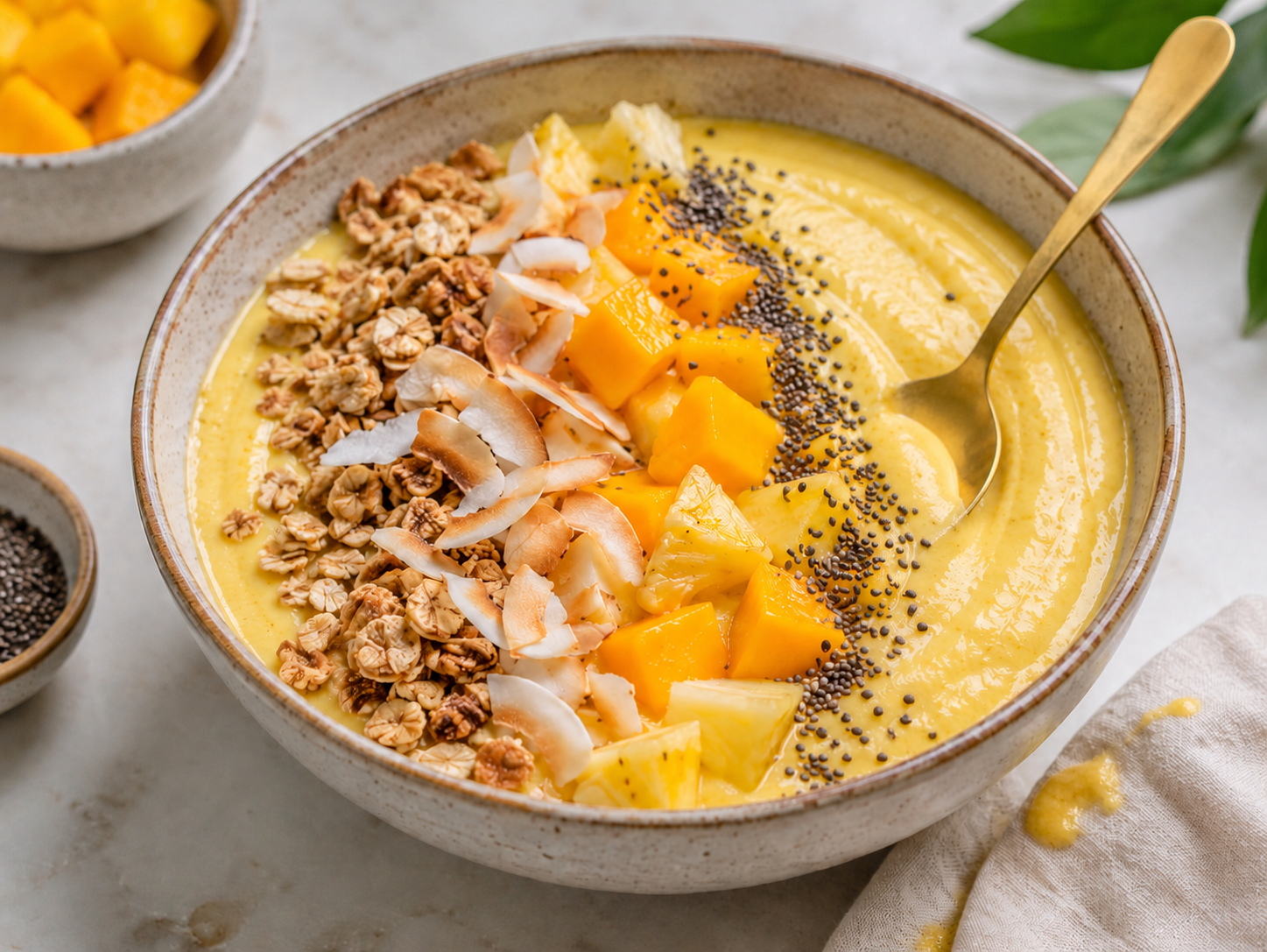
Frozen mango, pineapple, vanilla protein powder, Greek yogurt, and coconut milk blend into a sunny protein smoothie bowl. Granola, toasted coconut, diced mango, and chia seeds add crunch and freshness. The base should be thick enough to hold those toppings in place. Serve it cold, bright, and thick.
Why You’ll Love This Recipe
You will love Mango Pineapple Protein Bowl because it turns frozen fruit and creamy add-ins into something that feels fresh, filling, and fun to eat. In this recipe, mango and pineapple make the bowl bright and sweet, vanilla protein powder adds staying power, Greek yogurt gives it a creamy spoonable base, and coconut milk helps everything blend. Granola, toasted coconut, diced mango, and chia add crunch, tropical flavor, juicy pieces, and tiny seed texture. The beginner cue is simple: the base should look sunny yellow, creamy, thick, and smooth with no powdery protein clumps. A pourable base melts faster and will not hold the topping layer well. Because it is no-cook, the main skill is patience with the blender: stop, scrape, and add liquid carefully. That simple rhythm keeps the bowl thick, neat, and easy to repeat.
Texture and Blend Notes
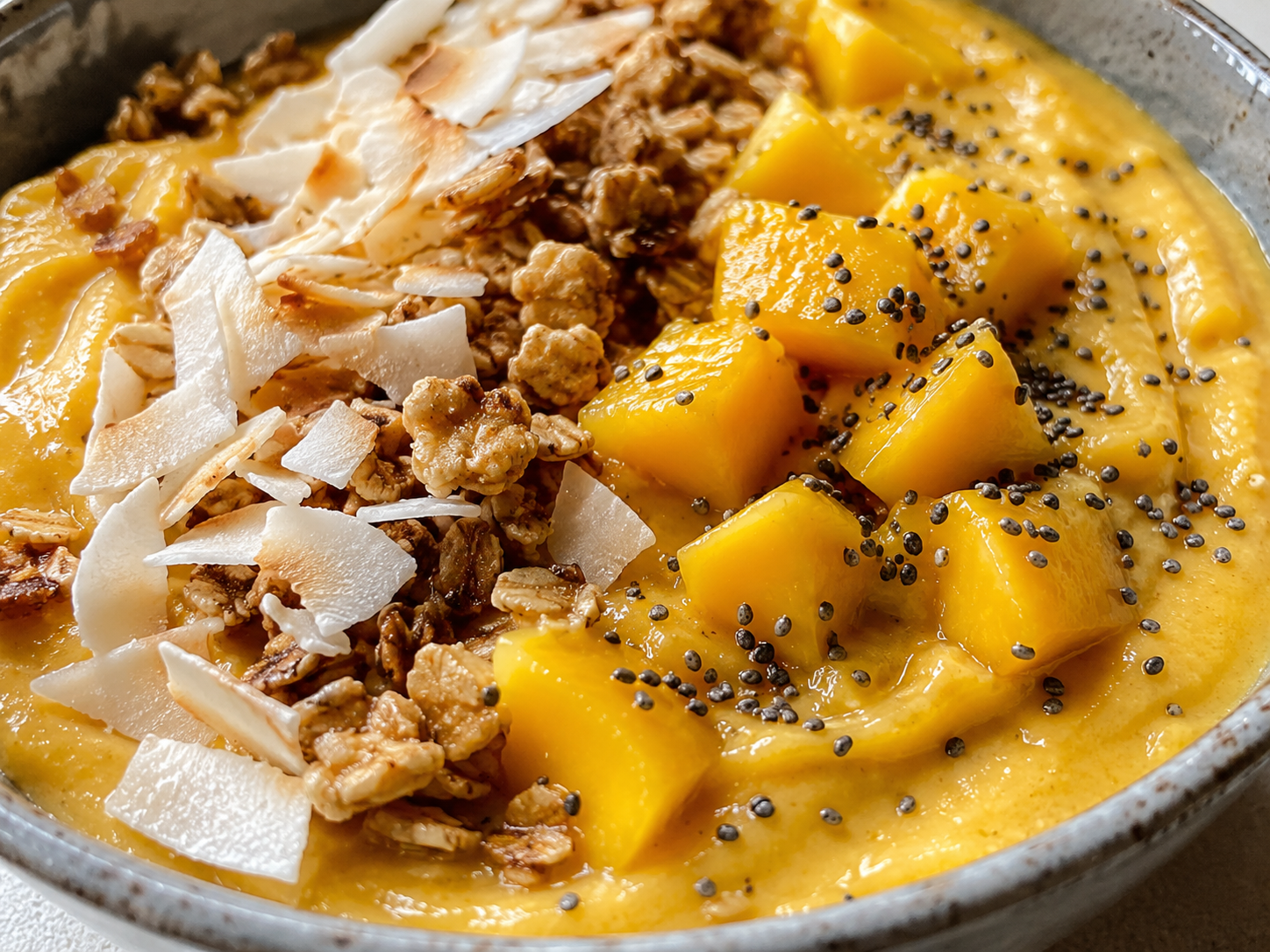
A good smoothie bowl starts before the toppings ever go on. Frozen fruit is dense, so a slow start gives the blades time to grab the mixture and smooth it out. Add the measured coconut milk first, keep 2 tablespoons nearby, then add the softer ingredients before the frozen fruit. Start gently, pause when fruit climbs the sides, and scrape with a rubber spatula only while the machine is off. The finish line is visual: the base should be sunny yellow, creamy, thick, and smooth with no powdery protein clumps. That is the difference between a drinkable smoothie and a bowl that can hold fruit, granola, seeds, and drizzles. That small pause keeps the finished bowl closer to sunny yellow, creamy, thick, and smooth with no powdery protein clumps instead of thin or slushy.
Ingredient Notes & Easy Swaps
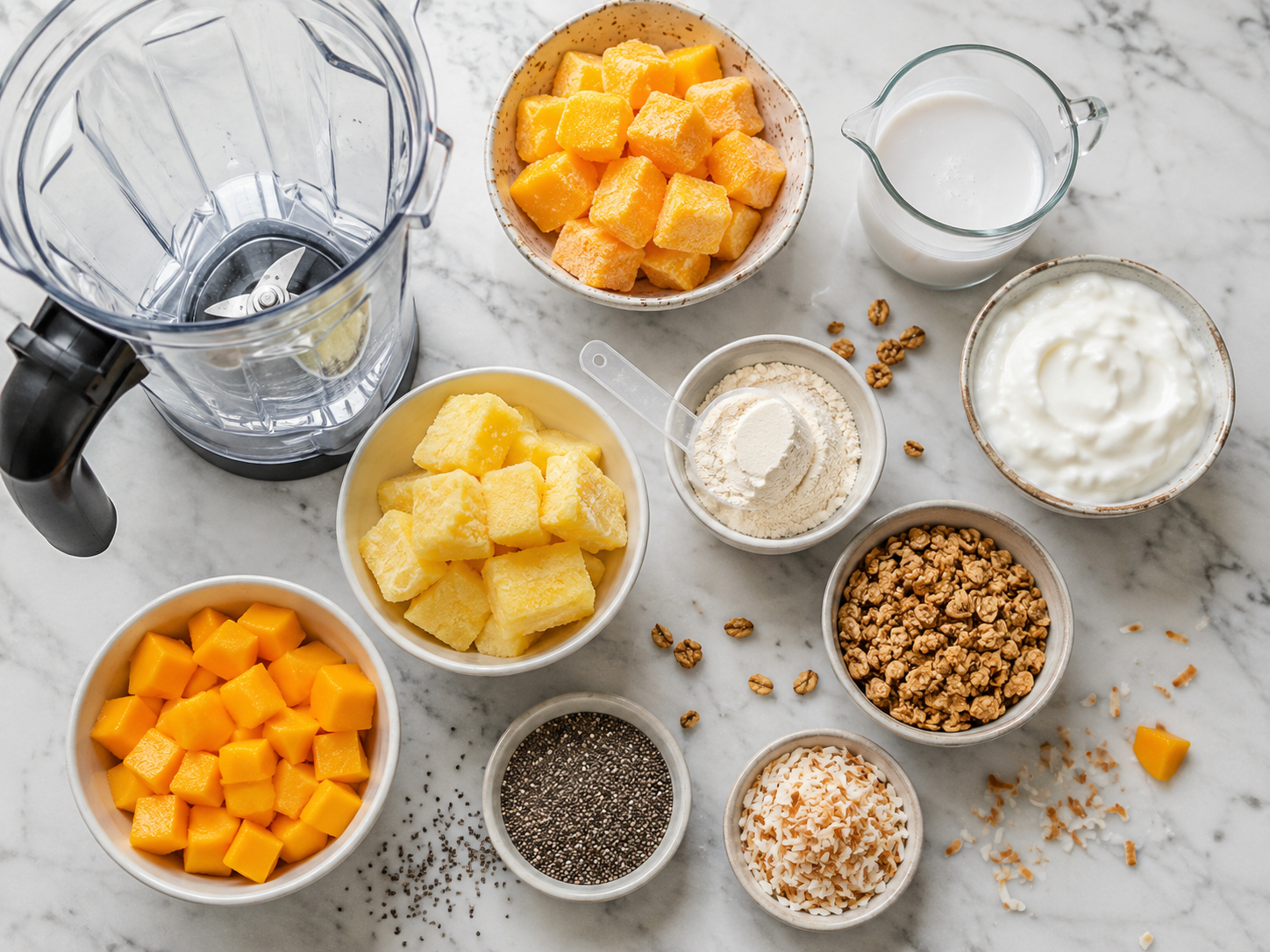
Frozen mango: Frozen mango makes the base thick, sunny, and naturally sweet. Keep it frozen until blending so the bowl stays spoonable.
Frozen pineapple: Pineapple adds bright tropical flavor and a little tang. If you want a sweeter bowl, use more mango and a little less pineapple.
Vanilla protein powder: Protein powder helps make the bowl more filling. Use a vanilla protein powder that blends smoothly and does not taste chalky.
Greek yogurt: Greek yogurt adds creaminess and protein. Coconut yogurt can work for a more tropical flavor, but it may add less protein depending on the brand.
Coconut milk: Coconut milk helps the blender move and adds richness. Add extra only a teaspoon at a time so the base does not turn thin.
Granola: Granola adds crunch and contrast to the smooth mango-pineapple base. Add it at the end so it stays crisp.
Toasted coconut: Toasted coconut gives a stronger coconut flavor and a little crunch. Regular unsweetened coconut flakes can work if you do not have toasted coconut.
Diced mango: Fresh or thawed diced mango adds juicy pieces on top. Keep the pieces small so they are easy to scoop.
Chia seeds: Chia seeds add texture and help the bowl feel more satisfying. Sprinkle them evenly so they do not clump in one spot.
Mango Pineapple Protein Bowl
Description
Frozen mango, pineapple, vanilla protein powder, Greek yogurt, and coconut milk blend into a sunny protein smoothie bowl. Granola, toasted coconut, diced mango, and chia seeds add crunch and freshness. The base should be thick enough to hold those toppings in place. Serve it cold, bright, and thick.
Ingredients
- 1.5 cups frozen mango
- 1 cup frozen pineapple
- 1 scoop vanilla protein powder
- 1/2 cup plain Greek yogurt
- 1/2 cup coconut milk
- 1/4 cup granola
- 2 tbsp toasted coconut
- 1/4 cup diced mango
- 1 tbsp chia seeds
Instructions
- 1Equipment: a high-speed blender, a rubber spatula, measuring cups, measuring spoons, a cutting board, a sharp knife, paper towels or a clean kitchen towel, a spoon, a can opener when using canned coconut milk, and 2 medium serving bowls. When desired, place the bowls in the freezer while preparing the ingredients.
- 2Prepare the toppings before blending. When the fresh mango is not already diced, wash and dry it. Slice the two fleshy sides away from the flat center pit, peel the usable pieces, and dice enough mango flesh to measure 1/4 cup. Keep the 1/4 cup granola, 2 tablespoons toasted coconut, and 1 tablespoon chia seeds dry until assembly.
- 3When using canned coconut milk, open the can and stir until the thick cream and thinner liquid are evenly combined. When using coconut milk from a carton, shake the closed carton well before measuring.
- 4Measure 1/2 cup coconut milk. Reserve 2 tablespoons beside the blender and pour the remaining coconut milk into the blender.
- 5Add 1 1/2 cups frozen mango, 1 cup frozen pineapple, 1 scoop vanilla protein powder, and 1/2 cup plain Greek yogurt. Secure the blender lid.
- 6Start on low speed for 15 to 20 seconds, then gradually increase to medium-high. Blend for 1 to 2 minutes of total machine-running time. Stop every 20 to 30 seconds as needed, wait for the blades to stop completely, remove the lid, and scrape down the sides with the rubber spatula. Never place the spatula in the blender while the blades are moving.
- 7Check the texture. The base should be sunny yellow, smooth, thick, and free of dry protein-powder clumps or frozen-fruit pieces. When the blades cannot move the mixture, add the reserved coconut milk 1 teaspoon at a time, secure the lid, and blend again. Stop adding liquid as soon as the mixture becomes smooth and spoonable; do not add unused reserve just to use it.
- 8Divide all of the smoothie base evenly between the 2 serving bowls and smooth the tops with the back of the spoon.
- 9Divide the granola, toasted coconut, diced fresh mango, and chia seeds evenly between the bowls.
- 10Serve immediately while the base is cold, thick, and scoopable.
Tips and Tricks
- 1
Measure First: Measure 1/2 cup coconut milk, set out the frozen fruit, and have the toppings ready before the blender starts. Smoothie bowls move fast once they begin, and a calm setup keeps you from pouring in extra liquid just because the mixture looks stuck.
- 2
Add Liquid Slowly: Keep the reserved liquid close, but treat it like a backup, not a shortcut. Add only 1 teaspoon at a time when the blades truly stop moving. That patience keeps the base thick enough for toppings instead of turning it into a drink.
- 3
Pause Before Scraping: Frozen fruit often sticks above the blades in a thick smoothie bowl. Turn the blender fully off, remove the lid, scrape the sides with a rubber spatula, then replace the lid before blending again. The texture gets smoother without making the bowl thin.
- 4
Eat While Thick: Mango Pineapple Protein Bowl is best while the base is cold and the toppings still have texture. If you need a head start, measure toppings and portion frozen fruit ahead, but wait to blend and assemble until just before serving.
Nutrition
Per serving — Calories: 480kcal, Protein: 24g, Carbs: 52g, Fat: 22g, Fiber: 7g, Sugar: 37g, Sodium: 70mg.
Nutrition information is an estimate and may vary based on ingredient brands, product sizes, preparation methods, and substitutions. It is not intended as medical or dietary advice.