
Mediterranean Garlic Shrimp Orzo
 By Better Plate Recipes
Have a recipe from another site? Import it →
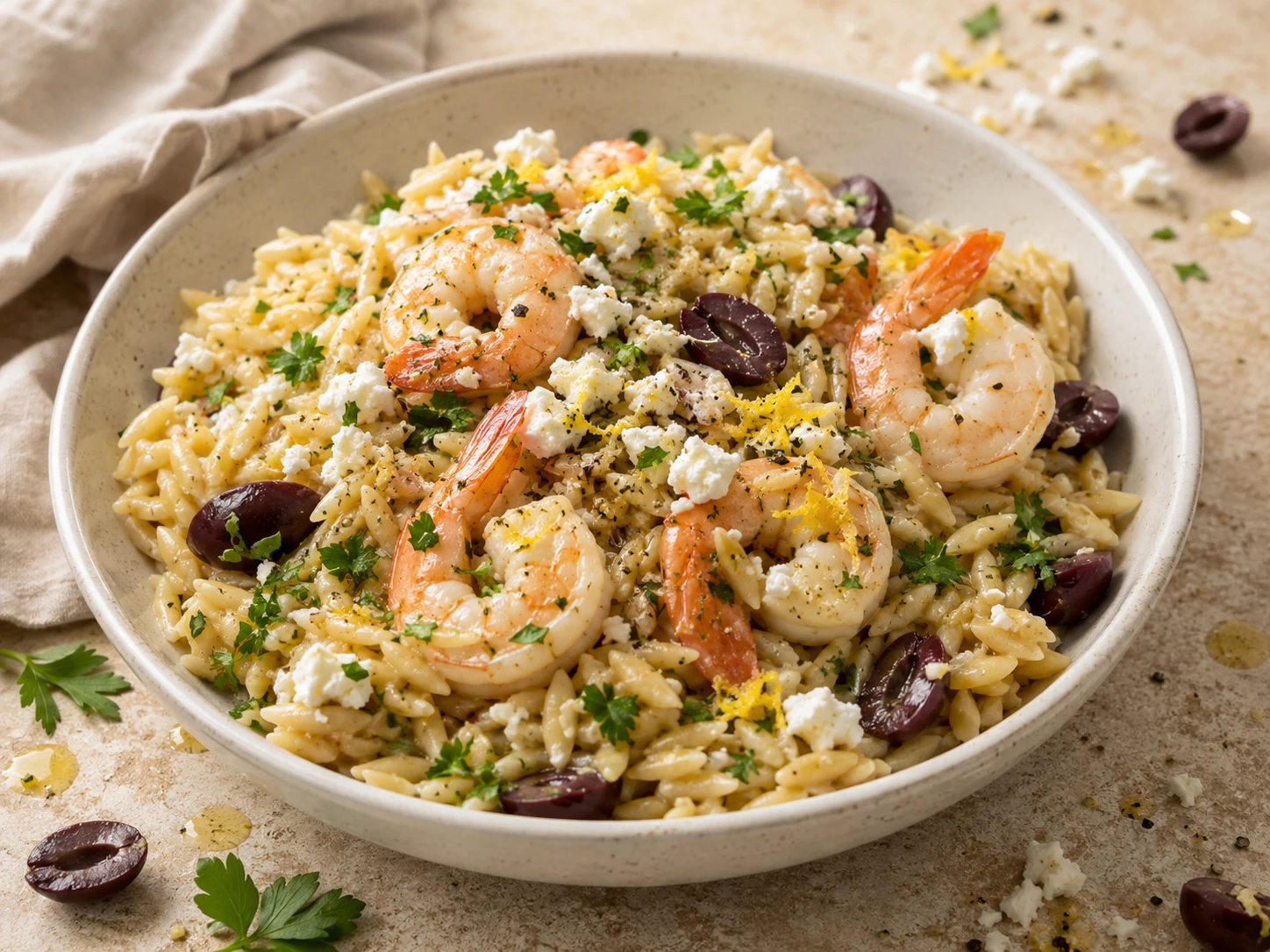
Mediterranean Garlic Shrimp Orzo cooks orzo directly in broth, then folds in oregano-seasoned shrimp, garlic, lemon, Kalamata olives, feta, and parsley for a creamy texture without cream.
Why You’ll Love This Recipe
You will love Mediterranean Garlic Shrimp Orzo because it gives you a full pasta meal without making the cooking feel stressful. The orzo absorbs broth and lemon as it cooks, so the base has flavor before the shrimp even goes back in. The flavor is specific, not generic, so every ingredient has a reason to be there. The shrimp stay juicy, the olives add briny bite, and feta melts just enough to feel creamy. It is also practical for real life: it uses one skillet after prep, which keeps cleanup simple. The method gives you clear cues for heat, timing, texture, and doneness, so you are not guessing at the stove. That makes it friendly for a brand-new cook, but still satisfying for someone who already knows their way around a skillet.
What Makes This Recipe Work
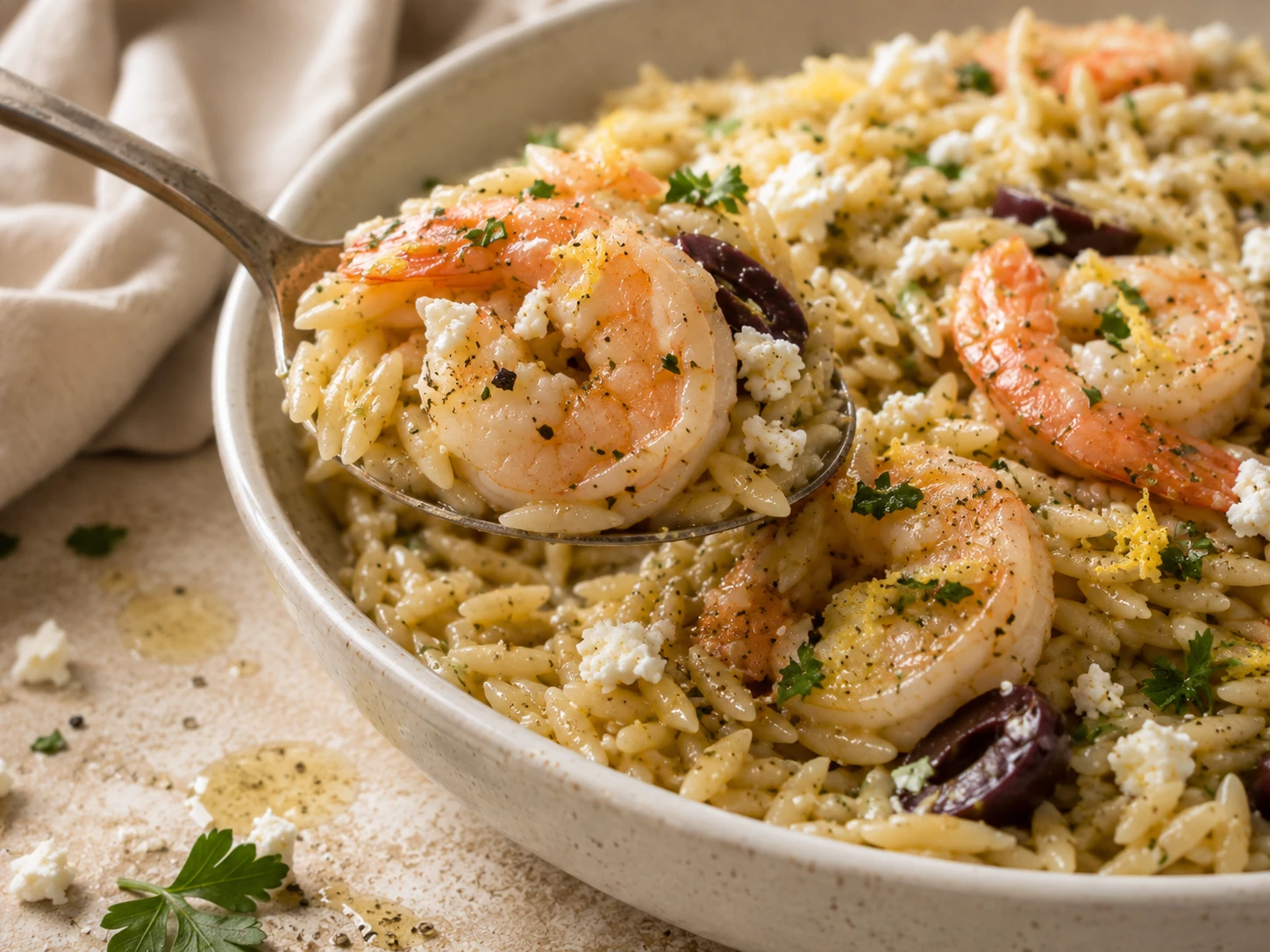
Mediterranean Garlic Shrimp Orzo works because the recipe has a clear balance: a hearty base, a flavorful sauce or dressing, and a fresh finish. Shrimp and broth-cooked orzo. Lemon juice, lemon zest, chicken broth, garlic, oregano, and olive oil season the orzo from the inside. The final layer matters too; kalamata olives, feta, and parsley. None of those details are just decoration. They keep the pasta from tasting flat and help every bite feel complete. The important part is pacing. Pasta should be cooked just until tender, proteins should come off the heat as soon as they are done, and sauces should be loosened slowly so they cling instead of turning watery. When those small pieces are handled carefully, the recipe tastes polished without needing complicated techniques or restaurant equipment.
Ingredient Notes & Easy Swaps
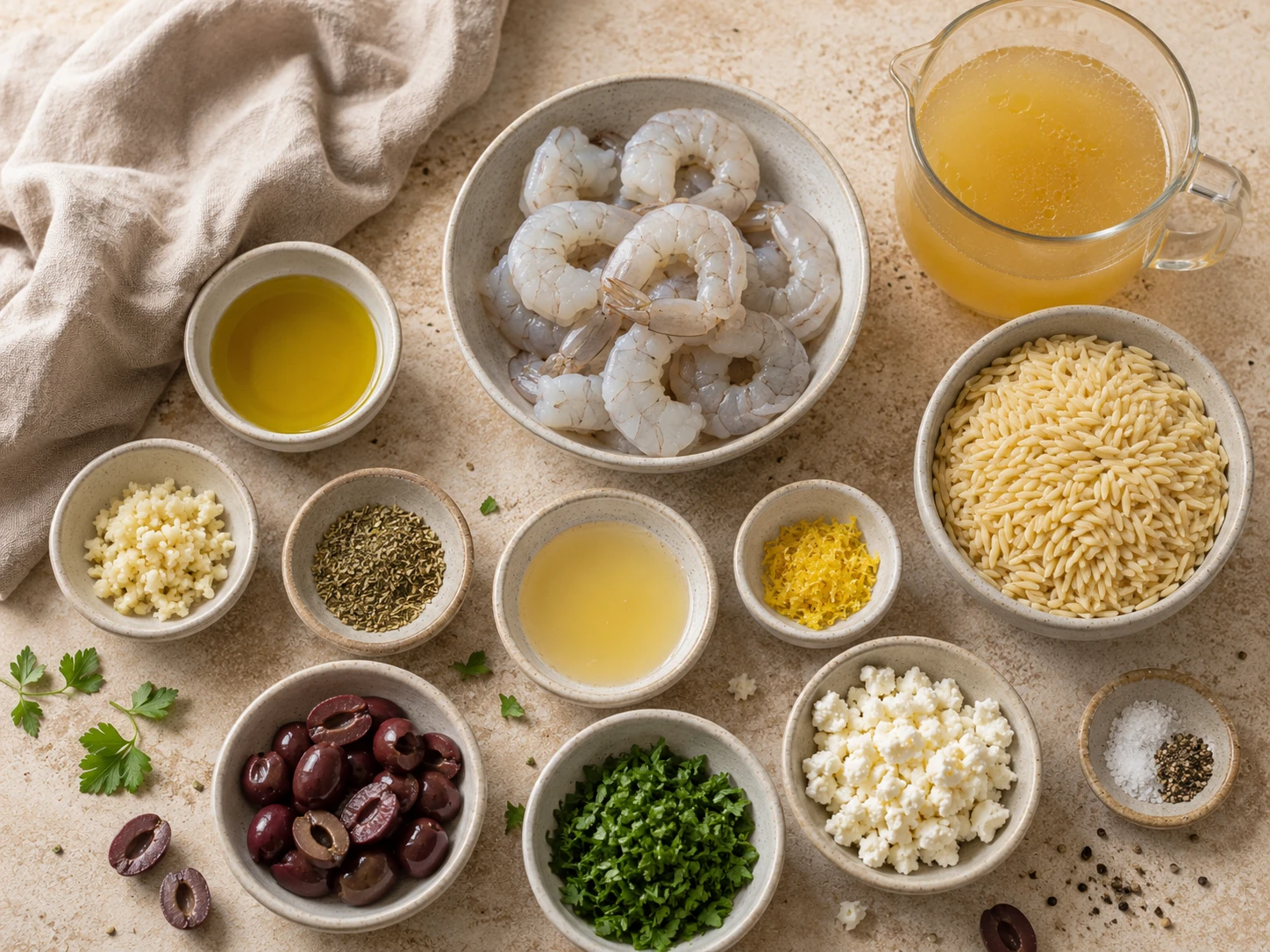
Dry orzo: Orzo looks like rice but it is pasta, and here it cooks directly in the broth so it releases starch into the pan and turns creamy without any cream. Stir every couple of minutes so it does not stick. Whole wheat orzo works but needs a little more broth and time.
Gluten-free orzo: Corn- or rice-based gluten-free orzo works in this method, but it absorbs liquid faster and can go soft suddenly. Start checking at 6 minutes and keep the extra 1/2 cup broth nearby, adding it 2 tablespoons at a time.
Dairy-free feta: Replace the 1/2 cup crumbled feta with a dairy-free almond- or tofu-based feta-style crumble, folded in off the heat the same way. Dairy-free versions are usually softer and saltier, so add a little less and taste before adjusting the salt.
Low-sodium chicken broth: The orzo absorbs the broth almost entirely, so the broth's salt concentrates in the finished dish. Low-sodium is important here. Vegetable broth swaps in directly and changes the flavor slightly, but it does not make this dish vegetarian, since the shrimp remain.
Kalamata olives and feta: These two carry most of the salt alongside the broth, which is why this dish sits higher in sodium than the other pasta recipes. Rinse the olives briefly if they are very briny, and taste before adding the last 1/2 teaspoon of salt.
Lemon juice and zest: The 3 tablespoons of juice are split deliberately: 2 tablespoons go in with the broth so the flavor cooks into the orzo, and the last tablespoon goes in off the heat with the zest so the finish tastes fresh. Zest the lemon before juicing it.
Garlic and oregano: Five cloves is a lot on purpose; this is a garlic-forward dish, and the cloves mellow as the orzo simmers. Dried oregano seasons the shrimp and holds up better than fresh in a quick sear.
Nutrition estimate: Nutrition is an estimate, not a lab measurement. It assumes RiceSelect or a similar regular orzo, peeled and deveined shrimp, low-sodium chicken broth, standard brined Kalamata olives, and standard crumbled feta. No pasta-water salt is involved because the orzo cooks in broth.
Mediterranean Garlic Shrimp Orzo
Description
Mediterranean Garlic Shrimp Orzo cooks orzo directly in broth, then folds in oregano-seasoned shrimp, garlic, lemon, Kalamata olives, feta, and parsley for a creamy texture without cream.
Ingredients
- 1 1/2 cups dry orzo
- 1 1/4 lb large shrimp, peeled and deveined
- 2 tbsp olive oil, divided
- 5 garlic cloves, minced
- 1 tsp dried oregano
- 3 cups low-sodium chicken broth, plus up to 1/2 cup more as needed
- 3 tbsp fresh lemon juice
- 1 tsp lemon zest
- 1/3 cup pitted kalamata olives, halved
- 1/2 cup crumbled feta
- 1/4 cup chopped fresh parsley
- 3/4 tsp sea salt
- 1/2 tsp black pepper

Instructions
- 1Equipment: a 12-inch skillet with a lid, a wooden spoon, tongs, paper towels, a bowl for the raw shrimp, a clean bowl for the cooked shrimp, a separate clean cutting board and knife for the produce, measuring cups, measuring spoons, an instant-read thermometer, and serving bowls.
- 2Mince the garlic, halve the olives, chop the parsley, and zest and juice the lemon on a separate clean produce board, before you handle the shrimp.
- 3Pat the 1 1/4 lb shrimp dry on both sides with paper towels and season them in their own bowl with 1 teaspoon dried oregano, 1/4 teaspoon sea salt, and 1/4 teaspoon black pepper. Keep the raw shrimp in its own bowl, away from the cutting board you use for produce, and wash your hands with soap and warm water for 20 seconds after handling it. Wash the bowl, and any tool that touched raw shrimp, in hot soapy water before it touches anything ready to eat.
- 4Heat 1 tablespoon olive oil in the 12-inch skillet over medium-high heat, about 7 out of 10, until the oil looks thin and moves easily around the pan. Add the shrimp in one layer, cook 1 1/2 minutes, flip with tongs, and cook 1 to 1 1/2 minutes more. They are done when the thickest shrimp reads 145°F on an instant-read thermometer, or, if a thermometer is not practical with small shrimp, when the flesh is firm, pearly, and opaque all the way through with no translucent center. A loose curl is only a secondary hint; a C shape by itself does not prove doneness. Move the cooked shrimp to a clean bowl and return it to the pan only briefly at the end so it does not overcook.
- 5Lower the heat to medium and add the remaining 1 tablespoon olive oil and the 5 minced garlic cloves. Stir 30 seconds, then add 1 1/2 cups dry orzo and stir for 1 minute, until the grains smell nutty and a few turn light golden. Toasting the orzo keeps the grains distinct instead of pasty.
- 6Pour in 3 cups low-sodium chicken broth and 2 tablespoons of the lemon juice. Bring it to a gentle simmer, with small bubbles breaking steadily rather than a hard boil, and adjust the burner to hold it there.
- 7Cook 8 to 10 minutes, stirring every 2 minutes and scraping the bottom so the orzo does not stick, until the grains are tender and most of the liquid is absorbed. If the pan looks dry but a grain still tastes chalky in the center, add more broth 2 tablespoons at a time, up to 1/2 cup total, and keep cooking.
- 8Stir in the 1/3 cup halved Kalamata olives, 1/2 teaspoon sea salt, and 1/4 teaspoon black pepper. Return the cooked shrimp and gently stir for about 30 seconds, just to warm them through.
- 9Turn off the heat. Add the remaining 1 tablespoon lemon juice, 1 teaspoon lemon zest, 1/2 cup crumbled feta, and 1/4 cup chopped parsley. Let it sit 2 minutes so the feta softens into creamy pockets, then serve warm.
Tips and Tricks
- 1
Toast the orzo before the broth: Stir the dry orzo in the garlicky oil for a full minute, until it smells nutty and a few grains turn light golden. That brief toast firms the outside of each grain so they stay distinct in the broth instead of breaking down into a pasty mass.
- 2
Stir every 2 minutes: Orzo is small and heavy, so it settles and scorches on the skillet bottom faster than you would expect. Scrape the bottom with a wooden spoon every couple of minutes; this also releases starch evenly, which is what gives the dish its creamy texture without any cream.
- 3
Add extra broth by sight, not by clock: If the pan looks dry but a grain still tastes chalky at the center, add broth 2 tablespoons at a time, up to 1/2 cup total. Pouring in a large splash at once floods the pan and leaves you with soupy orzo you then have to boil down.
- 4
Finish the feta, lemon, and parsley off the heat: Turn the burner off first. Residual heat softens the feta into salty creamy pockets rather than melting it away into the orzo, and the last tablespoon of lemon juice keeps its sharpness instead of cooking flat.
Nutrition
Serving size: 1 serving (1/4 recipe)
Calories: 555kcal, Protein: 43g, Carbs: 56g, Fat: 16g, Fiber: 3g, Sugar: 2g, Sodium: 1350mg.
Nutrition information is an estimate and may vary based on ingredient brands, product sizes, preparation methods, and substitutions. It is not intended as medical or dietary advice.