
Salmon Avocado Rice Bowl
 By Better Plate Recipes
Have a recipe from another site? Import it →
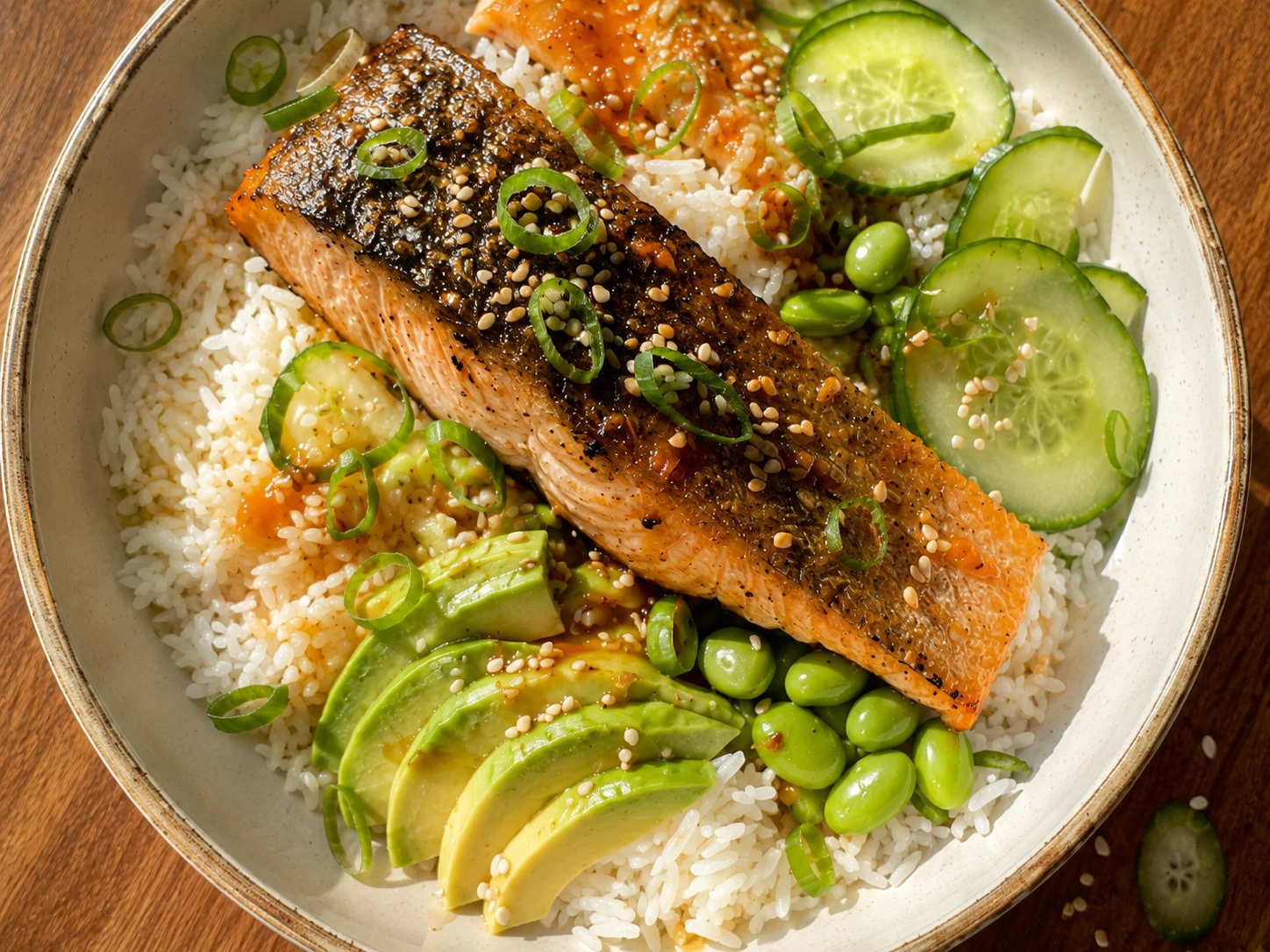
Salmon Avocado Rice Bowl layers crisp-skinned salmon, warm seasoned sushi or jasmine rice, avocado, cucumber, edamame, ginger soy sauce, sesame seeds, and green onions into a fresh but filling lunch. The rice gets vinegar and sesame oil, while the sauce adds sweet, salty, gingery brightness.
Why You’ll Love This Recipe
This bowl feels like something you would order out, but it comes together with simple parts at home. The salmon brings rich flavor and satisfying protein, while the rice makes the bowl feel warm and comforting. Seasoning the rice with rice vinegar and sesame oil keeps it from tasting plain, and the ginger soy sauce gives every bite a bright, savory finish. Avocado adds creaminess, cucumber adds crunch, and edamame gives extra texture and plant protein. The method is quick, but it still teaches the important details: dry the salmon skin, let the skillet heat properly, and rest the fish before serving so the texture stays tender. Clear cues, like opaque sides and a thermometer reading, make it easier to know exactly when the salmon is ready without second-guessing.
What Makes This Recipe Work
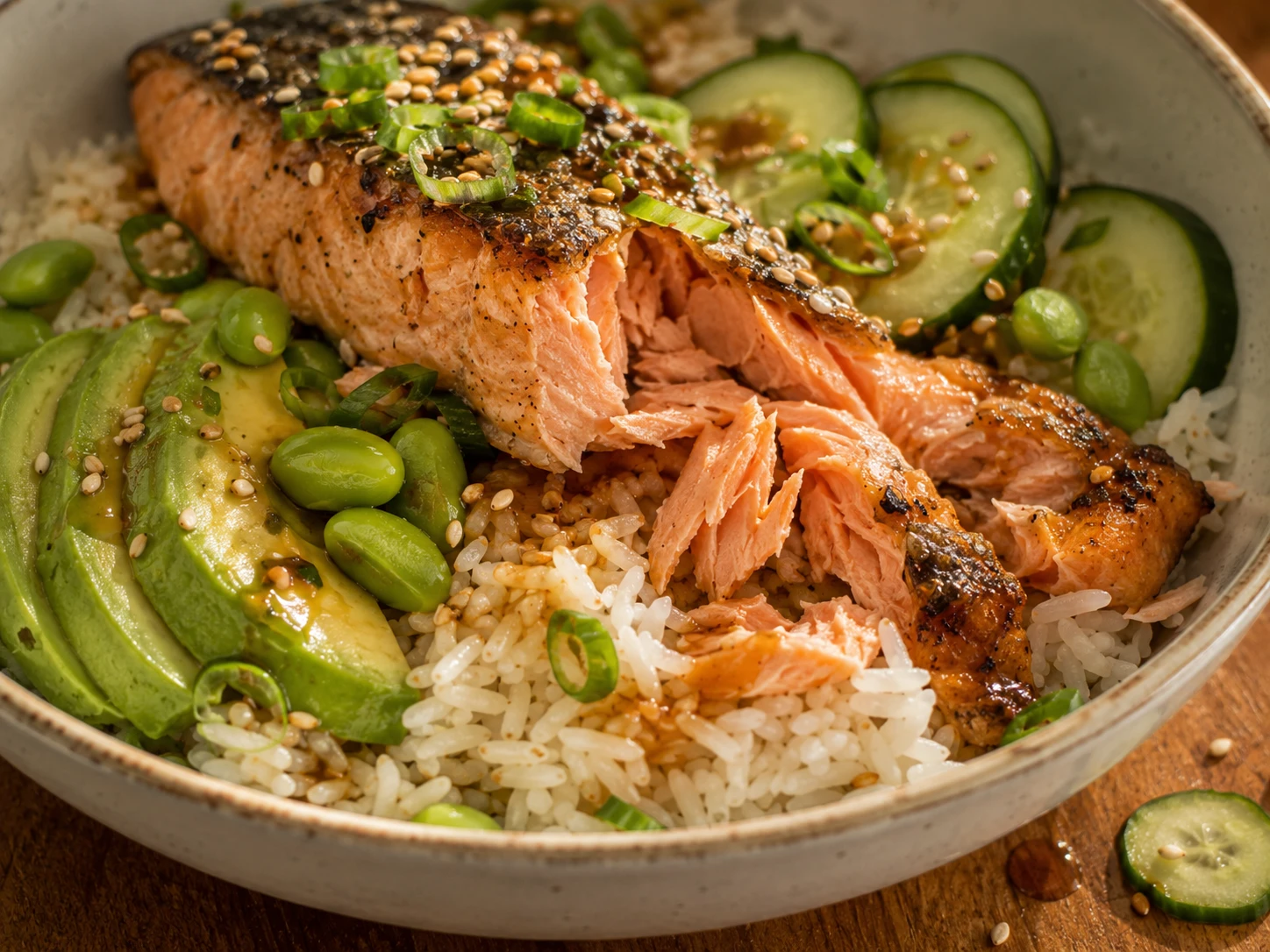
This bowl works because every part has a clear job. The salmon gives the meal its rich, savory center, while the warm rice catches the sauce and makes the bowl filling. Drying the salmon skin well before cooking helps it crisp instead of steam. Starting the fish skin side down lets the fat render slowly, which creates better texture and keeps the fillet from sticking. The vinegar and sesame oil season the rice lightly before the sauce goes on, so the base tastes balanced on its own. Cool avocado, cucumber, and edamame keep the bowl fresh, while sesame seeds and green onions add the final little crunch and sharpness. That mix of warm, cool, soft, and crisp is why the bowl tastes complete without needing extra toppings or a heavy dressing.
Before You Start
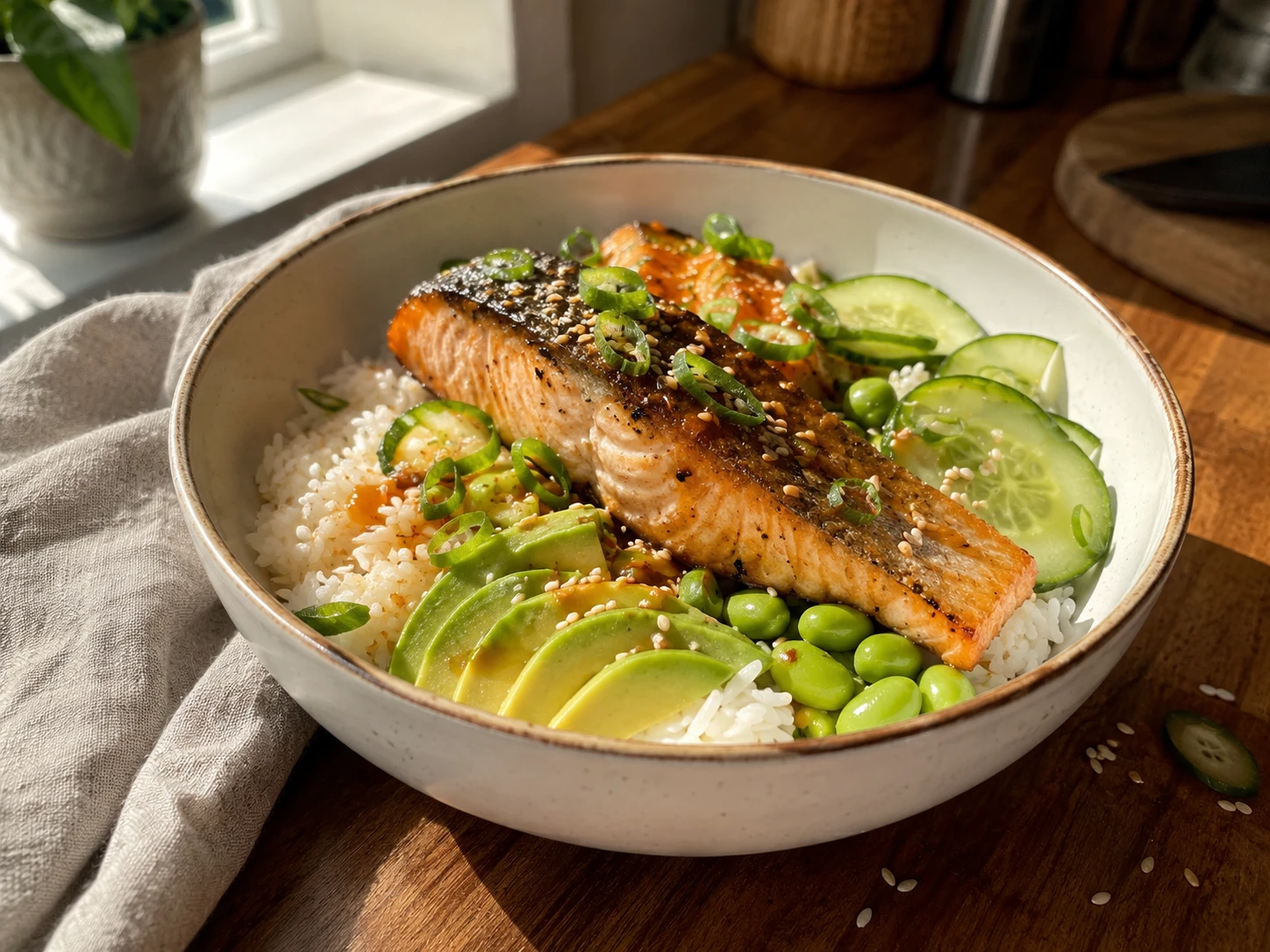
Have the rice warm, the sauce mixed, and the toppings ready before the salmon goes into the skillet. Fish cooks quickly, and the bowl tastes best when the salmon is hot and the rice is still soft. Pat the salmon very dry with paper towels, especially on the skin side, because moisture is the enemy of crisp skin. Use a large nonstick or stainless skillet that gives both fillets room to sit flat. If the avocado is very ripe, slice it last so it does not brown or lose its shape. Keep a thin fish spatula nearby so you can slide under the salmon gently without tearing the skin. Also check that your rice is not cold from the fridge; slightly warm rice loosens more easily and takes on the vinegar-sesame seasoning better.
Serving Ideas
Serve this bowl right after cooking for the best contrast between crisp salmon skin, warm rice, creamy avocado, and cool cucumber. Spoon the sauce over the salmon and rice instead of drowning the fresh toppings, so the avocado stays clean and the cucumber stays crisp. For a fully cooked salmon texture, cook until the thickest part reaches 145 degrees F. If you are comfortable with a softer medium center, remove it earlier, but check carefully and use fresh, properly handled fish. Leftovers can be served cold over rice and vegetables, though the salmon skin will soften once refrigerated. Add the sesame seeds and green onions last so they keep their clean flavor and do not get buried under the sauce. Keep any extra sauce on the side if you like a lighter bowl.
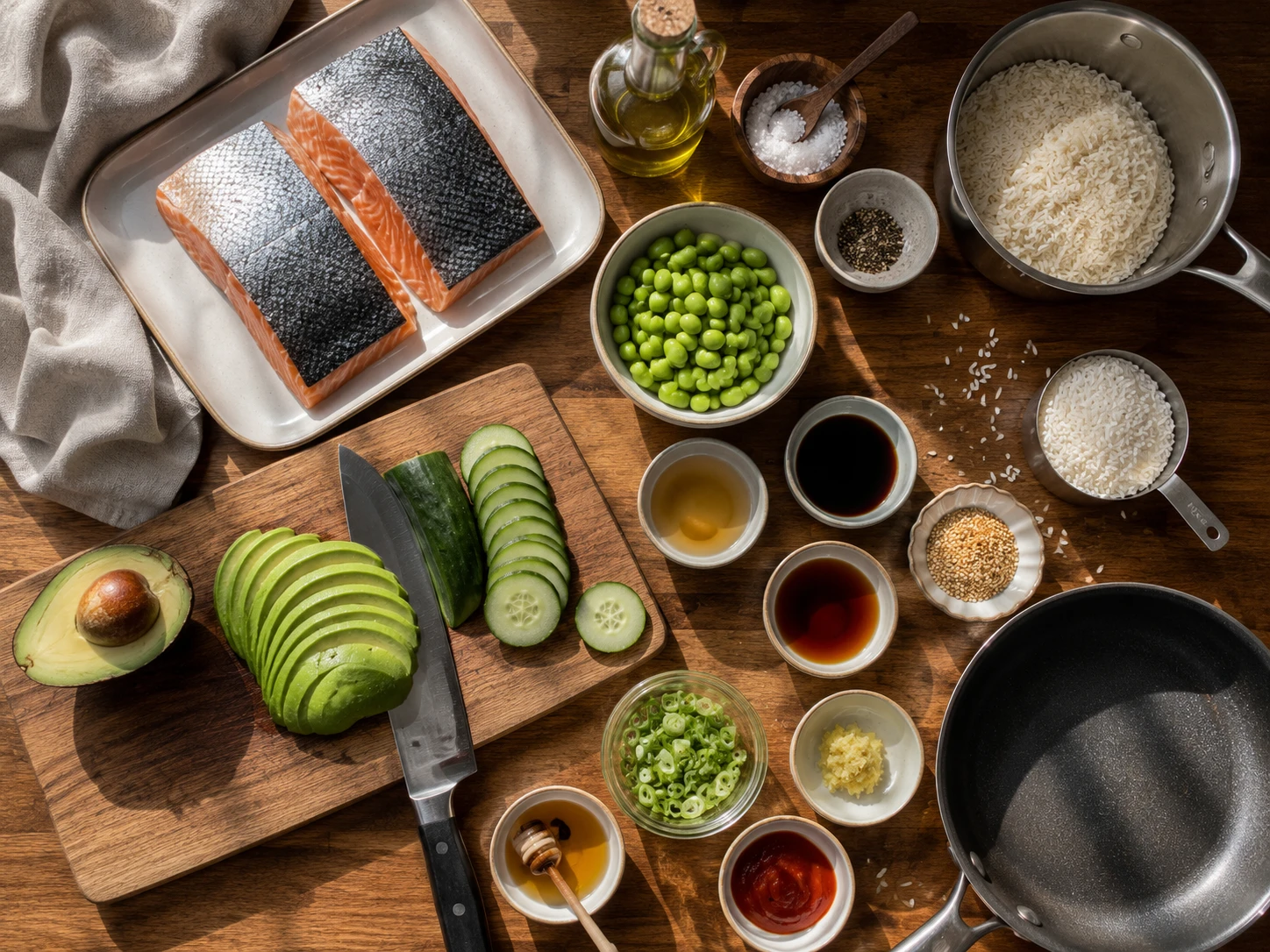
Ingredient Notes & Easy Swaps
Salmon: Use two 6-ounce fillets and pat the skin very dry. Cook to 145 degrees F. Wild salmon is generally leaner than Atlantic salmon, so the type chosen changes the calorie and fat estimate.
Cooked sushi or jasmine rice: Measure 2 cups cooked warm rice, not dry rice. The final preparation image shows dry rice; about 2/3 cup dry usually yields 2 cups cooked, but follow the package. Use 2 cups cooked brown rice or quinoa and follow its different liquid and cooking time.
Avocado and cucumber: Prepare and slice these before handling raw salmon, or use a separate board. Wash and sanitize any board and knife that touched raw fish before reuse.
Edamame: Use 1/2 cup cooked shelled edamame, thawed if frozen and drained. For a soy-free bowl, replace it with 1/2 cup cooked green peas.
Soy sauce or tamari: Use certified gluten-free tamari for gluten-free needs. For soy-free needs, use coconut aminos; because it is sweeter, reduce the honey to 1/2 teaspoon or omit the honey.
Rice vinegar and toasted sesame oil: These season the warm rice. Toasted sesame oil is strong, so measure the listed 1 teaspoon rather than pouring freely.
Fresh ginger, honey, and sriracha: Fresh ginger gives the best brightness. Honey balances the sauce, and sriracha is optional; leave it out or serve it separately for a mild bowl.
Sesame seeds and green onions: These are finishing ingredients added just before serving. Omit sesame seeds if needed; sliced green onions still provide a fresh finish.
Salmon Avocado Rice Bowl
Description
Salmon Avocado Rice Bowl layers crisp-skinned salmon, warm seasoned sushi or jasmine rice, avocado, cucumber, edamame, ginger soy sauce, sesame seeds, and green onions into a fresh but filling lunch. The rice gets vinegar and sesame oil, while the sauce adds sweet, salty, gingery brightness.
Ingredients
- 2 (6 oz) skin on salmon fillets
- 1 tbsp avocado or olive oil
- 1/2 tsp sea salt
- 1/4 tsp black pepper
- 2 cups cooked sushi or jasmine rice (warm)
- 1 tbsp rice vinegar
- 1 tsp toasted sesame oil
- 1 ripe avocado, sliced
- 1/2 cup cucumber, thinly sliced
- 1/2 cup cooked shelled edamame, thawed if frozen and drained
- 2 tbsp low sodium soy sauce or tamari
- 1 tbsp rice vinegar (for sauce)
- 1 tsp grated fresh ginger
- 1 tsp honey
- 1 tsp sriracha (optional)
- 1 tbsp toasted sesame seeds
- 2 tbsp sliced green onions
Instructions
- 1Equipment: a large nonstick or stainless skillet, paper towels, a thin fish spatula, a cutting board for the vegetables, a separate cutting board for the raw salmon, a sharp knife, a small mixing bowl, a spoon, measuring spoons, an instant-read thermometer, and 2 serving bowls.
- 2Slice the avocado, cucumber, and green onions first on the vegetable board, before the raw salmon touches anything. If you only have one board, prepare all the vegetables first and set them aside.
- 3Place the salmon fillets on the separate raw-fish cutting board. Pat the tops and sides dry, then press paper towels firmly against the skin side until it feels as dry as possible.
- 4Sprinkle the salt and black pepper over both sides of the salmon. Use your fingers to spread the seasoning evenly, then wash your hands. Wash the raw-fish board with hot soapy water and sanitize it before using it again for anything else.
- 5In a small bowl, whisk the soy sauce or tamari, 1 tablespoon rice vinegar for the sauce, grated ginger, honey, and sriracha if using. Set this sauce beside the stove.
- 6Place the skillet over medium-high heat, about 7 out of 10. Add the avocado or olive oil and heat for 1 minute, until the oil looks thin and shiny.
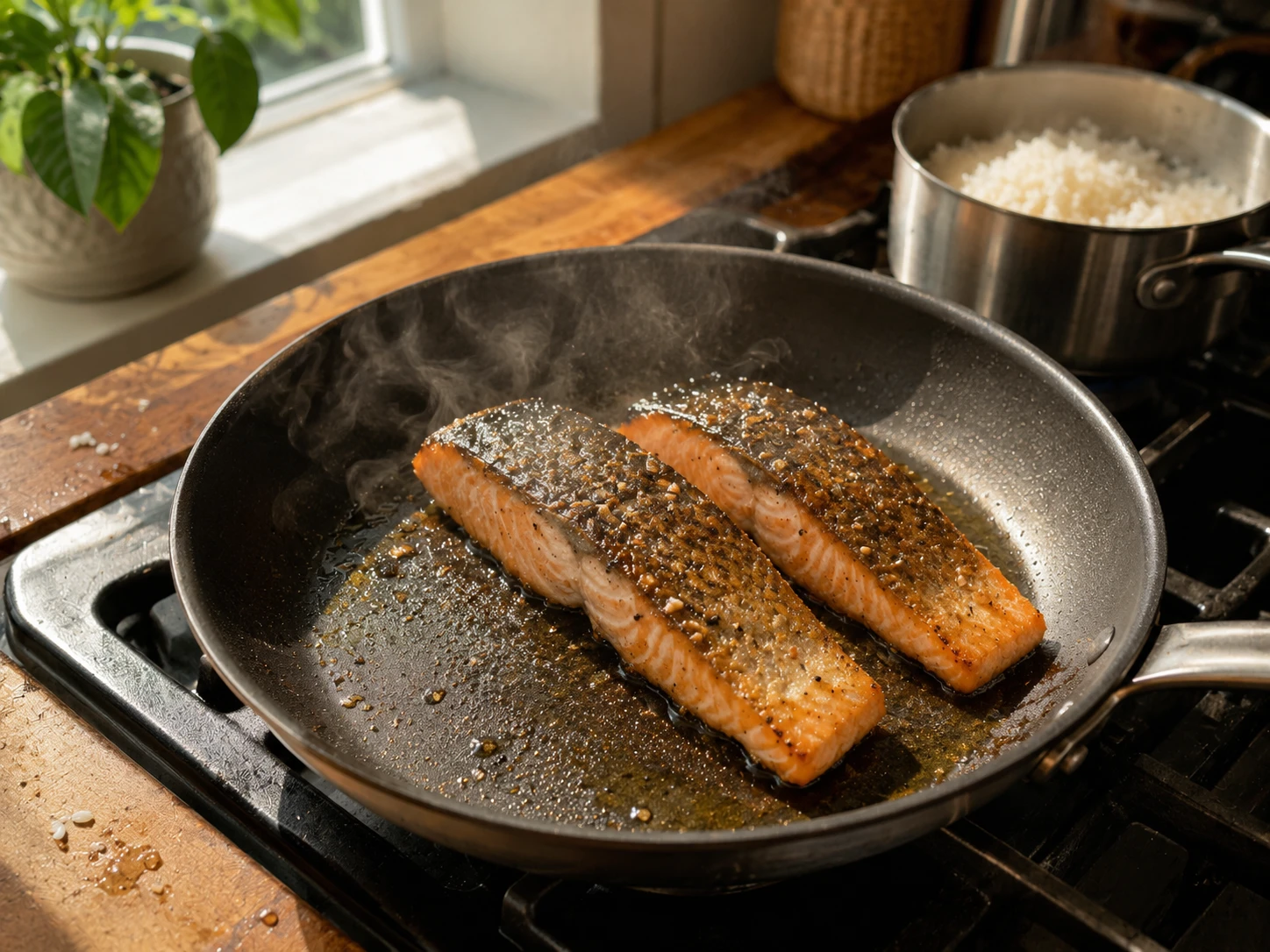
- 7Carefully place the salmon in the skillet skin side down. Press each fillet gently with the spatula for 10 seconds so the skin stays flat against the pan.
- 8Cook the salmon without moving it for 5 to 6 minutes. The skin should look deep golden at the edges, and the sides of the salmon should turn opaque about halfway up.
- 9Slide the thin spatula under each fillet. Flip carefully and cook the flesh side for 2 to 3 minutes, until the thickest part reaches 145 degrees F for fully cooked salmon and flakes easily with a fork.
- 10Transfer the salmon to a clean shallow bowl and let it rest for 2 minutes. Resting keeps the inside juicy while you finish the bowls.
- 11Add the warm cooked rice to a bowl. Stir in 1 tablespoon rice vinegar and 1 teaspoon toasted sesame oil until the rice looks glossy and lightly seasoned.
- 12Divide the seasoned rice between 2 serving bowls.
- 13Add sliced avocado, cucumber, and the drained edamame around the rice, leaving space for the salmon.
- 14Place 1 salmon fillet on each bowl, skin side up if you want the skin to stay crisp longer.
- 15Drizzle the ginger soy sauce over the salmon and rice. Sprinkle with sesame seeds and sliced green onions, then serve right away.
Tips and Tricks
- 1
Dry the salmon skin like you mean it. Even a little surface moisture can make the skin steam instead of crisp, so press it with paper towels before seasoning. This small step makes the difference between soft skin and that golden, restaurant-style texture.
- 2
Let the pan heat before adding the fish. Salmon releases from the skillet more easily when the oil is hot and shimmering. If you add it too early, the skin is more likely to stick, tear, or cook unevenly before it can crisp.
- 3
Season the rice while it is warm. Warm rice absorbs the vinegar and sesame oil more evenly, so the base tastes lightly seasoned instead of plain. That makes the bowl better even before the ginger soy sauce is drizzled on top.
- 4
Add the cool toppings after the salmon rests. Avocado and cucumber taste best fresh, not warm or wilted. Building the bowl at the end keeps the textures separate, so each bite has warm rice, rich salmon, crisp cucumber, and creamy avocado.
Nutrition
Serving size: 1 bowl (1/2 of recipe)
Calories: 755kcal, Protein: 47g, Carbs: 63g, Fat: 35g, Fiber: 9g, Sugar: 6g, Sodium: 1270mg.
Nutrition information is an estimate and may vary based on ingredient brands, product sizes, preparation methods, and substitutions. It is not intended as medical or dietary advice.
Recipe Guides
This recipe appears in
95 High-Protein Meal Prep Lunches
Lunch and meal-prep recipes that hold up in the fridge and provide at least 35 grams of protein per listed serving.
Explore high-protein meal-prep lunches →