
Spicy Garlic Shrimp Pasta
 By Better Plate Recipes
Have a recipe from another site? Import it →
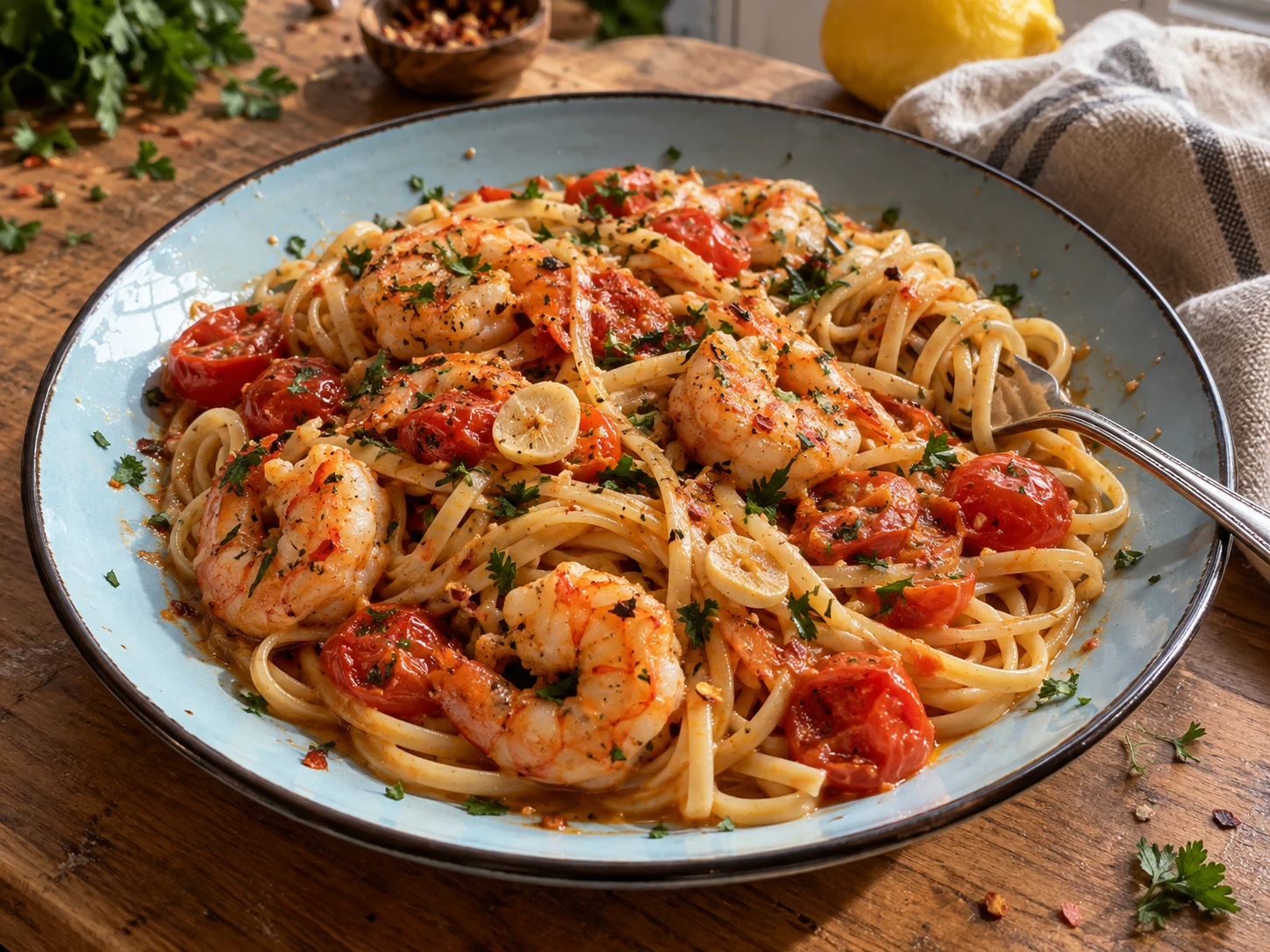
Spicy Garlic Shrimp Pasta combines linguine or spaghetti with tender shrimp, pale-gold sliced garlic, cherry tomatoes, tomato paste, broth, smoked paprika, red pepper flakes, lemon, and parsley.
Why You’ll Love This Recipe
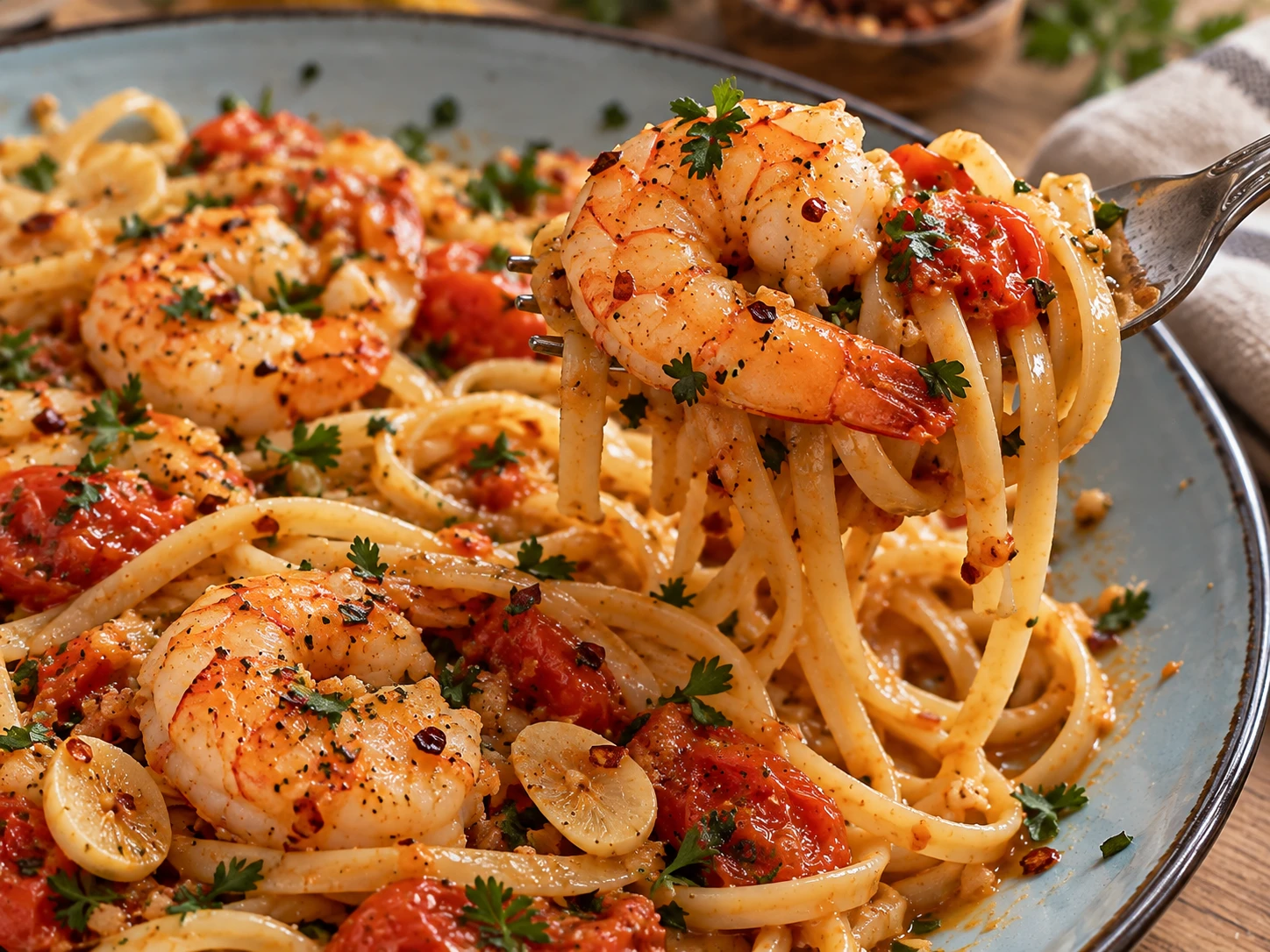
You will love Spicy Garlic Shrimp Pasta because it gives you a full pasta meal without making the cooking feel stressful. The sliced garlic and tomato paste build bold flavor fast, while red pepper flakes bring heat without needing a long simmer. The flavor is specific, not generic, so every ingredient has a reason to be there. The sauce is glossy and spicy, the tomatoes burst softly, and the shrimp stay tender when pulled at the C-shape stage. It is also practical for real life: it gives you big flavor in about 25 minutes with one skillet and one pasta pot. The method gives you clear cues for heat, timing, texture, and doneness, so you are not guessing at the stove. That makes it friendly for a brand-new cook, but still satisfying for someone who already knows their way around a skillet.
What Makes This Recipe Work
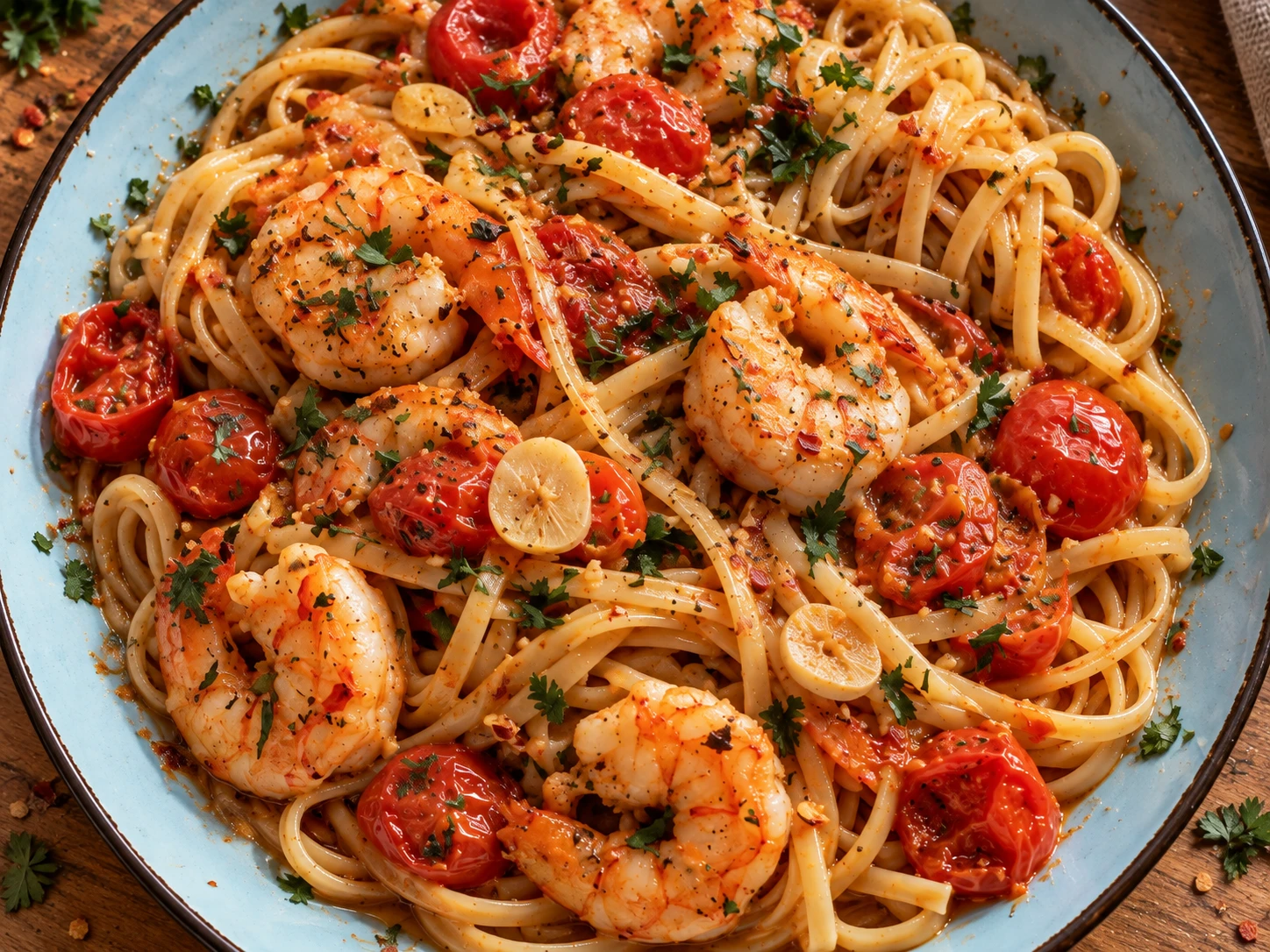
Spicy Garlic Shrimp Pasta works because the recipe has a clear balance: a hearty base, a flavorful sauce or dressing, and a fresh finish. Shrimp and long pasta. Tomato paste, broth, lemon juice, sliced garlic, paprika, and pasta water make a bold red pan sauce. The final layer matters too; cherry tomatoes and parsley. None of those details are just decoration. They keep the pasta from tasting flat and help every bite feel complete. The important part is pacing. Pasta should be cooked just until tender, proteins should come off the heat as soon as they are done, and sauces should be loosened slowly so they cling instead of turning watery. When those small pieces are handled carefully, the recipe tastes polished without needing complicated techniques or restaurant equipment.
Before You Start
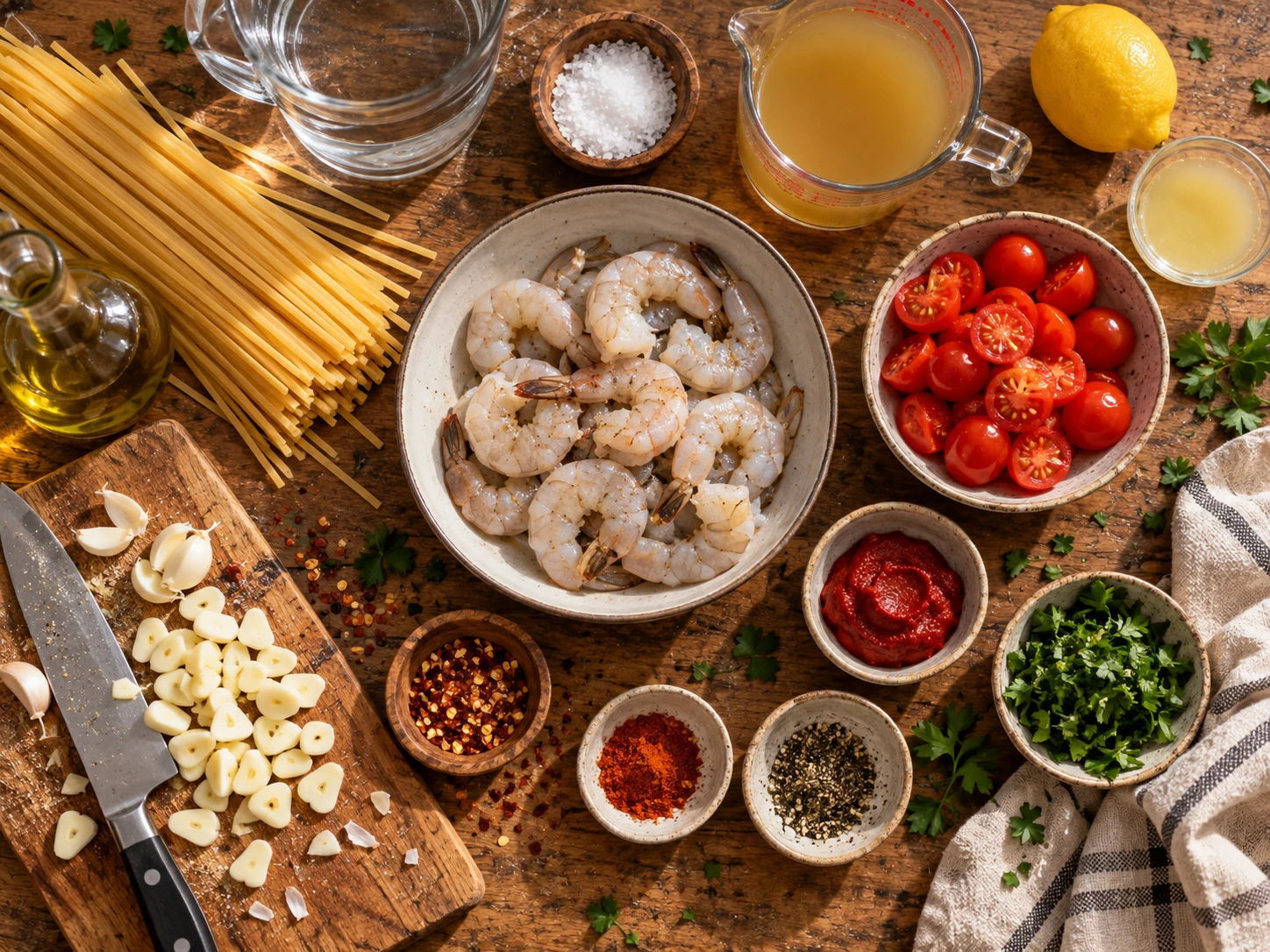
Before you start Spicy Garlic Shrimp Pasta, set up the tools and small ingredients first. Put out the pot, colander or fine-mesh sieve, 12-inch skillet if needed, cutting board, knife, measuring spoons, tongs, and a large mixing bowl. Slice the garlic, halve tomatoes, chop parsley, measure tomato paste and broth, and dry shrimp. Keep a heatproof measuring cup near the stove if you need pasta water, because it is easy to forget until the pasta is already drained. Garlic slices need medium heat and close attention because dark garlic turns bitter. This little bit of setup makes the recipe feel much slower and easier, even when the cook time is short. It also helps beginners avoid the most common mistakes: crowded pans, watery dressing, overcooked protein, dry pasta, or sauce that gets too thick before the pasta is ready.
Ingredient Notes & Easy Swaps
Linguine or spaghetti: Long strands suit this glossy tomato-garlic sauce. Linguine gives a slightly wider, more substantial bite; spaghetti keeps it classic and lighter. Save the pasta water either way, since the starch is what makes the sauce cling.
Gluten-free pasta: A corn-and-rice gluten-free spaghetti or linguine works best here; 100% brown rice pasta softens unevenly in a tomato sauce. Cook it at the low end of the package time and reserve the pasta water to bring the sauce together.
Adjusting the heat: One teaspoon of red pepper flakes makes this properly spicy. Use 1/2 teaspoon for moderate heat or 1/4 teaspoon for barely any. The heat builds as the flakes bloom in the oil, so judge after the sauce has simmered rather than at the start.
Tomato paste: The 3 tablespoons of paste do the heavy lifting in this sauce. Cook it in the oil until it darkens to brick red; that step removes the raw, tinny flavor and deepens the whole dish. Tube paste and canned paste both work.
Thinly sliced garlic: Slicing rather than mincing gives soft, mellow garlic pieces throughout the pasta instead of a uniform background. Slices also burn less easily than mince, as long as you keep them pale gold and stir constantly.
Smoked paprika: Smoked paprika seasons the shrimp and adds a subtle smokiness behind the chili heat. Sweet paprika works but loses the smoke; do not substitute hot paprika unless you also cut the red pepper flakes.
Chicken broth: Low-sodium chicken broth loosens the tomato paste into a sauce. Vegetable broth swaps in directly and changes the flavor slightly, but it does not make this dish vegetarian, since the shrimp remain.
Nutrition estimate: Nutrition is an estimate, not a lab measurement. It assumes regular Ronzoni spaghetti, peeled and deveined shrimp, low-sodium chicken broth, canned tomato paste, and about 10% absorption of the pasta-water salt.
Spicy Garlic Shrimp Pasta
Description
Spicy Garlic Shrimp Pasta combines linguine or spaghetti with tender shrimp, pale-gold sliced garlic, cherry tomatoes, tomato paste, broth, smoked paprika, red pepper flakes, lemon, and parsley.
Ingredients
- 4 quarts water
- 1 tbsp kosher salt, for pasta water
- 10 oz linguine or spaghetti
- 1 1/4 lb large shrimp, peeled and deveined
- 3 tbsp olive oil, divided
- 6 garlic cloves, thinly sliced
- 1 tsp red pepper flakes
- 1/2 tsp smoked paprika
- 1 1/2 cups cherry tomatoes, halved
- 3 tbsp tomato paste
- 1/2 cup low-sodium chicken broth
- 2 tbsp fresh lemon juice
- 1/3 cup chopped fresh parsley
- 3/4 tsp sea salt
- 1/2 tsp black pepper
Instructions
- 1Equipment: a large 6-quart pot, a colander, a heatproof measuring cup, a 12-inch skillet, tongs, paper towels, a bowl for the raw shrimp, a clean bowl for the cooked shrimp, a separate clean cutting board and knife for the produce, measuring cups, measuring spoons, an instant-read thermometer, and serving bowls.
- 2Pour 4 quarts water into the large pot over high heat. When it reaches a strong rolling boil, add 1 tbsp kosher salt. Add 10 oz linguine or spaghetti and stir once right away so it does not stick.
- 3Cook for the time on the package, stirring once or twice, until tender with a small firm bite. Before draining, scoop out 1 cup of the cloudy pasta water into a heatproof measuring cup, then drain in the colander and do not rinse.
- 4Slice the 6 garlic cloves thin and as evenly as you can, halve the cherry tomatoes, chop the parsley, and juice the lemon on a separate clean produce board, before you handle the shrimp.
- 5Pat the 1 1/4 lb shrimp dry on both sides with paper towels and season them in their own bowl with 1/2 teaspoon smoked paprika, 1/4 teaspoon sea salt, and 1/4 teaspoon black pepper. Keep the raw shrimp in its own bowl, away from the cutting board you use for produce, and wash your hands with soap and warm water for 20 seconds after handling it. Wash the bowl, and any tool that touched raw shrimp, in hot soapy water before it touches anything ready to eat.
- 6Heat 1 tablespoon olive oil in the 12-inch skillet over medium-high heat, about 7 out of 10, until the oil looks thin and moves easily around the pan. Add the shrimp in one layer, cook 1 1/2 minutes, flip with tongs, and cook 1 to 1 1/2 minutes more. They are done when the thickest shrimp reads 145°F on an instant-read thermometer, or, if a thermometer is not practical with small shrimp, when the flesh is firm, pearly, and opaque all the way through with no translucent center. A loose curl is only a secondary hint; a C shape by itself does not prove doneness. Move the cooked shrimp to a clean bowl and return it to the pan only briefly at the end so it does not overcook.
- 7Lower the heat to medium. Add 2 tablespoons olive oil, the sliced garlic, and 1 teaspoon red pepper flakes. Stir almost constantly for about 1 minute, until the garlic turns pale gold. Lift the skillet off the burner for 10 seconds if it starts to color too fast, because browned garlic turns the sauce bitter.
- 8Add the 1 1/2 cups halved cherry tomatoes and 3 tablespoons tomato paste. Stir for 2 minutes, pressing the paste into the hot oil until it darkens from bright red to brick red and smells sweet instead of raw. This step is what gives the sauce its depth.
- 9Pour in 1/2 cup low-sodium chicken broth and simmer 1 minute, scraping the bottom of the pan. Add the drained pasta, 1/2 teaspoon sea salt, and 1/4 teaspoon black pepper, then add the reserved pasta water 1 tablespoon at a time, tossing after each addition, until the pasta looks glossy and lightly coated.
- 10Turn off the heat. Return the cooked shrimp, add 2 tablespoons fresh lemon juice and 1/3 cup chopped parsley, and gently stir for about 30 seconds so the shrimp warm through and the lemon stays bright. Serve right away.
Tips and Tricks
- 1
Slice the garlic evenly: Aim for slices about the thickness of a coin, all the same. Sliced garlic is the backbone of this sauce, and uneven slices mean the thin ones scorch and turn bitter while the thick ones are still raw and harsh.
- 2
Bloom the tomato paste: Give the paste a full 2 minutes pressed into the hot oil until it darkens from bright red to brick red. Raw tomato paste tastes tinny and sharp; cooking it out concentrates the sugars and is the difference between a flat sauce and a deep one.
- 3
Bloom the red pepper flakes carefully: Stir the full listed teaspoon in the warm oil with the garlic and keep both moving. The oil spreads the chile heat evenly through the sauce, but scorched flakes taste harsh and bitter, so lift the skillet off the burner briefly if either the garlic or flakes darken too quickly.
- 4
Finish with shrimp, lemon, and parsley off the heat: Turn the burner off before the shrimp go back in with the lemon juice and parsley. Thirty seconds of residual heat warms the shrimp without cooking them again, and the lemon and parsley keep their fresh edge instead of cooking down into the sauce.
Nutrition
Serving size: 1 serving (1/4 recipe)
Calories: 500kcal, Protein: 38g, Carbs: 59g, Fat: 13g, Fiber: 4g, Sugar: 5g, Sodium: 880mg.
Nutrition information is an estimate and may vary based on ingredient brands, product sizes, preparation methods, and substitutions. It is not intended as medical or dietary advice.