Healthy Eating Guide
Why You Need Protein Every Day
Protein gets talked about a lot, usually by people selling shakes and bars. But you don't need any of that to understand why it matters or to get enough of it. You just need to know what it does, roughly how much you need, and which everyday foods make it easy.
Your body can't stock up on protein
Your body stores extra carbs and fat to use later. Protein is different: your body has no real storage tank for it. Every day, it uses protein to repair muscle, heal cuts and bruises, keep your skin, hair, and nails growing, and make many of the enzymes and hormones that keep everything running.
Because it can't save up a big supply, you need a steady amount coming in from food. If you don't get enough over time, your body starts pulling what it needs from your own muscle. That's one reason protein matters even more as people get older.
It helps you feel full
Protein tends to be more filling than carbs or fat. A breakfast with eggs or Greek yogurt usually keeps you satisfied longer than a bowl of sugary cereal or a plain bagel, which can make it easier to skip the constant snacking, especially in the afternoon.
How much protein do you need a day?
You'll see two numbers, and both are useful.
The long-standing minimum for adults is 0.8 grams of protein per kilogram of body weight, or about 0.36 grams per pound. That's the amount most healthy adults need to avoid falling short.
The newer target comes from the 2025–2030 Dietary Guidelines for Americans, released in January 2026. They recommend aiming for 1.2 to 1.6 grams per kilogram a day (about 0.55 to 0.73 grams per pound), adjusted for your own needs.
Here's what that looks like by weight:
- 130 lb: at least 47 grams, with a target of about 71 to 94 grams
- 150 lb: at least 54 grams, with a target of about 82 to 109 grams
- 180 lb: at least 65 grams, with a target of about 98 to 131 grams
- 200 lb: at least 72 grams, with a target of about 109 to 145 grams
A few things can change your number:
- Very active people and anyone lifting weights may need more, up to about 2.0 grams per kilogram (roughly 0.9 grams per pound), according to sports nutrition groups.
- Getting enough matters even more as you age, because protein helps you hold on to muscle.
- Pregnant and breastfeeding women also need more. Ask your doctor what's right for you.
Spread it across your meals
Many people eat very little protein at breakfast, a little at lunch, and most of it at dinner. Research suggests spreading it out more evenly may work better. In one small study, adults who ate about 30 grams of protein at each meal made about 25% more muscle protein over 24 hours than when they ate the same total amount mostly at dinner.
You don't need to count every gram. Just try to include a good protein source at breakfast, lunch, and dinner instead of saving it all for the end of the day.
Easy ways to get protein from real food
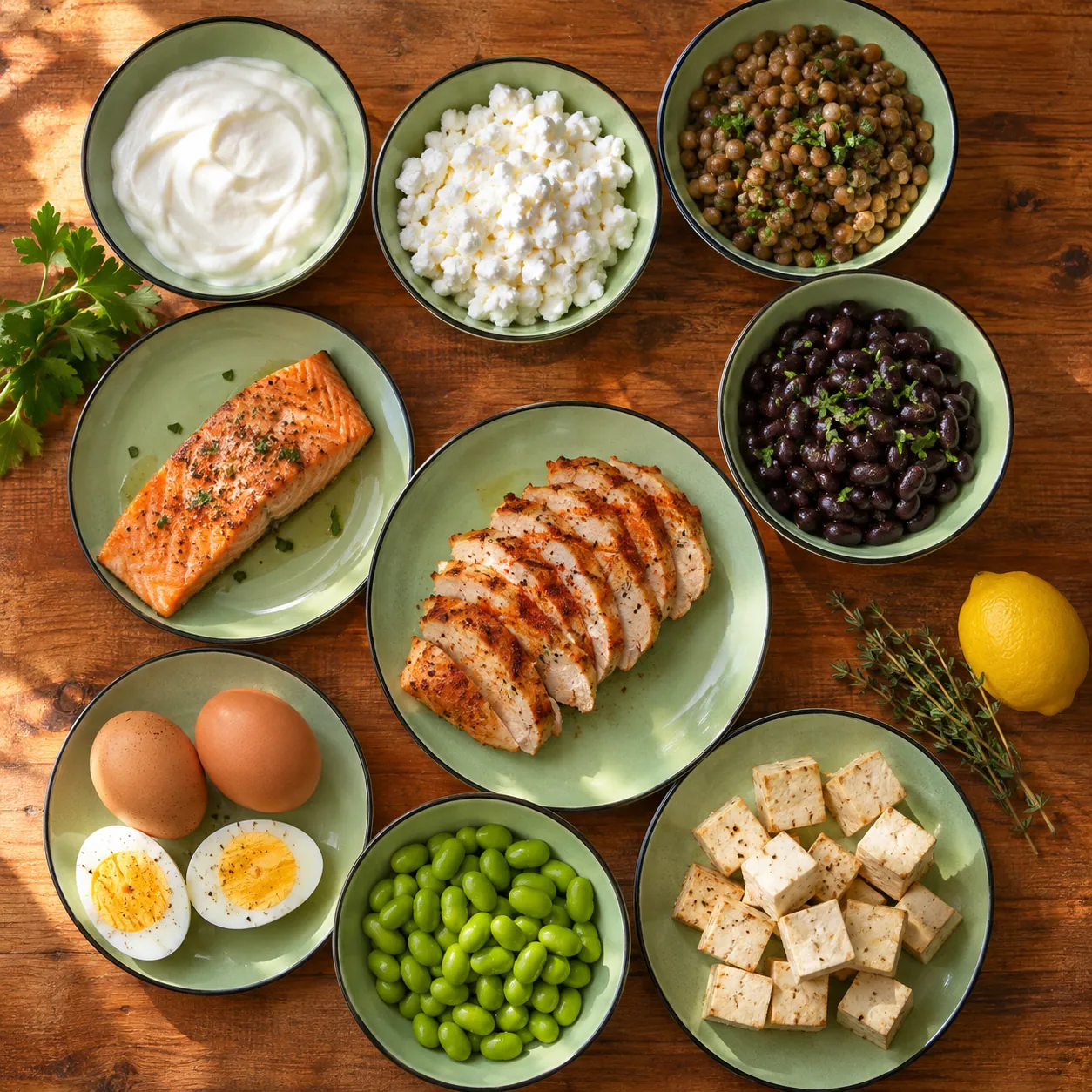
Here's roughly how much protein you get from common foods:
- 2 large eggs: about 12 grams
- 1 cup plain nonfat Greek yogurt: about 23 grams
- 1/2 cup cottage cheese: about 12 grams
- 4 oz cooked chicken breast: about 35 grams
- 4 oz cooked salmon: about 25 grams
- 1 can (5 oz) tuna, drained: about 25 grams (brands vary, so check the label)
- 1 cup cooked lentils: about 18 grams
- 1/2 cup black beans: about 7 grams
- 3 oz firm tofu: about 8 to 10 grams
Plant foods count too. Beans, lentils, tofu, and edamame are all good sources. Each plant food has a slightly different mix of amino acids (the building blocks of protein), so eating a variety through the day gives your body everything it needs.
What a high-protein day can look like
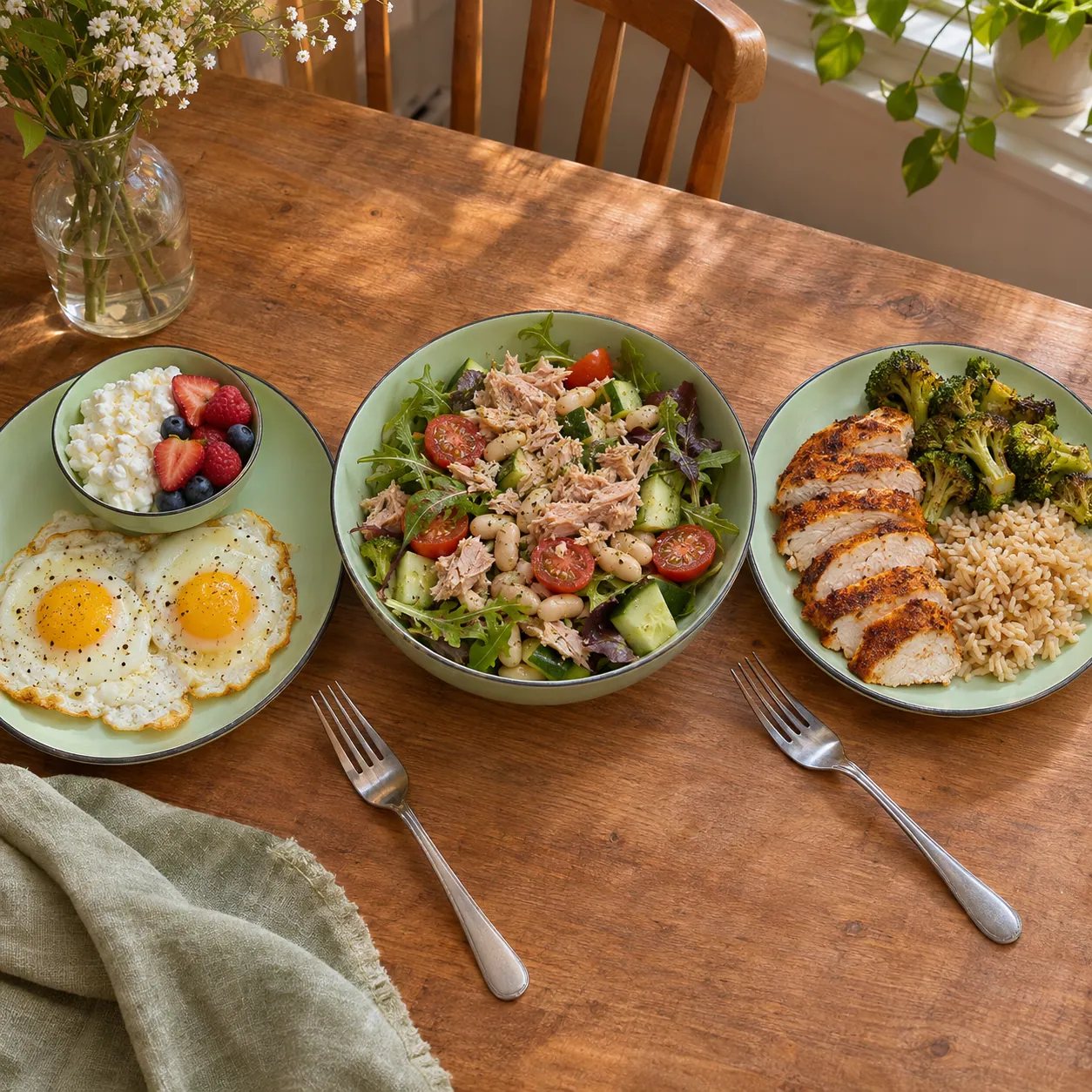
Here's a simple example that lands around 90 grams without any shakes or bars. That fits the new target for someone around 150 pounds:
- Breakfast: 2 eggs with 1/2 cup cottage cheese and fruit (about 25 grams)
- Lunch: a big salad with tuna, white beans, and greens (about 30 grams)
- Dinner: 4 oz of air fryer chicken breast with roasted vegetables and rice (about 35 grams)
Want more ideas? Our high-protein breakfast, lunch, and dinner guides group recipes by how much protein they have per serving, so you can pick what fits your day.
A few things to keep in mind
- More isn't always better. Very high protein diets aren't necessary for most people, and protein still needs to fit into a balanced plate with vegetables, whole grains, and healthy fats.
- If you have kidney disease, talk to your doctor before increasing your protein. Your needs may be different.
- Whole foods first. Powders and bars can be handy, but eggs, yogurt, chicken, fish, and beans give you protein plus vitamins, minerals, and fiber.
Frequently asked questions
Can you eat too much protein?
For most healthy adults, eating more than the minimum isn't harmful, but there's no extra benefit to going far beyond what your body uses. Very high amounts can crowd out vegetables, fruit, and whole grains. People with kidney disease should follow their doctor's advice.
Can you get enough protein without meat?
Yes. Eggs, dairy, beans, lentils, tofu, tempeh, and edamame can all cover your needs. Eating a mix of these through the day makes it easy.
Is protein at breakfast important?
It helps. Breakfast is often the lowest-protein meal of the day, and adding eggs, Greek yogurt, or cottage cheese is one of the easiest ways to spread your protein out more evenly.
Make it easier with a plan
The easiest way to get enough protein is to plan it ahead, so you're not deciding at 6 p.m. what to make. Our free meal planner lets you pick high-protein recipes for the week, build your grocery list, and cook with step-by-step instructions read out loud.
Sources and references
- Dietary Guidelines for Americans, 2025–2030 — U.S. Department of Health and Human Services and U.S. Department of Agriculture, released January 2026.
- Mamerow MM, et al. Dietary protein distribution positively influences 24-h muscle protein synthesis in healthy adults. The Journal of Nutrition, 2014.
- USDA FoodData Central — nutrient values for the common foods listed above.
This article is for general information and isn't medical advice. If you have a health condition, talk to your doctor or a registered dietitian about your protein needs.