
Chicken Parmesan Protein Pasta
 By Better Plate Recipes
Have a recipe from another site? Import it →
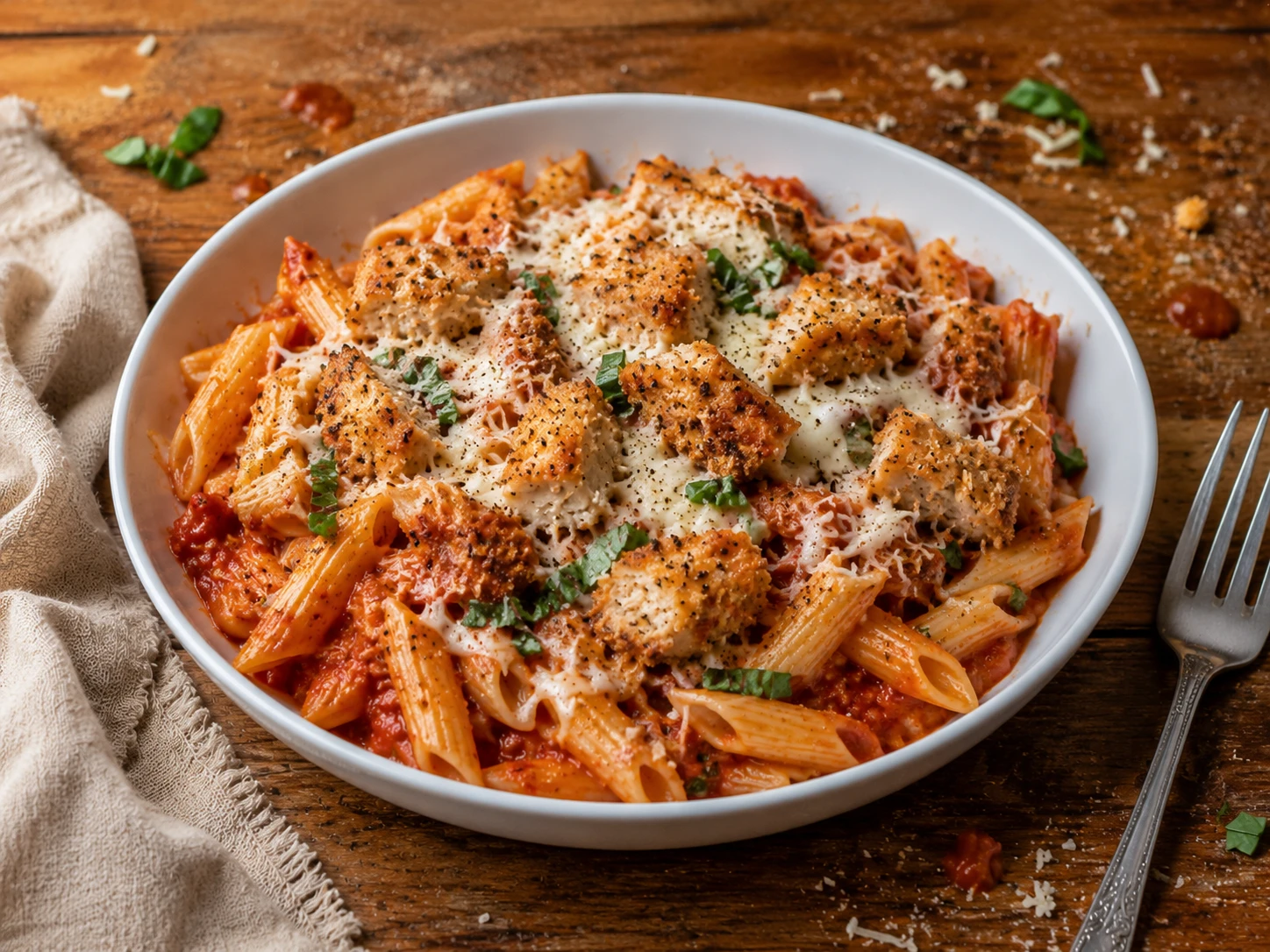
Chicken Parmesan Protein Pasta combines penne or rigatoni with panko-coated chicken, marinara, mozzarella, Parmesan, garlic, and basil. The chicken is pan-cooked instead of deep-fried, then finished under melted cheese.
Why You’ll Love This Recipe
You will love Chicken Parmesan Protein Pasta because it gives you comfort and balance in the same bowl. The panko-coated chicken gives you that chicken parm feeling without setting up a deep-fry station. The flavors are familiar enough for a weeknight, but the little details make it feel more special than plain pasta. You get saucy pasta, golden chicken pieces, melted mozzarella, parmesan, and fresh basil in the same bite. It is also practical: jarred low-sugar marinara keeps the recipe fast while the skillet method keeps cleanup simple. The instructions walk you through the heat level, timing, and visual cues, so you are not guessing when the protein is cooked or when the sauce is ready. It is the kind of recipe that helps a beginner feel confident while still giving an experienced cook something satisfying to make.
What Makes This Recipe Work
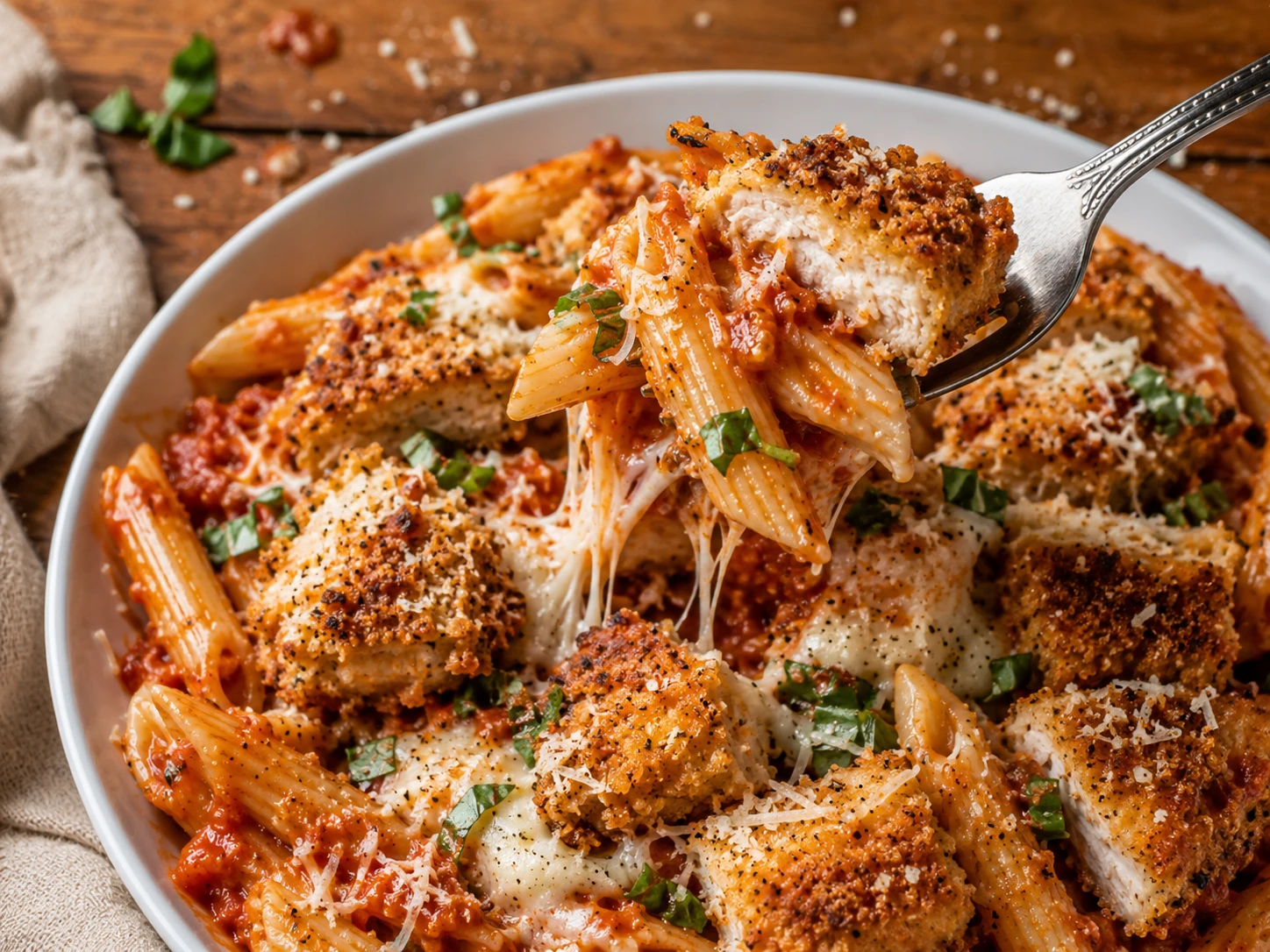
Chicken Parmesan Protein Pasta works because the bowl has balance instead of just pasta and sauce. The hearty base (Panko-coated chicken and high-protein pasta) gives the meal real staying power. The texture piece (fresh basil) keeps each bite from feeling one-note, whether it adds freshness, color, tenderness, or a little bite. The sauce layer (Low-sugar marinara, garlic, pasta water, parmesan, and melted mozzarella) ties everything together and gives the pasta something flavorful to hold onto. The finish (extra parmesan and mozzarella) adds the bright, salty, creamy, or herby note that makes the dish taste complete. The trick is not rushing the skillet work. Cooking the main ingredients carefully, warming the aromatics, and loosening the sauce with pasta water all build flavor in small layers. Once you understand those little steps, the recipe feels easy instead of fussy, and the final bowl tastes more intentional than the short cook time suggests.
Ingredient Notes & Easy Swaps
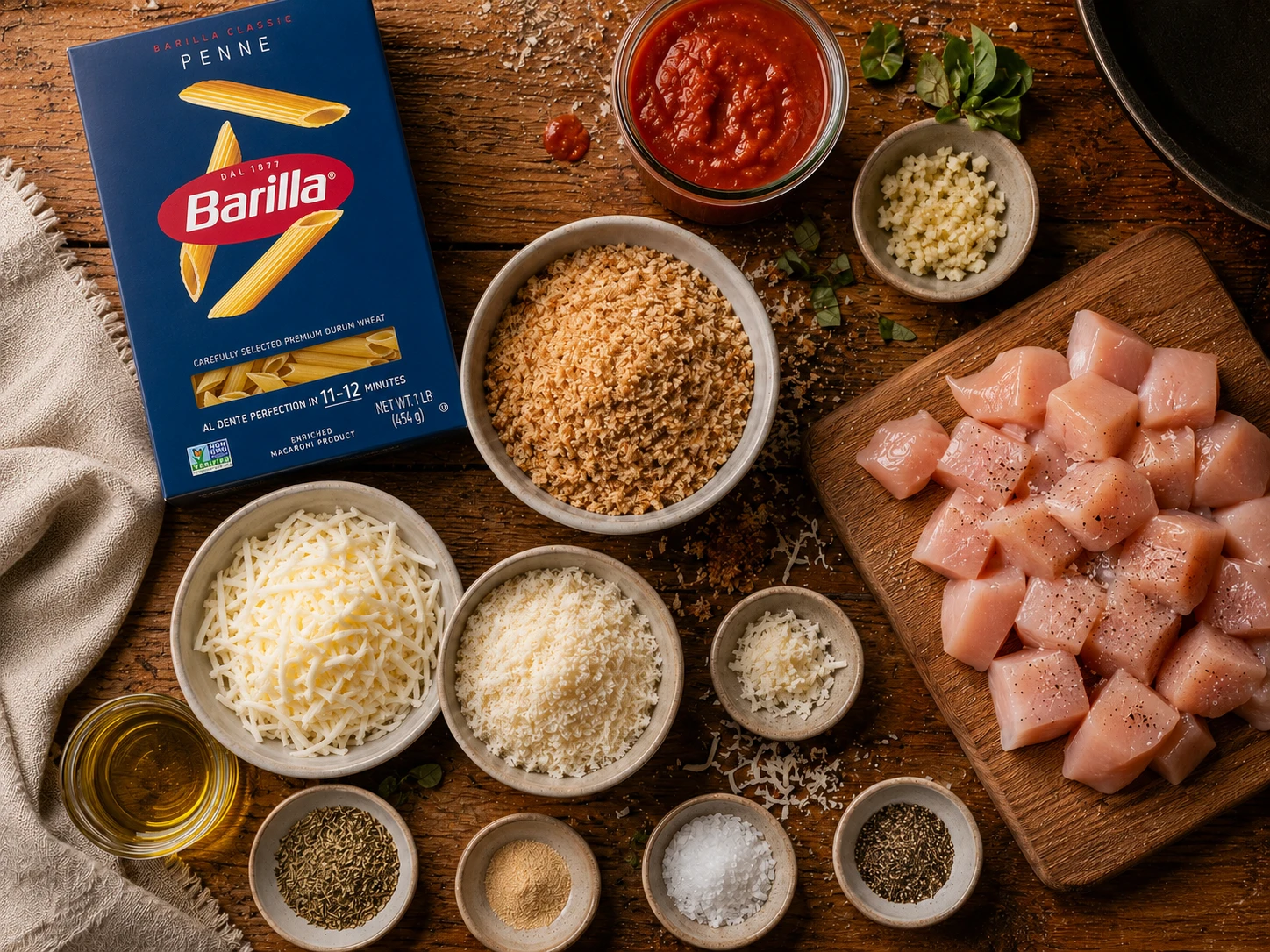
Penne or rigatoni: Both shapes have ridges and hollows that hold thick marinara and melted cheese. Cook to a firm bite, because the pasta keeps softening while the cheese melts under the lid.
Gluten-free swap: This recipe needs two gluten-free replacements, not one: use 10 oz gluten-free penne or rigatoni and 1/3 cup gluten-free panko. Gluten-free panko is finer and browns faster, so watch the first batch closely, and check gluten-free pasta about 2 minutes before the package time.
Dairy-free swap: Three cheese portions need replacing: the 1/3 cup parmesan in the coating, the 2 tbsp parmesan topping, and the 1 cup mozzarella. Use dairy-free parmesan-style shreds for both parmesan portions and 1 cup dairy-free mozzarella shreds on top. Dairy-free mozzarella melts more slowly and stays softer, so give it the full 3 minutes covered on low and expect a less stretchy finish.
Regular versus high-protein pasta: High-protein pasta made from chickpeas, lentils, or added wheat protein gives a modest, brand-dependent boost, often about 3 to 8 g more protein per serving than regular semolina, and fiber varies by brand too. It also softens faster and can turn mealy, so taste it early. The nutrition here is calculated on regular pasta.
Marinara sodium and sugar vary by brand: Jarred marinara ranges from about 300 mg to over 600 mg of sodium per half cup and from 2 g to 12 g of sugar. This is the single biggest variable in the numbers below, so compare labels if you are watching either.
Fresh basil: Scatter the basil after the burner is off so it stays green and perfumed. Chopping it at the last moment keeps the cut edges from darkening.
Nutrition estimate: Nutrition is an estimate, not a lab measurement. It assumes regular Barilla or Ronzoni pasta, low-sugar marinara, part-skim mozzarella, and about 10% absorption of the pasta-water salt.
Chicken Parmesan Protein Pasta
Description
Chicken Parmesan Protein Pasta combines penne or rigatoni with panko-coated chicken, marinara, mozzarella, Parmesan, garlic, and basil. The chicken is pan-cooked instead of deep-fried, then finished under melted cheese.
Ingredients
- 4 quarts water
- 1 tbsp kosher salt, for pasta water
- 10 oz penne or rigatoni, high-protein or regular
- 1 1/4 lb boneless skinless chicken breast, cut into 1-inch cubes
- 1/3 cup whole wheat panko breadcrumbs
- 1/3 cup grated parmesan, plus 2 tbsp for topping
- 1 tsp italian seasoning
- 1/2 tsp garlic powder
- 2 tbsp olive oil
- 2 1/2 cups jarred marinara sauce (low sugar)
- 3 garlic cloves, minced
- 1 cup shredded part-skim mozzarella
- 1/4 cup chopped fresh basil
- 3/4 tsp sea salt
- 1/2 tsp black pepper

Instructions
- 1Equipment: a large 6-quart pot, colander, heatproof measuring cup, 12-inch skillet with a lid, tongs, paper towels, a cutting board and knife used only for raw chicken, a medium bowl for the dry coating, a separate medium bowl for oiling the raw chicken, a clean plate for the cooked chicken, an instant-read thermometer, measuring cups, measuring spoons, and serving bowls.
- 2Pour 4 quarts water into a large 6-quart pot and set it over high heat. When the water reaches a strong rolling boil, with big bubbles that keep breaking the surface even when you stir, add 1 tbsp kosher salt and stir. Add 10 oz penne or rigatoni, high-protein or regular and stir once right away so it does not clump on the bottom.
- 3Cook the pasta for the time listed on the package, stirring once or twice. Near the end, taste one piece; it should be tender with a small firm bite in the center. Before draining, carefully scoop out 1 cup of the cloudy pasta water with a heatproof measuring cup. Drain the pasta in a colander and do not rinse it.
- 4In a medium coating bowl, stir together 1/3 cup whole wheat panko, 1/3 cup grated parmesan, 1 tsp italian seasoning, 1/2 tsp garlic powder, 1/2 tsp sea salt, and 1/4 tsp black pepper.
- 5On the raw-chicken board, pat 1 1/4 lb chicken cubes very dry with paper towels, then toss them in a separate bowl with 1 tbsp of the olive oil so the surface is just slick. The oil is the binder that makes the dry panko stick. Add the oiled chicken to the coating bowl and turn the pieces until evenly crusted. Discard any coating left in the bowl, since it has touched raw chicken. Wash your hands, the board, the knife, and the bowl with hot soapy water before you touch anything else in the kitchen.
- 6Heat 1/2 tbsp of the remaining olive oil in a 12-inch skillet over medium-high heat. Add half the coated chicken in a single layer and do not touch it for the first 2 minutes; moving it early pulls the panko off before it sets. Turn and cook 3 to 4 minutes more until golden on several sides, then repeat with another 1/2 tbsp oil and the second batch. Splitting the remaining 1 tbsp oil across two batches keeps the coating crisp instead of soggy.
- 7Check the thickest piece with an instant-read thermometer; it must read 165°F. Color alone is not a reliable sign of doneness, so a golden outside or white center does not prove the chicken is safe. Move the cooked chicken to a clean plate or bowl, never back onto the plate or board that held it raw.
- 8Lower the heat to medium. Add 3 minced garlic cloves and stir 30 seconds until you can smell the garlic. Pour in 2 1/2 cups low-sugar marinara with 1/4 tsp sea salt and 1/4 tsp black pepper, and simmer 2 to 3 minutes, stirring once or twice, until it thickens slightly and stops looking watery.
- 9Add the drained pasta and the cooked chicken and toss for 1 minute. If the sauce feels too thick to coat, add reserved pasta water 2 tablespoons at a time until the pasta looks glossy rather than dry.
- 10Sprinkle 1 cup shredded part-skim mozzarella and the remaining 2 tbsp parmesan evenly over the top. Cover the skillet, turn the heat to low, and cook 2 to 3 minutes until the cheese is melted and glossy. Low heat under a lid melts the cheese with gentle steam; high heat would scorch the sauce underneath before the mozzarella softens. Turn off the heat and scatter 1/4 cup chopped fresh basil over the top.
Tips and Tricks
- 1
Use Oil as the Binder: Dry panko slides straight off dry chicken. Tossing the raw cubes with a tablespoon of olive oil first gives the crumbs something to grip, which is why this pan-cooked version gets a real crust without eggs or deep frying.
- 2
Press the Coating On and Let It Set: Press the panko mixture firmly onto each piece, then leave the chicken alone for the first full 2 minutes in the skillet. That untouched time is what fuses the crust to the meat; stirring early strips it into the pan and leaves you with plain chicken and burnt crumbs.
- 3
Choose a Thick, Low-Sugar Marinara: Thin jarred sauces slide off the pasta and leave a watery pool under the melted cheese. Pick a marinara that mounds on a spoon and lists under about 6 g of sugar per half cup, so the dish tastes savory rather than sweet.
- 4
Cover on Low to Melt the Cheese: A lid traps steam and melts the mozzarella evenly in 2 to 3 minutes without a broiler. Keep the burner low, because the marinara underneath will catch and taste scorched long before cheese melts over higher heat.
Nutrition
Serving size: 1 serving (1/4 recipe)
Calories: 715kcal, Protein: 56g, Carbs: 74g, Fat: 22g, Fiber: 4g, Sugar: 13g, Sodium: 1600mg.
Nutrition information is an estimate and may vary based on ingredient brands, product sizes, preparation methods, and substitutions. It is not intended as medical or dietary advice.