
Lemon Raspberry Protein Pancakes
 By Better Plate Recipes
Have a recipe from another site? Import it →
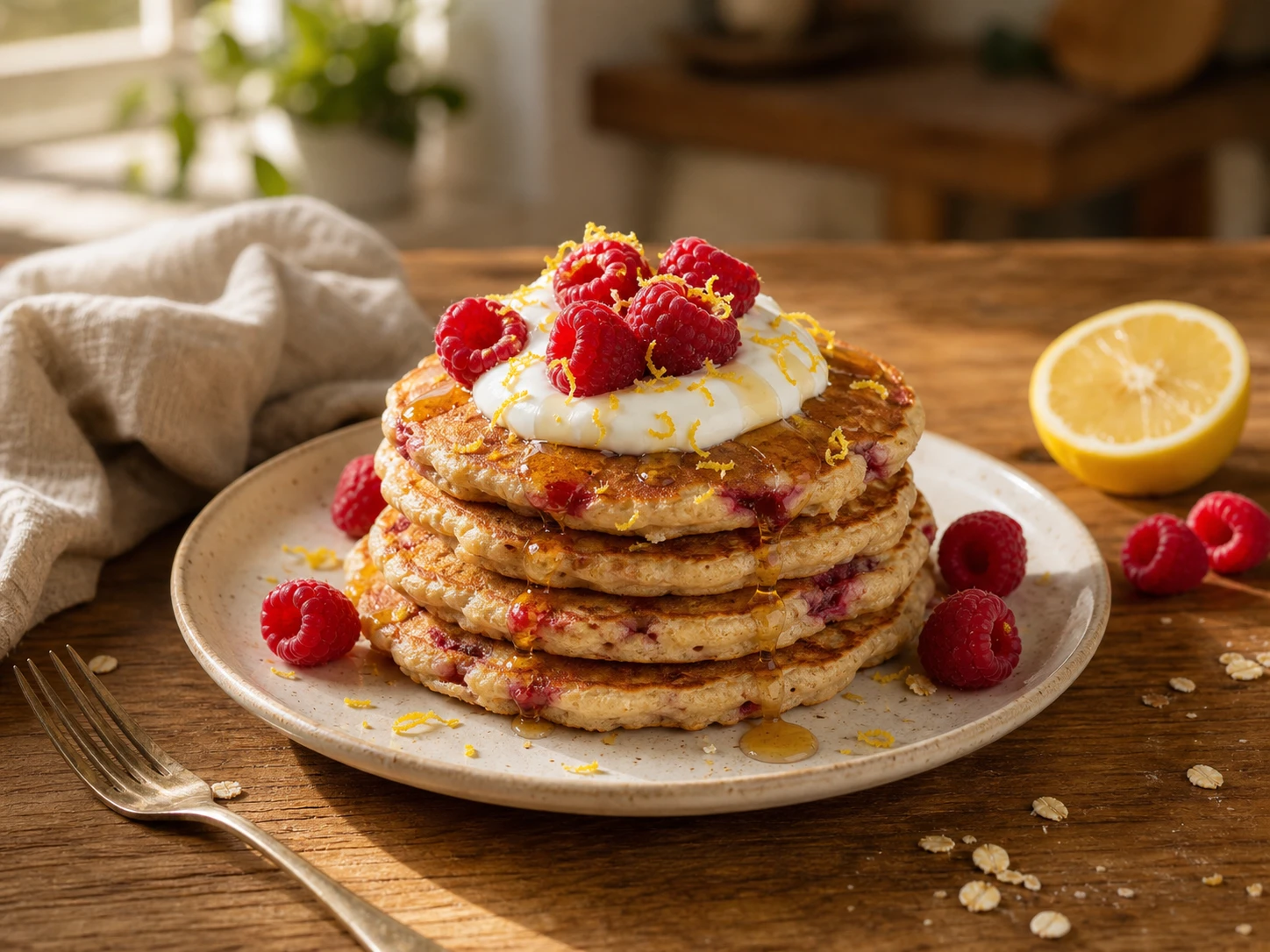
Lemon Raspberry Protein Pancakes are tender oat pancakes made with vanilla protein powder, cottage cheese, lemon zest, lemon juice, and fresh raspberries. The batter blends smooth, rests briefly, then cooks into golden pancakes with juicy berry pockets and a cool Greek yogurt topping for breakfast.
Why You’ll Love This Recipe
These pancakes feel bright and special, but the method is still easy enough for a regular morning. Rolled oats create a hearty base, cottage cheese and protein powder add protein, and lemon zest gives the batter a fresh citrus flavor without making it sharp. The raspberries soften slightly as the pancakes cook, so each bite has little pockets of tart sweetness. The Greek yogurt topping keeps the stack creamy and balanced, while a light maple drizzle is enough to make it feel finished. You also do not need regular flour because the oats blend into a quick oat flour that helps the pancakes hold together. The flavor lands somewhere between cozy pancakes and a fresh lemon-berry breakfast treat. It feels fresh, not fussy.
What Makes This Recipe Work
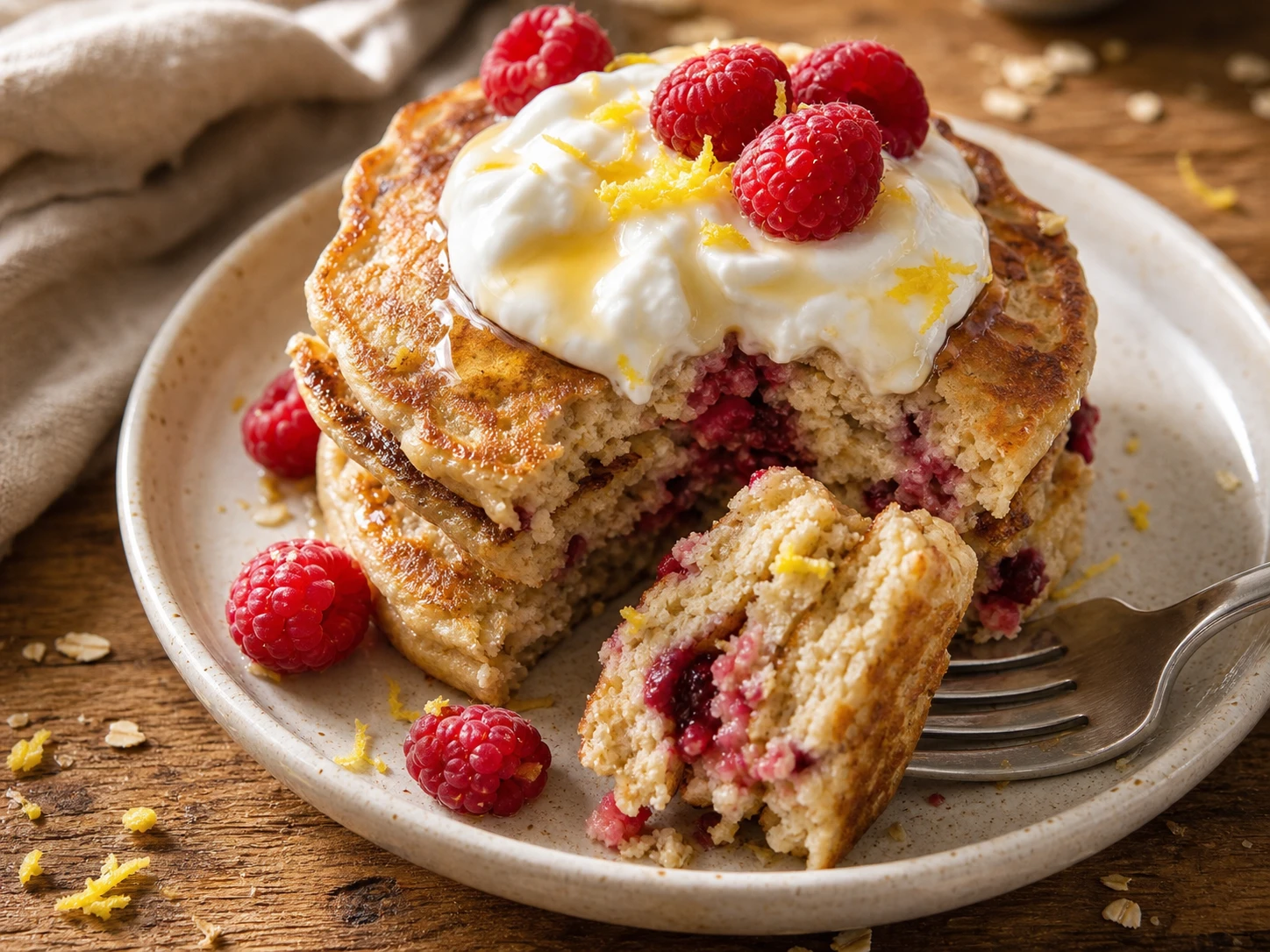
Blending the oats turns them into a quick flour, which gives the pancakes structure without making the batter heavy. Cottage cheese blends into the mixture and adds moisture, so the pancakes stay tender instead of dry. The 5-minute rest is important because the oats absorb some liquid and thicken the batter, making the pancakes easier to scoop and flip. Raspberries are folded in after resting so they do not break apart and stain the whole batter pink. Medium-low heat gives the pancakes enough time to cook through before the bottoms get too dark, which matters because protein pancakes can brown quickly. The gentle heat is what gives you golden outsides and cooked centers at the same time. It also helps the berries soften without collapsing into the batter.
Texture and Flavor Notes
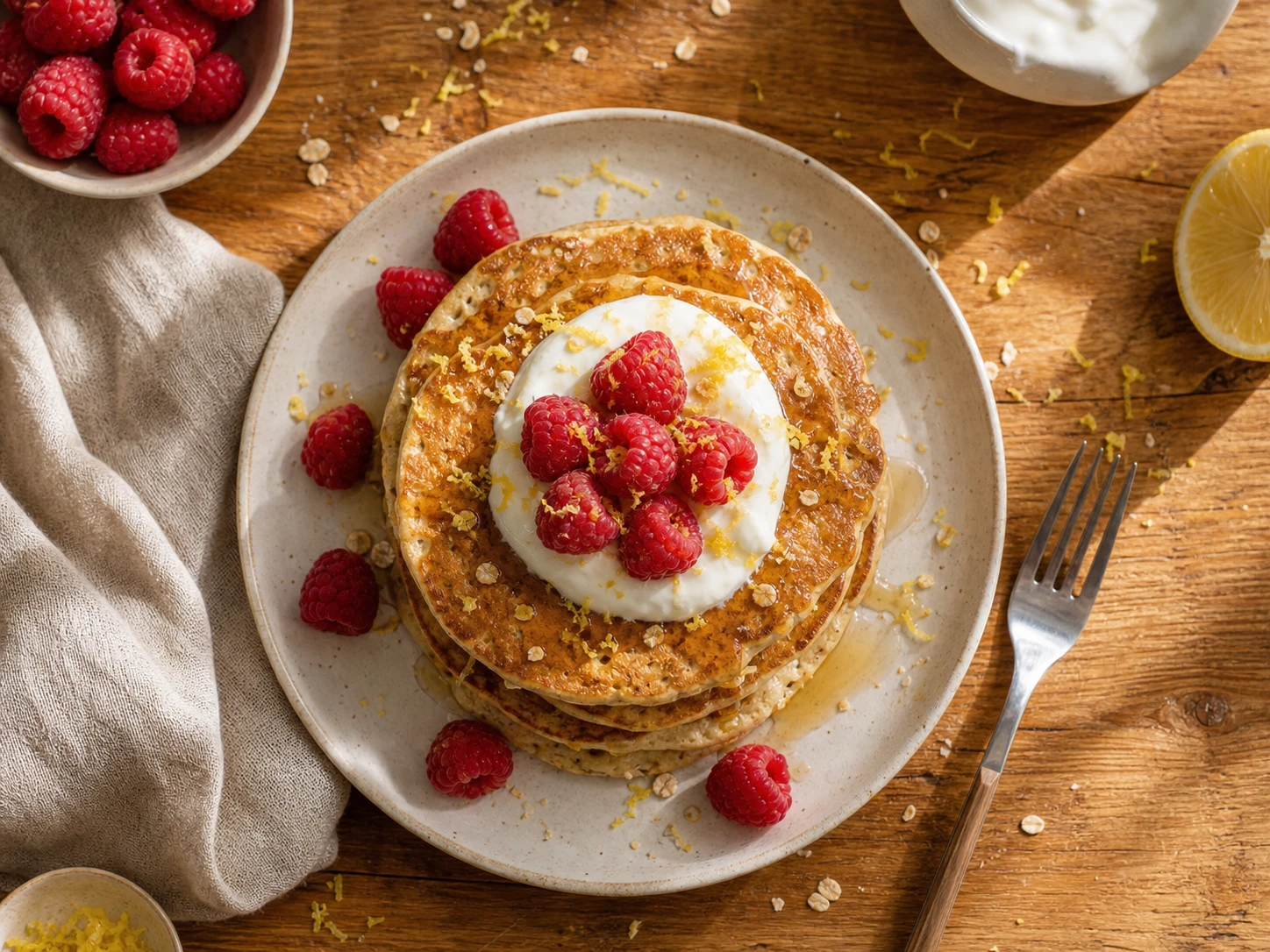
The batter should look like thick yogurt: scoopable and pourable, but not thin like crepe batter. If it becomes too thick after resting, add almond milk 1 tablespoon at a time until it loosens. The pancakes should turn golden on the outside, stay soft in the center, and spring back lightly when pressed. Lemon zest gives the strongest lemon flavor, while lemon juice adds brightness. Fresh raspberries should stay mostly whole so they create juicy pockets instead of bleeding through every pancake. Greek yogurt on top adds a cool creamy contrast to the warm lemon-berry stack. The finished pancakes should feel tender and moist, not rubbery or dense. If they look dark before bubbles form, the pan is too hot and should be lowered slightly. That cue is easier for beginners than guessing by color alone.
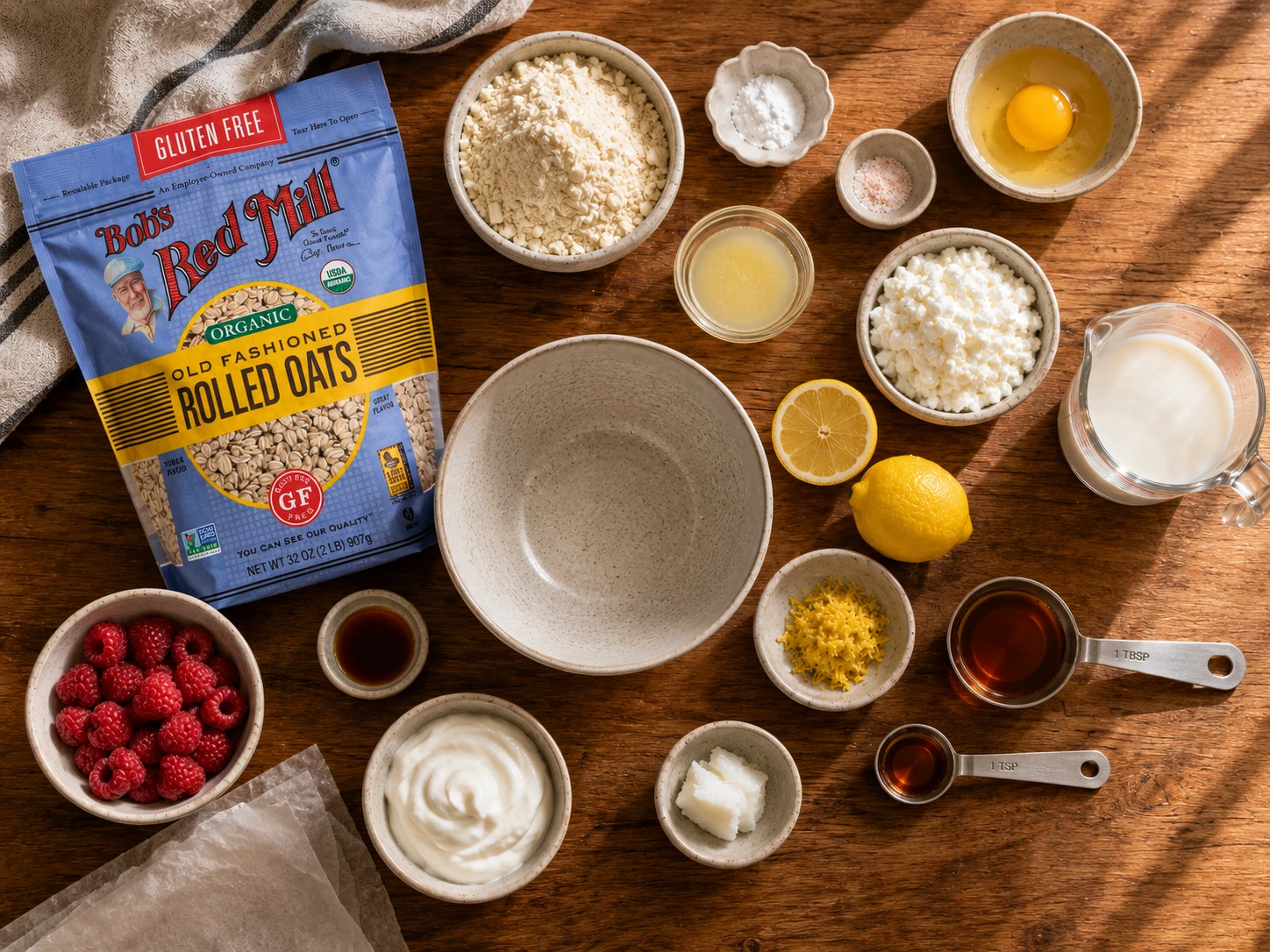
Ingredient Notes & Easy Swaps
Rolled oats: The prep image shows Bob's Red Mill Gluten Free Organic Old Fashioned Rolled Oats. Blend 1 cup rolled oats into flour. If using ready-made oat flour, use 3/4 cup (about 90 g) rather than 1 cup and skip only the grinding step. Steel-cut oats are not suitable.
Vanilla protein powder: The estimate assumes a representative 30 g scoop. Brands thicken differently; add milk 1 tablespoon at a time only if needed. Plant-based powder often needs 1 to 2 extra tablespoons and may make the pancakes slightly denser.
Cottage cheese: Low-fat cottage cheese adds protein and moisture and becomes smooth in the blender. Ricotta can replace it cup for cup, but it may loosen the batter; begin with 1/4 cup almond milk and add the remaining milk only if needed.
Almond milk: Unsweetened almond milk is included in the estimate. Dairy, soy, or oat milk can replace it. For a nut-free batch, use an appropriate nut-free milk and verify the protein powder and topping labels.
Lemon zest and juice: Use only the yellow peel because white pith is bitter. One medium lemon should supply the listed zest and juice.
Raspberries: Fresh berries give the cleanest pockets. Frozen berries can replace the 1/2 cup folded into the batter without thawing; fold gently and allow slightly longer for the centers to cook. Use fresh berries for topping, or thaw, drain, and blot frozen topping berries first.
Baking powder: Fresh baking powder is needed for lift. Standard baking powder contributes substantial sodium to the estimate.
Coconut oil or butter: Either works in the same amount. Butter adds dairy and a little more saturated fat; coconut oil keeps the pan dairy-free.
Greek yogurt and maple topping: The estimate assumes nonfat plain Greek yogurt and includes the optional maple drizzle. A thick dairy-free yogurt works, but protein and calories will change.
Fully gluten-free version: Use certified gluten-free oats and verify that the protein powder, baking powder, and all toppings are labeled gluten-free.
Lemon Raspberry Protein Pancakes
Description
Lemon Raspberry Protein Pancakes are tender oat pancakes made with vanilla protein powder, cottage cheese, lemon zest, lemon juice, and fresh raspberries. The batter blends smooth, rests briefly, then cooks into golden pancakes with juicy berry pockets and a cool Greek yogurt topping for breakfast.
Ingredients
- 1 cup rolled oats
- 1 scoop (about 30 g) vanilla protein powder
- 1 teaspoon baking powder
- 1/4 teaspoon salt
- 1 large egg
- 1/2 cup low fat cottage cheese
- 1/3 cup unsweetened almond milk
- 1 tablespoon pure maple syrup
- 1 teaspoon vanilla extract
- Zest of 1 medium lemon (about 1 teaspoon)
- 1 tablespoon fresh lemon juice
- 3/4 cup fresh raspberries, divided
- 1 teaspoon coconut oil or butter, for the pan
- 2 tablespoons plain Greek yogurt, for topping
- 1 teaspoon maple syrup, for drizzling (optional)
Instructions
- 1Equipment: a blender, a medium nonstick skillet or griddle, a microplane or fine grater, a cutting board, a small knife, a small dish, a 1/4-cup measuring cup, a silicone spatula, and 2 serving plates.
- 2Wash the lemon under cold water. Using the microplane, gently rub only the bright yellow part of the skin to get about 1 teaspoon of zest. Stop before you reach the white part, since it tastes bitter. Then cut the lemon on the cutting board and squeeze 1 tablespoon of juice into the small dish.
- 3Add the 1 cup rolled oats to the blender and blend on high for 20 to 30 seconds, until they look like fine flour. (If you are using 3/4 cup ready-made oat flour, about 90 g, you can skip the grinding — but still run the blender in the next step so the cottage cheese blends smooth.)
- 4Add the 1 scoop protein powder, 1 teaspoon baking powder, 1/4 teaspoon salt, 1 egg, 1/2 cup cottage cheese, 1/3 cup almond milk, 1 tablespoon maple syrup, 1 teaspoon vanilla, the lemon zest, and the lemon juice to the blender. Blend on medium for 20 seconds. Stop and scrape the sides with the spatula, then blend 10 more seconds until smooth and pourable. The batter should look like thick yogurt. If it is too thick to pour, add 1 to 2 tablespoons more almond milk.
- 5Let the batter rest for 5 minutes. This lets the oats soak up the liquid so the pancakes hold together.
- 6While the batter rests, place the skillet over medium-low heat (about 4 out of 10). Heat for 2 minutes, then add 1/2 teaspoon of the coconut oil or butter and swirl to coat.
- 7Gently stir 1/2 cup of the raspberries into the rested batter with the spatula, using just 2 or 3 soft strokes so the berries do not break.
- 8Scoop 1/4 cup of batter and pour it into the skillet. Add 1 more so you cook 2 at a time, leaving 2 inches between them. Do not press them down.
- 9Cook for 2 to 3 minutes, until small bubbles form and pop on the surface and the edges look dry and set. Peek underneath with the spatula; the bottom should be golden brown.
- 10Slide the spatula fully under one pancake and flip it in one quick motion. Cook for 1 1/2 to 2 more minutes, until the second side is golden and the middle springs back when lightly pressed.
- 11Move the pancakes to a plate. Add the second 1/2 teaspoon coconut oil or butter to the skillet and repeat with the rest of the batter. You should get about 6 pancakes total.
- 12Divide the pancakes between the 2 plates. Top each stack with 1 tablespoon Greek yogurt, 2 tablespoons fresh raspberries, and 1/2 teaspoon maple syrup if using. Serve right away, while warm.
Tips and Tricks
- 1
Rest the batter before cooking. Those 5 minutes let the oat flour absorb liquid and thicken naturally. If you skip the rest, the pancakes may spread too much and be harder to flip cleanly in the skillet. It also makes the batter easier to portion.
- 2
Keep the pan at medium-low heat. Protein pancakes can brown faster than regular pancakes. Lower heat gives the centers time to cook through while the outside turns golden instead of dark or bitter, with better texture. This helps the inside stay tender.
- 3
Fold raspberries in gently. Fresh raspberries are delicate and can break apart quickly. Use only a few soft strokes so you get berry pockets instead of a pink batter with crushed fruit throughout the stack. That gives every pancake a better berry bite.
- 4
Adjust thick batter slowly. Protein-powder brands absorb liquid differently. If the rested batter is too thick to fall from the measuring cup in a slow ribbon, add almond milk 1 tablespoon at a time. Too much liquid makes the pancakes thin, fragile, and difficult to flip.
Nutrition
Serving size: 3 pancakes with 1 tablespoon Greek yogurt, 2 tablespoons raspberries, and optional 1/2 teaspoon maple syrup
Calories: 430kcal, Protein: 29g, Carbs: 54g, Fat: 10g, Fiber: 9g, Sugar: 14g, Sodium: 860mg.
Nutrition information is an estimate and may vary based on ingredient brands, product sizes, preparation methods, and substitutions. It is not intended as medical or dietary advice.
Recipe Guides
This recipe appears in
30 High-Protein Breakfast Ideas
Genuine breakfast recipes that provide at least 25 grams of protein per listed serving, from eggs and oats to yogurt bowls and protein pancakes.
Explore high-protein breakfasts →14 Easy High-Protein Cottage Cheese Breakfasts
Cottage cheese breakfasts from the Better Plate collection — loaded toast, spoonable bowls, pancakes, and French toast sticks, sweet and savory.
Explore cottage cheese breakfasts →